
It’s no wonder that after the past few turbulent years, a lot of us are eager to seek out face-to-face connection. And I think it’s natural that we keep trying to make online interactions feel more like in-person activities. I see this happening with new approaches to online dating, family game nights, and even the way we buy things. Live shopping is a rapidly growing area of e-commerce, and one you should be paying close attention to.
Table of contents:
Why is live shopping great for e-commerce?
Adding live shopping to your e-commerce site
What is live shopping?
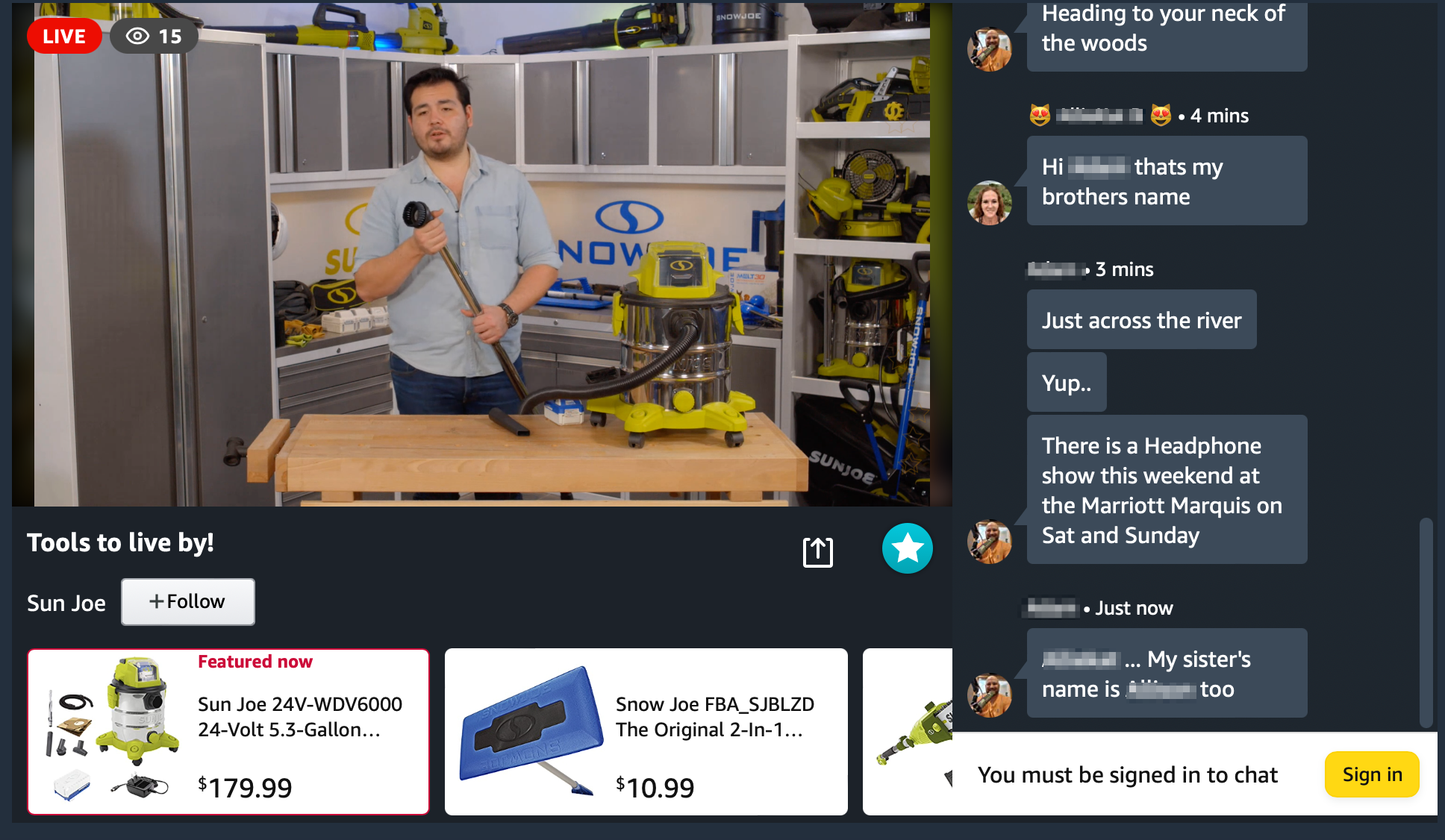
Live shopping is a video stream of one or more people chatting about a product. The livestream host will typically talk about new product features and benefits, offer limited-time discounts, respond to questions, and encourage viewers to make a purchase.
If this format sounds vaguely familiar, it is. E-commerce livestream shopping copies a successful formula used for decades by television home shopping networks like QVC and HSN. During these live broadcasts, the hosts discuss a product and show it off for the camera. Some segments may feel like a talk show, some like a fashion show, and others like a tutorial. The way home shopping network hosts talk to the camera feels very personable, almost as if they're a friend of the person shopping. The ability for viewers to call in and speak to hosts on-air further reinforces this feeling of human connection.
At some point, this format began to migrate from television to e-commerce websites. While it’s hard to say exactly when the transition happened, we know that Chinese retail giant Alibaba had a big role in the process. The company brought live shopping to Chinese consumers in 2016 via its Taobao app. By 2021, live commerce produced more than 15% of the gross merchandise value of Chinese e-commerce.
Live video shopping is also used widely, and successfully, by direct sales representatives for fashion brands like LuLaRoe.

Over the past few years (even pre-pandemic) I’ve noticed more traditional North American retailers experimenting with a live shopping model as well. Amazon, Walmart, and Nordstrom all partner with influencers and brand experts for live shopping streams.
Live shopping vs. influencer marketing
It’s important to remember that live shopping is not exactly the same thing as traditional influencer or affiliate marketing. Here’s how it can differ:
You can add live shopping to your e-commerce site without stopping any of your traditional, digital, influencer, or affiliate marketing campaigns. In fact, all of these channels are great for amplifying a new live shopping experience.
Why is live shopping great for e-commerce?
I find that adding live shopping to my clients’ e-commerce sites brings a number of immediate and long-term benefits including:
1. It increases website engagement
While you can host a shopping event on Facebook Live or Instagram, there’s additional benefit to keeping the event on your e-commerce site. When you advertise a live streaming event and host it on your domain, you can bring in additional traffic and boost site engagement. Over time, higher engagement rates can be beneficial for your website’s performance in search engine results pages.
If you need to host your live shopping event on a social media platform, you can still create increased engagement. Be sure to only share links to your website product pages (not a social storefront like Instagram Shopping) during the live stream. This will encourage viewers to visit, and go through checkout, on your site.
2. It boosts e-commerce conversion rates
Live streaming is a really good way to boost sales before a holiday, during peak shopping seasons, and even during a slump. Live online shopping reduces friction in the customer’s purchasing journey. Because a viewer gets product information, a demo, and answers to their questions all in one place, it can be easier for them to make a purchase then and there.
You can also use live shopping to leverage the fear of missing out (FOMO). By launching limited edition items or running livestream-only promotions, you create a sense of urgency that motivates the viewer to buy now.
3. It improves revenue
Live shopping is rapidly growing in popularity. It’s expected to be directly responsible for as much as 20% of all e-commerce sales by 2026. By implementing this feature on your website now, your brand can see increasing revenue gains as more global shoppers seek out live shopping events.
If you’re selling products at a high price point, you can take another page out of the home shopping networks’ playbook and offer installment payments with a service like Klarna or Affirm. The ability to break up payments into installments is another factor that can smooth friction during the customer journey and boost sales revenue.

4. It encourages customer loyalty
You can use live shopping events to quickly build brand loyalty with new and existing e-commerce customers. This is a key reason why direct sales representatives use live streams to sell products—they form a relationship with their audience and take on the role of a trusted consultant. Your brand can do the same by integrating live shopping into your e-commerce site. Directly addressing the camera, giving shout-outs to viewers, answering questions in a simultaneous text chat, and giving product recommendations all go a long way toward building customer loyalty.
I think direct-to-consumer fashion retailer Betabrand is a great example of this. They use live shopping streams as an interactive experience. During a livestream, the Betabrand team may introduce new prints and patterns, launch limited edition items, and have viewers vote on what products they’d like to see next. This gives viewers a sense that they are influencing the direction of their favorite brand. Throughout the course of the entire live stream, hosts read through the chat on an iPad and respond to questions and casual conversation.

5. It builds brand awareness
One of the most straightforward benefits of live shopping is that it can turbocharge your marketing efforts. It’s often a really good way to grow brand awareness and interest across new audience segments. Consider Peloton’s live shopping success. When the home fitness company launched a shopping livestream on Instagram, they reached 26,000 new viewers—people who weren’t already following Peloton online. I’d say that's a pretty amazing reach for one event.
Adding live shopping to your e-commerce site
You don’t need to completely rebuild your website from the ground up in order to launch a live shopping experience. There are several ways you can add live shopping features including embedding a YouTube stream or using WordPress and Shopify plugins to bring video and chat to your e-commerce site. There aren’t a ton of live shopping plugins available at the moment, but I expect this will change in the near future. Live Shopping & Video Streams for WooCommerce (WordPress) and Livescale’s Live Shopping (Shopify) are two options you can check out right now.
In addition to setting up a video feed, you’ll also need to promote and manage the live shopping event. In the days or weeks leading up to your first livestream, you may want to engage the help of:
- A social media manager who can help you promote the event across multiple channels
- An SEO expert to make sure your livestream positively impacts website traffic
- A customer service representative or moderator to answer questions in the livestream chat
- On-camera talent if you aren’t interested in hosting live shopping sessions yourself
If you aren’t sure where to start, an agency can help. Through my agency, Web Rocket Media, I provide a variety of services that can help you successfully launch a live shopping campaign. Simply send an inquiry through my Upwork profile and we can discuss the best options for your e-commerce business.


.svg)


