


Our climate commitment:
carbon neutrality
We believe that in order to be a successful business, we must also be an accountable one, and for Upwork, this accountability involves working to reduce emissions that are contributing to the global climate crisis. With the publication of this emissions report—Upwork’s first such report—we are proud to announce that we have estimated our carbon footprint and taken immediate action to achieve carbon neutrality. We are also committing to being carbon neutral moving forward. Upwork’s business model, through enabling remote work which substantially reduces greenhouse gas (“GHG”)emissions by taking commuter cars off the road, is inherently beneficial to the environment. As such, our further commitment we are making with this report to carbon neutrality underscores our efforts to do our part to protect the environment.

Upwork readily achieved carbon neutrality for 2019 for all three scopes of emissions (including employee commuting) largely owing to the success of our distributed workforce model, which encourages Upwork employees and the freelancers that provide services to Upwork (together, “team members”) to work remotely. Sixty-nine percent (69%) of team members reduced miles commuting and associated carbon emissions after joining Upwork.
Upwork enabled team members to avoid over one million commuting miles in 2019,a finding of which we are very proud. And in 2020, we adopted a remote-first work model, through which working remotely is now the default for nearly every team member moving forward, avoiding even more GHG emissions in the future.
The graph below presents Upwork’s 2019 carbon footprint (derived from the carbon assessment made looking back at its most recently completed calendar year) as well as the avoided emissions resulting from Upwork’s distributed workforce model. We hope that this report can serve as a model for other businesses to not just unlock their own potential to meet and achieve their business goals by similarly embracing remote work, but to show that such businesses can simultaneously make their own positive impact in the fight against global climate change.
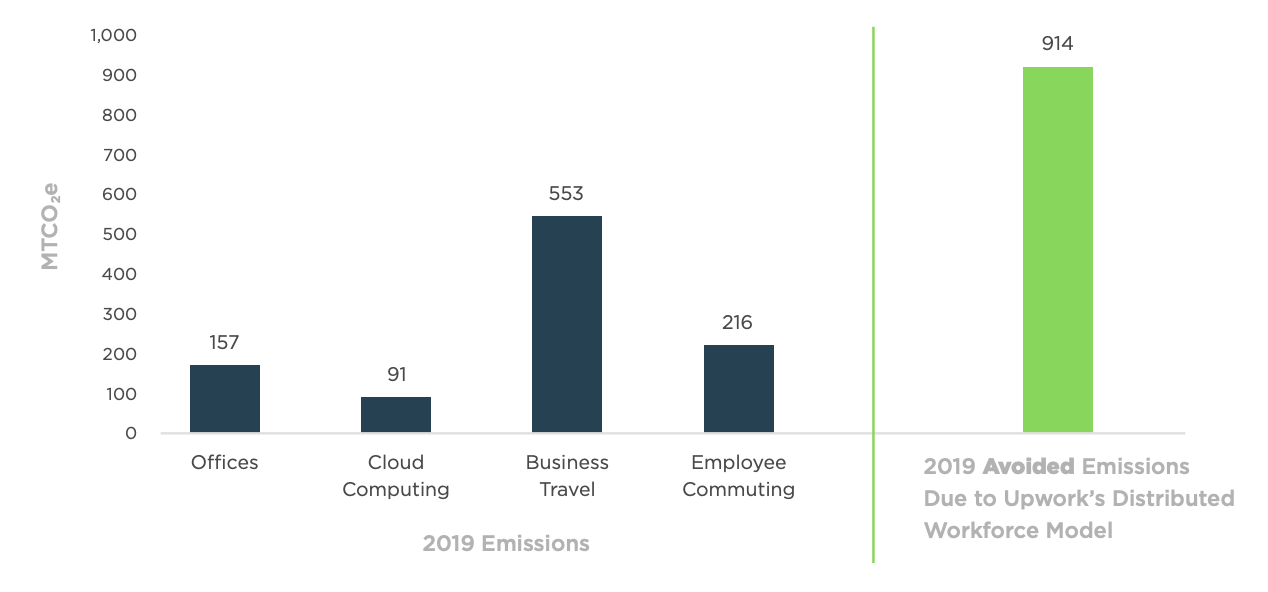
This emissions report provides a clear picture of exactly how much energy we are using, our carbon impact, and how we achieved carbon neutrality; it also presents more information on the emissions that we avoided in 2019 owing to our embrace of remote work within our own company.
Understanding our carbon footprint
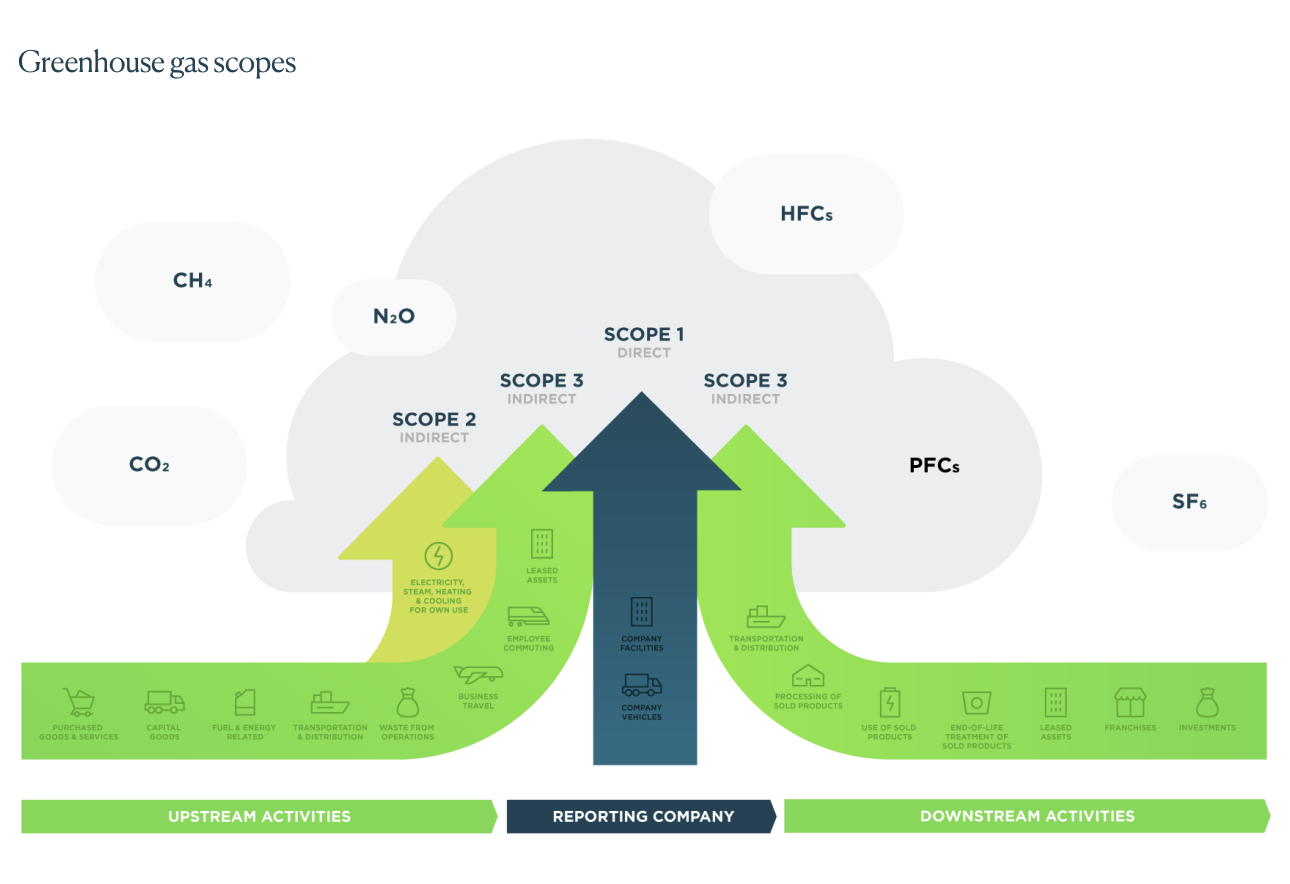
Standard measures of GHG emissions are broken out into three categories: scope 1, 2, and 3 emissions. Scope 1 emissions are those GHGs released from sources directly owned or operated by a company, which for Upwork only includes office heating from natural gas. Scope 2 emissions result from the generation of electricity purchased by a company. For Upwork, scope 2 emissions are generated solely from the electricity used at our offices. Lastly, scope 3 emissions cover all indirect GHG emission occurring in the value chain of a company, including both upstream and downstream. Upwork’s scope 3 emissions include the vehicle fuel used for business travel and employee commuting, and the electricity used for cloud computing. Collectively, these three scopes of emissions comprise Upwork’s carbon footprint.
Embarking on our journey to measure our GHG emissions on an annual basis, we worked with expert consultants at Industrial Economics (“IEc”) to assess our 2019 carbon footprint in detail. With the help of IEc, we analyzed data on the energy use of the offices we occupied in 2019 and the sources of electricity used to power those offices. We also analyzed business travel undertaken by Upwork employees throughout2019, including flights and rental car mileage, and assessed energy usage attributable to Upwork’s cloud computing. Finally, we conducted a survey of our team members to gather data on their commuting patterns, and to evaluate the extent to which Upwork’s policy of allowing team members to work remotely has resulted in avoided commuting-related emissions.

Scope 1 and 2 emissions from offices
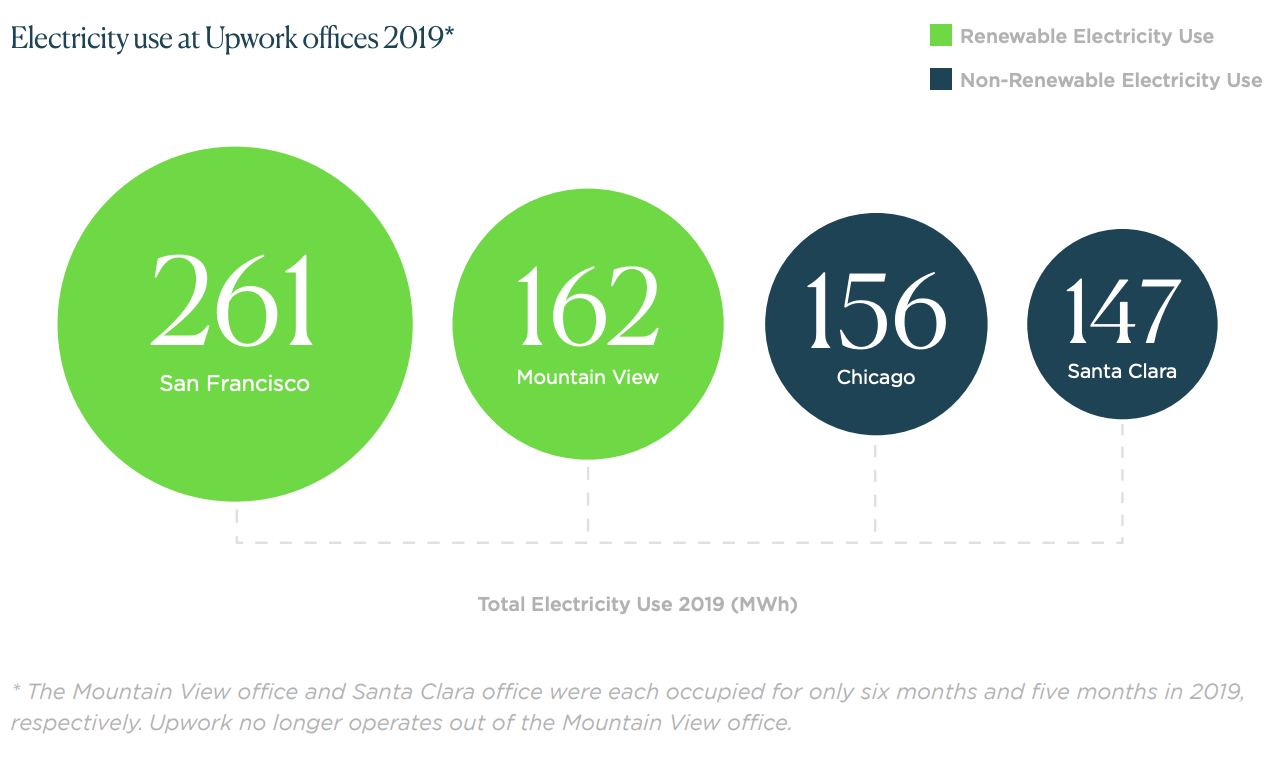
Upwork’s scope 1 emissions are a product of natural gas use at the San Francisco office; none of our other offices use natural gas for heating. In 2019, we used 6,200 therms (621,000 kBtu) of natural gas, which produced approximately 33 MTCO₂e.¹ Each of the four offices we occupied at various points in 2019 purchased electricity from the electricity grid, thereby generating scope 2 emissions. Two of those locations—the San Francisco and Mountain View offices—participate in renewable energy programs.One hundred percent (100%) of the electricity used in these offices was produced using renewable resources such as solar and wind, and therefore these offices had no scope 2 emissions. Because our Mountain View office only used renewable sources of electricity and did not use natural gas, that office had no scope 1 or scope 2 emissions in 2019 and was therefore carbon neutral.
In total, we used 726 MWh (2.5M kBtu) of electricity in our offices, almost sixty percent (60%) of which was renewable, generating about 124 MTCO₂e of GHG emissions. The graph below presents a breakdown of energy usage across the four offices. The total scope 1 and 2 emissions for 2019 were 157 MTCO₂e.
We closed the Mountain View office in mid-2019 shortly before opening the Santa Clara office. In addition, we ceased occupying the San Francisco office in early 2020 and moved those operations to be entirely remote. As of this December 2020 report, we are evaluating our existing office spaces in Chicago and Santa Clara.
Scope 3 emissions
Upwork’s main components of scope 3 emissions consist of cloud computing, business travel, and employee commuting. 2019 scope 3 emissions from these sources totaled 860 MTCO₂e. Due to our policy allowing team members to work remotely, employee commuting is relatively low. We are proud to support remote work, notably for its positive environmental contribution, among a host of other reasons.
1. Cloud computing
Another way we reduce our carbon footprint is through our use of Amazon Web Services (“AWS”) for cloud computing, which in 2019 accounted for 91 MTCO₂e. Use of on-site servers would result in substantially higher emissions. Use of a cloud service provider, by contrast, results in operational and equipment efficiencies provided by data centers and virtualized computing. Moreover, AWS is able to purchase renewable electricity in bulk, securing lower pricing than is often available for renewable electricity. Finally, with an expected completion date in the first quarter of 2021, Upwork is in the process of migrating from the AWS data centers in California to AWS’s carbon neutral data center in Oregon, which will result in lower scope 3 emissions going forward.
2. Business travel
Upwork employees collectively traveled 3.8 million miles for business purposes in 2019, constituting the bulk of our carbon footprint at 553 MTCO₂e. Over ninety-nine percent (99%) of these business travel emissions resulted from air travel. Our employees flew 31,000 miles on short flights (less than 300 miles), 2.9 million miles on medium length flights (between 300 and 2,300 miles), and 870,000 miles on long flights (more than 2,300 miles). Upwork employees drove only 7,000 miles by car for business travel in 2019. The COVID-19 pandemic, among other factors, has dramatically shifted how businesses like ours incorporate business travel into achieving our business goals, with remote-first practices now taking precedence by default.However, even post-pandemic, we plan to lower emissions from business travel by implementing a remote-first approach to our practices, minimizing the need for face-to-face meetings and associated business travel.
3. Team member commuting
Upwork’s business model and our embrace of remote work have a straightforward, positive impact on our reduction of GHG emissions related to commuting. As part of our carbon footprint analysis, we conducted a survey of 760 team members to determine how they commuted in 2019 while at Upwork, as well as how they commuted to work prior to joining Upwork. The survey also collected data on commute distance and frequency. We estimated the GHG emissions reductions associated with team members’ changes in commuting using emissions factors specific to each make, model, and year for personal vehicles, and standardized emissions factors for other forms of transportation such as subway and bus. We then used statistical methods and data from survey respondents to model emissions from the full population of team members.
Seventy-three percent (73%) of respondents already reported having no commute at all in 2019 while working for Upwork thanks in large measure to our business model and embrace of remote work; in contrast, only twenty-three percent (23%) of respondents reported no commute prior to starting with Upwork. The small number of team members who reported a commute in 2019 resulted in 216 MTCO₂e of our scope 3 emissions.
The graphic below shows a breakdown of commuting days per week, before and after joining Upwork.
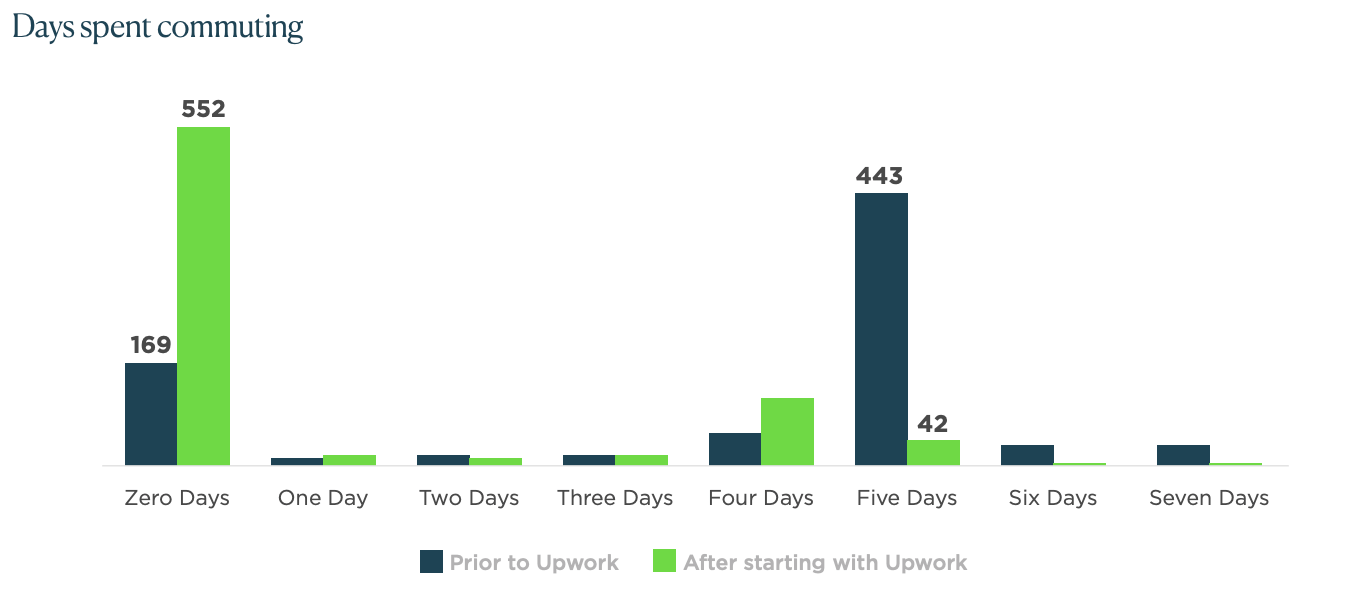
Sixty-nine percent (69%) of respondents had fewer commute miles and lower associated carbon emissions after joining Upwork, including many who ceased commuting entirely once they joined; twenty-three percent (23%) had no commute prior to Upwork and continued to have no commute after joining Upwork; and just eight percent (8%) reported an increase in commuting miles after joining Upwork. The bulk of emissions avoided are tied to personal vehicle commuting, as seen in the graph on page 9; personal vehicle commuting has the highest carbon impact of all modes. Upwork enabled team members to reduce miles traveled in a personal vehicle by over one million miles in 2019, a finding of which we are very proud. And in 2020, we adopted a remote-first work model, through which working remotely will be the default for nearly every team member, thereby avoiding this significant source of GHG emissions going forward.
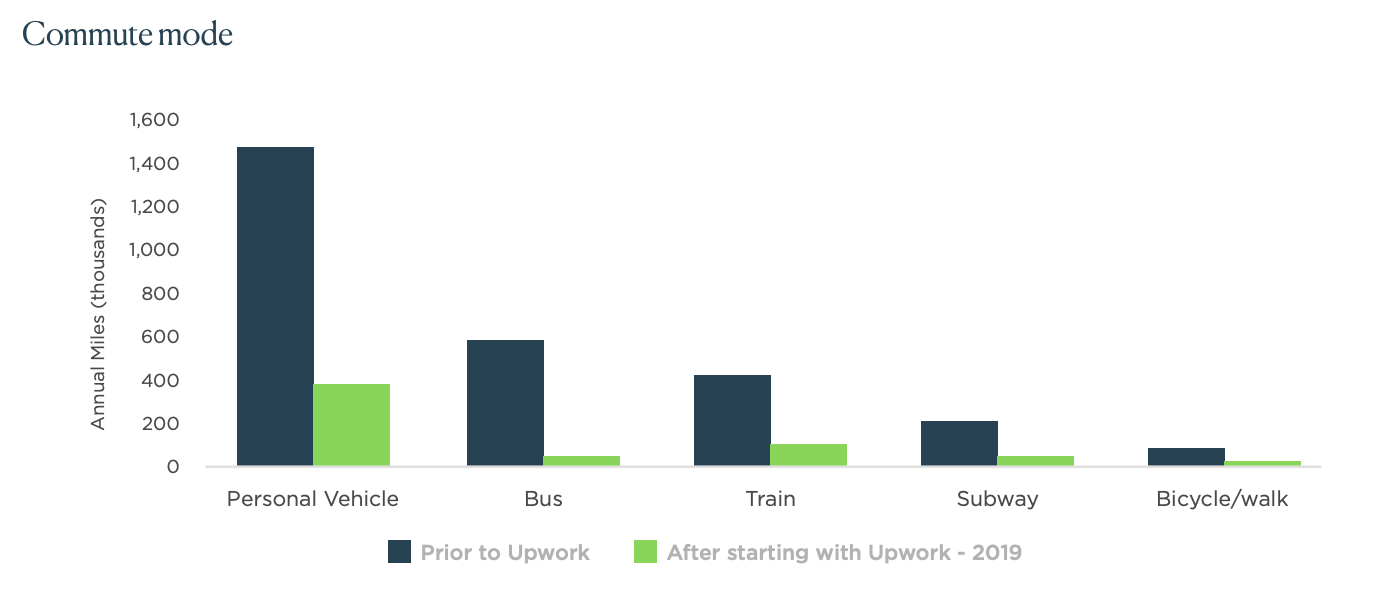
Our remote-first working environment helps avoid, and in many cases eliminate, carbon emissions that would otherwise be released into the atmosphere through daily commutes. In total, these reduced commutes prevented 914 MTCO₂e from being released into the atmosphere in 2019, which is equivalent to the annual emissions of about 105 homes.

Carbon Neutrality
Upwork has achieved carbon neutrality for 2019 and is committed to maintaining carbon neutrality across the company moving forward. Upwork is proud of the steps we have taken to reduce our impact on the environment, but we recognize there is more work to be done.
Scopes 1 and 3 emissions
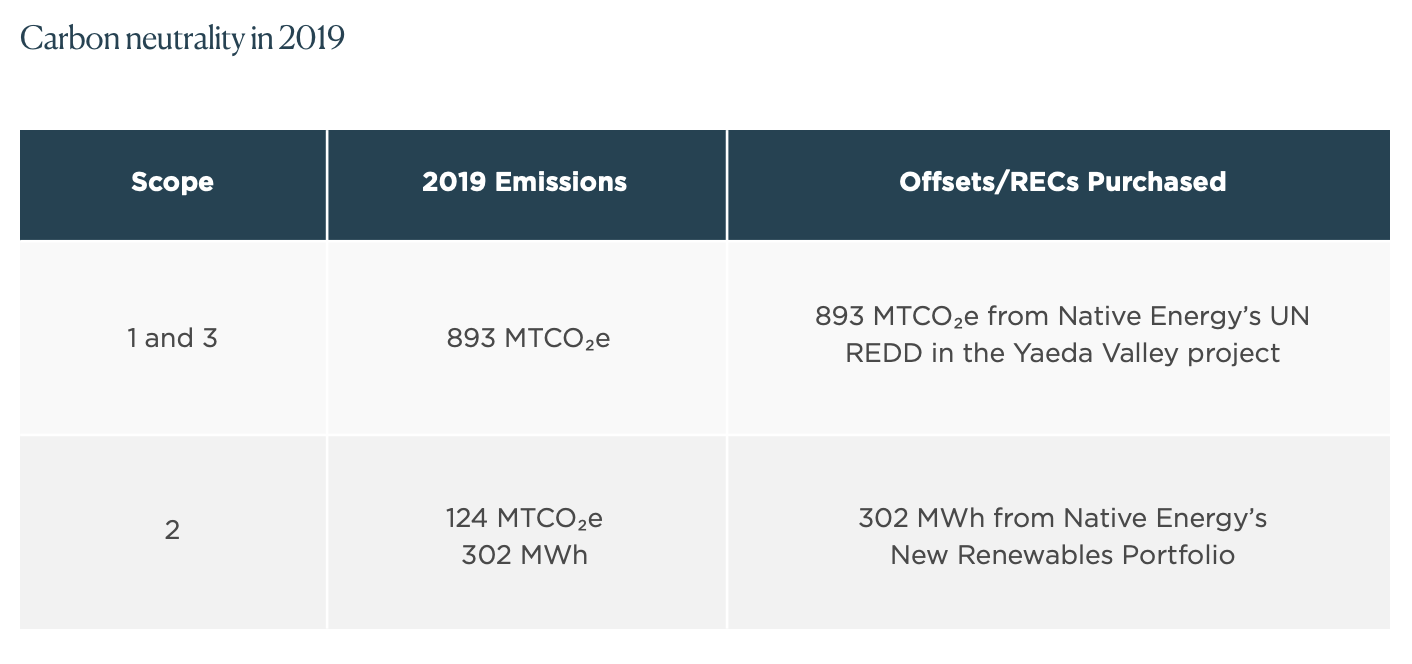
To address our scope 1 and 3 emissions, we purchased carbon offsets for 893 MTCO₂e from an organization whose mission we believe in. We purchased these offsets from Native Energy’s UN REDD in the Yaeda Valley project, a project located in Tanzania that protects forests from deforestation, an important tool in fighting climate change, as forests absorb carbon emissions. This project also improves the livelihoods of the Hadza (or Hadzabe) people, an ethnic group indigenous to Tanzania who practice subsistence hunting and foraging. Since 2018, Native Energy has used its Help Build funding model to invest in the project up front, providing the Hadzabe people with a reliable source of income. This income reliability has enabled the community to invest in education and employment, ensures long-term territorial security and governance capacity, and provides direct payments associated with the forestry project to each Hadzabe household. We at Upwork are honored to support this effort.Looking forward, Upwork plans to reduce our emissions and minimize the need for offsets. We have implemented a remote-first approach to our workforce, will seek to avoid business travel emissions where possible, and, in addition to closing our San Francisco office, we are evaluating our office spaces in Chicago and Santa Clara. Additionally, we plan to shift all cloud computing services we procure through AWS to theirOregon region, since those facilities use one hundred percent (100%) renewable energy.

Scope 2 emissions
To address the impact of our scope 2 emissions, we purchased high-quality renewable energy credits(“RECs”). We worked with Native Energy to invest in their New Renewables Portfolio to fund new sources of renewable energy, as opposed to simply purchasing the lowest-cost RECs from existing projects. The portfolio is building 200,000 MWh of new, community-scale renewables projects that are fully attributable to funders and also meet “additionality criteria,” meaning these projects would not have happened without buyers like Upwork.The cost for RECs from the portfolio is $5/MWh, compared to approximately $1/MWh for commodityRECs. Upwork is proud to join charter supporters including Clif Bar, LUSH, and Lime in investing in this portfolio.

Conclusion
Upwork naturally reduces GHG emissions through a variety of practices as established in this report, from embracing a remote-first working environment, to the heart of our business model and other means. However, our commitment to being a responsible steward of the environment extends beyond the inherent 7 benefits of our business model. Upwork has taken concrete, meaningful actions to reduce our impact on the environment. Our emphasis on remote work, culminating in the adoption of a remote-firstmodel in 2020, has resulted in a small carbon footprint relative to many other companies. We purchased carbon offsets and RECs for all of our energy use to achieve carbon neutrality for 2019, and are committed not only to continue this practice moving forward, but also to improve our operations to lower emissions and reduce the need for offsets in the first place. We make these commitments in service to our mission to create economic opportunities so people have better lives, and also to inspire our users, peer companies and others in the global economy to take similar actions and bold stances to ensure business helps to create a more equitable and sustainable future and makes a clear and direct impact in the global fight against climate change.