The 7 Best Industries To Work In for 2026
Whether you’re looking for your first job or want to change your current career path, these seven industries have great growth potential over the next 10 years.

.png)
.avif)
When you’re looking for a new job, the industry you choose to work in can have a significant impact on your earnings, future work, and growth potential.
The best job for you might not be the highest-paying one. Some industries offer higher pay but typically have demanding hours; others may offer more work-life balance at a lower salary. It’s important to consider both income and non-monetary benefits when evaluating your career path.
Whatever your goals may be, start your job search in these seven industries that have great growth potential over the next 10 years.
How we picked the top industries for 2025
We used a mix of Upwork data and information from the U.S. Bureau of Labor Statistics (BLS) Occupational Outlook Handbook to build this list. The BLS maintains detailed reports on a vast array of industries and jobs, including 10-year job growth rate projections that are expressed as a percentage.
For the purposes of our analysis, we looked for career opportunities with a BLS growth score of at least 5%—in many cases, the projected growth of each role is much higher. We then looked at what top Upwork clients (like work innovators) are searching for on the platform…and how much they pay skilled freelancers in different fields.
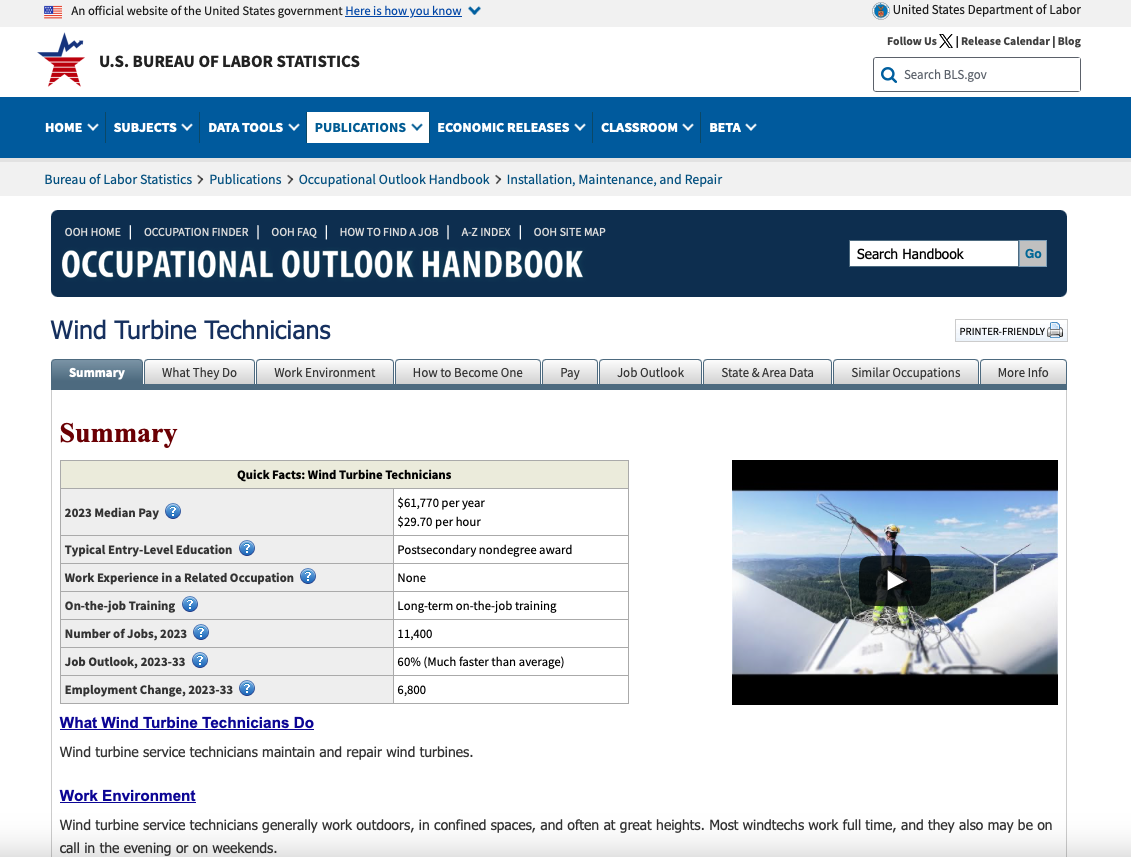
As you move through this guide, click on the provided Upwork and BLS links for more detailed information about any industry or job that sparks your interest.
1. Renewable energy careers

Photo by Johanna Montoya on Unsplash
The renewable energy industry looks for alternatives to fossil fuels, like solar, wind, and hydropower. Companies across all industries are increasing their sustainability efforts to keep up with local regulations and consumer demand. The United States, for example, has committed to having net-zero emissions by 2050, and other members of the Paris Agreement have similar carbon-neutral goals.
The regulations these countries develop are driving the growth in the industry: 825,000 new energy jobs were added to the U.S. job market between 2020 and 2023 alone.
Wind turbine service technician
Wind turbines are a common source of renewable energy. Just one wind turbine can generate enough energy to power around 940 U.S. homes. Wind turbine technicians install, inspect, maintain, and repair these turbines—and this job is in high demand.
Career snapshot:
- Typical pay: $33 to $49 per hour
- BLS predicted growth rate: 60%
- Education requirement: Professional certificate
Solar panel installer
Solar panel installers assemble, set up, and maintain solar panels in residential and commercial areas. According to the 2024 U.S. Energy and Employment report, the number of available solar-related jobs grew by 5.3% in 2023, and the BLS expects this growth to continue.
Career snapshot:
- Typical pay: $22 to $39 per hour
- BLS predicted growth rate: 48%
- Education requirement: High school diploma
Mechanical engineer
Mechanical engineers develop and build systems that involve moving parts and thermal sensors. They’re a critical part of creating clean energy systems and vehicles, including those with hydrogen fuel cell engines.
Career snapshot:
- Typical pay: $73,000 to $179,700 per year
- BLS predicted growth rate: 11%
- Education requirement: Bachelor’s degree
Find mechanical engineering jobs on Upwork
2. Construction careers

The renewable energy boom is also creating career growth in another industry: construction. Laborers and skilled construction workers are in demand, as well as the architects and managers who design and oversee projects.
Construction laborer
Construction laborers perform a number of jobs on a build site, from cleaning and preparing areas for work to operating equipment like jackhammers and drills. Some construction laborers act as helpers who assist other trade professionals like electricians, painters, and tile setters.
Career snapshot:
- Typical pay: $13 to $22 per hour
- BLS predicted growth rate: 7%
- Education requirement: High school diploma or on-the-job experience
Pipefitter
A pipefitter is a skilled tradesperson who installs and tests pipe systems. The pipes they install may be for water, gas, sewage, or other substances. You can find pipefitters working for construction companies, local governments, and as sole proprietors.
Career snapshot:
- Typical pay: $17 to $35 per hour
- BLS predicted growth rate: 6%
- Education requirement: High school diploma and an apprenticeship
Architect
Architects design structures like offices, warehouses, manufacturing plants, and homes. They may work for a construction company, at an architecture firm, or even as freelancers.
Career snapshot:
- Typical pay: $81,800 to $128,100 per year
- BLS predicted growth rate: 8%
- Education requirement: Bachelor’s degree and professional licensure
Find architecture jobs on Upwork
Construction manager
Construction managers oversee building projects from start to finish. They typically work on the job site and have a hand in everything from budgeting to meeting with zoning inspectors.
Career snapshot:
- Typical pay: $102,300 to $174,200 per year
- BLS predicted growth rate: 9%
- Education requirement: Bachelor’s degree
3. Health care careers

While health care jobs can be demanding and include weekend or on-call hours, there’s potential for flexibility, too. Depending on the job, you may be able to work days, nights, weekends, or three 12-hour days per week.
If you’d prefer to have a less patient-facing role, you can find jobs in medical research or even work remotely as a health care consultant. And don’t forget about animals—pets need health care as well, and veterinarians are poised to be in high demand over the coming decade.
Medical assistant
During a medical visit, a medical assistant prepares the patient for the doctor. They typically lead the patient to the exam room, take their vitals, and enter medical and personal information into patient history files. You can find medical assistants at work in hospitals, clinics, and doctors’ offices.
Career snapshot:
- Typical pay: $17 to $25 per hour
- BLS predicted growth rate: 15%
- Education requirement: Professional certification
Advanced practice registered nurses
An advanced practice registered nurse (APRN) may work as a nurse practitioner, nurse midwife, or nurse anesthetist. These medical providers may work in collaboration with an assistant or on their own—most U.S. states allow APRNs to treat patients and prescribe medication.
The path to becoming an APRN typically begins by working in nursing—you could start as a nursing assistant, for example—and proceeding to the position of registered nurse (RN) before pursuing postsecondary education.
Career snapshot:
- Typical pay: $108,700 to $146,800 per year
- BLS predicted growth rate: 40%
- Education requirement: Master’s degree or doctorate and professional licensure
Find remote nursing jobs on Upwork
Home health and personal care aide
A home health or personal care aide helps patients with day-to-day life. They may work with patients of any age, though many aides work with older adults and assist with things like bathing, attending appointments, preparing nutritious meals, and maintaining a clean environment.
Career snapshot:
- Typical pay: $14 to $20 per hour
- BLS predicted growth rate: 21%
- Education requirement: High school diploma and on-the-job training
Veterinarian
Veterinarians treat and care for animals of all sizes—from small domesticated pets to dairy cows and even zoo animals. As a veterinarian, you may give regular checkups and vaccines, treat injuries, conduct surgeries, run lab tests, and even conduct animal autopsies.
Career snapshot:
- Typical pay: $64,400 to $165,200 per year
- BLS predicted growth rate: 19%
- Education requirement: Doctorate and professional licensure
4. Technology careers

The growth of clean energy and artificial intelligence technology is creating a big demand for highly skilled tech professionals. More than half of the highly innovative companies we surveyed are already rolling technology like cloud computing and AI into their regular operations—with more businesses to follow in their footsteps.
If you’re interested in working as a freelancer, check out jobs in the technology sector! Because these roles are primarily computer-based, they’re often a great choice for working remotely.
Data scientist
Data scientists may glean insights from data, create and test different algorithm models, and visualize their findings. Their work is a critical part of making informed business decisions, developing machine learning algorithms, advancing the field of computer science, and more.
Career snapshot:
- Typical pay: $25 to $50 per hour
- BLS predicted growth rate: 36%
- Education requirement: Bachelor’s degree
Find data science jobs on Upwork
Information technology security analyst
IT security analysts are cybersecurity professionals who work to make sure that an organization’s computer systems are safe from breaches and leaks. They may maintain system firewalls, check for vulnerabilities, test how hackable a network is, train colleagues on security best practices, and more.
Career snapshot:
- Typical pay: $63,600 to $88,400 per year
- BLS predicted growth rate: 33%
- Education requirement: Bachelor’s degree
Find information security jobs on Upwork
Computer and information research scientist
Computer and information research scientists are involved in the research and development of new technologies. They may work to develop systems that help solve business problems as well as address challenges faced by health care and technology organizations. Many research scientists work in an academic setting, too, and publish papers on their findings.
Career snapshot:
- Typical pay: $89,800 to $160,200 per year
- BLS predicted growth rate: 26%
- Education requirement: Bachelor’s or master’s degree
Computer network architect
A computer network architect is responsible for building and maintaining different types of networks. They may keep one or two computers connected to each other, build local area networks (LANs) and wide area networks (WANs), or maintain vast corporate cloud infrastructure. This role involves network design, setup, maintenance, and testing, among other responsibilities.
Career snapshot:
- Typical pay: $78,000 to $195,000 per year
- BLS predicted growth rate: 13%
- Education requirement: Bachelor’s degree
5. Finance careers

The financial services industry is one with current and long-term growth potential. Whether you’re interested in helping individuals and small business owners maximize their retirement savings or you want to calculate risk for insurance companies, you’ll find a wide range of roles available. You can even build a financial services career while working for the government.
Financial examiner
Financial examiners are responsible for making sure that organizations comply with transaction laws. These professionals typically work for the groups that make such laws—like national governments or governing bodies within the finance industry. A financial examiner may inspect banking records, assess risk, and develop guidelines to help companies better comply with policies.
Career snapshot:
- Typical pay:$48,250 to $63,100 per year
- BLS predicted growth rate: 21%
- Education requirement: Bachelor’s degree
Actuary
Actuaries analyze the financial cost of risk. This may include running different scenarios to figure out how likely it is that a specific natural disaster will occur—and how great an economic impact that disaster will have. While that may sound dark, it’s an important part of how insurance companies and businesses figure out how to price policies, pay out claims, and reduce overall risk.
Career snapshot:
- Typical pay: $72,400 to $178,200 per year
- BLS predicted growth rate: 22%
- Education requirement: Bachelor’s degree and professional certification
Financial analyst
Whether they’re working with a couple who wants to plan for retirement or a startup company interested in improving their bottom line, a financial analyst looks at historical data, economic trends, and a client’s current expenditures in order to make specific investment recommendations.
Career snapshot:
- Typical pay: $20 to $60 per hour
- BLS predicted growth rate: 9%
- Education requirement: Bachelor’s degree, certification, and professional licensure
Find financial analyst jobs on Upwork
Personal financial advisor
Personal financial advisors work with individuals who need help planning their investments and estates, preparing for retirement, choosing insurance, and more. These advisors may conduct research and model different scenarios to help their clients make sound financial decisions before a big life event (like buying a home or starting a family).
Career snapshot:
- Typical pay:$47,800 to $64,200 per year
- BLS predicted growth rate: 17%
- Education requirement: Bachelor’s degree and professional licensure
6. Transportation careers

Photo by Alejandro Quiñonez on Pexels
Transportation industry careers continue to be another choice with high growth potential. From planning the way that goods move through a supply chain to actually transporting people and packages between locations, there’s always a need for skilled transit pros.
Logistician
Logisticians work to improve supply chain efficiency. They typically work with businesses that move products between manufacturers, warehouses, and customers. A logistician may model different scenarios to forecast supply and demand, evaluate risk, and direct how companies procure or ship raw materials and finished products.
Career snapshot:
- Typical pay:$44,700 to $56,100 per year
- BLS predicted growth rate: 19%
- Education requirement: Bachelor’s degree
Flight attendant
Flight attendants work on both short- and long-haul flights, making sure that passengers are safe and comfortable throughout the duration of their journey. A flight attendant’s job starts with checking emergency equipment before the flight takes off and may conclude with cabin cleanup and organization upon landing.
Career snapshot:
- Typical pay:$64,700 to $117,900 per year
- BLS predicted growth rate: 10%
- Education requirement: High school diploma and professional certification
Professional driver
Professional drivers may drive taxis, buses, private cars for hire, and other vehicles. Their primary responsibility is to get passengers safely from one destination to another, though doing so may entail light vehicle maintenance, interior detailing, assisting with luggage, and making change for cash fares.
Career snapshot:
- Typical pay: $25,800 to $49,900 per year
- BLS predicted growth rate: 11%
- Education requirement: On-the-job training
Courier
A courier transports packages between different locations. They typically offer local, express deliveries—if you’ve ever ordered something from a local store and requested same-day delivery, you’re typically working with a courier. Some couriers work for major shipping companies like UPS, while others work for a dedicated courier service in a specific area.
Career snapshot:
- Typical pay: $11 to $23 per hour
- BLS predicted growth rate: 11%
- Education requirement: High school diploma
7. Hospitality careers

Photo by Olena Bohovyk on Unsplash
When you think of a hospitality career, you might picture someone working in a hotel. While that’s absolutely accurate—there are hotel-based hospitality jobs with growth potential—you can find hospitality professionals working in other locations, too. And not all hospitality jobs are customer-service based, either! You may find a hospitality career you like that lets you focus on fitness, maintenance, budgeting, or another skill.
Lodging manager
Lodging managers are in charge of the general operations at a hotel, motel, bed-and-breakfast, casino, or hostel. They may be responsible for hiring and training guest services team members, working to resolve customer complaints, monitoring budgets, inspecting the grounds, and helping to improve the guest experience.
Career snapshot:
- Typical pay: $39,300 to $127,100 per year
- BLS predicted growth rate: 10%
- Education requirement: High school diploma or bachelor's degree
Bartender
Bartenders prepare drinks for patrons at bars, restaurants, hotels, casinos, theaters and other establishments. They may also work with a catering company to provide bartending services at private events like weddings. In addition to mixing drinks, bartenders often provide customer service, decide if a customer is too intoxicated to serve, check IDs, clean the bar, and submit food orders to kitchen staff.
Career snapshot:
- Typical pay: $9 to $14 per hour
- BLS predicted growth rate: 9%
- Education requirement: On-the-job training and professional certification
Entertainment and recreation manager
Entertainment and recreation managers or coordinators plan activities and outings for groups of people at sports clubs, hotels, retirement homes, and on cruises. Some recreation managers may also work for local governments that offer free or low-cost entertainment and fitness programming for residents.
Career snapshot:
- Typical pay: $41,500 to $98,700 per year
- BLS predicted growth rate: 11%
- Education requirement: Bachelor’s degree
Fitness instructor
A fitness instructor plans and leads exercise classes for groups or individuals. They typically demonstrate how to perform different exercises, correct technique, help clients modify programs as necessary, and provide initial first aid in the event of an injury. You can find fitness instructors working at gyms, hotels, senior centers, spas, local recreation centers, and on cruise ships.
Career snapshot:
- Typical pay: $23,800 to $83,200 per year
- BLS predicted growth rate: 14%
- Education requirement: Professional certification
Find sports and fitness jobs on Upwork
Career change FAQ
A career change can feel daunting, especially if you’ve been working in your current field for some time. It’s definitely possible, though—it just takes time and focus.
What’s the best industry to work in for 2025?
The BLS projects that the clean energy industry and the health care industry will see high levels of growth over the next few years. Ultimately, though, the best industry for you is one that aligns with your skills and provides the level of income or flexibility that you need.
What industry pays the most money?
Technology jobs traditionally pay very well, but there’s room to make a great salary in any of the fields on this list. Income earned by professionals in the clean energy sector is on the rise, and in-demand health care jobs can offer a nice blend of income and schedule flexibility.
How can you transition to a new industry?
Making a successful transition is all about experience, networking, and applying for your dream jobs!
- Identify your transferrable skill sets and work experiences. What have you done in your current job that relates in some way to your new ideal career? Think of both hard, technical skills (i.e. web development or telecommunications management) as well as soft skills like communication. And if you’ve been out of the workforce while raising your kids or caretaking, that’s OK too. The skills you’ve gained in these home-based roles can be incredibly valuable in health care jobs, project management roles, and more.
- Find a network of professionals in your target industry. By attending networking events in the industry you want to join, you can begin to learn more about different roles and even find new job opportunities by word of mouth. And while attending in-person networking events is ideal, you can also find LinkedIn groups and Zoom networking meetups for professionals in a range of industries.
- Tailor your job search. After researching the industry you’re interested in, begin applying for jobs. Even if you don’t land a new gig right away, the process of meeting with potential clients and employers will be a great experience that can help you further tailor your job search and resume.
- Work with a career coach or resume writer. Sometimes it’s helpful to bring in a professional who can help you clarify your career goals and craft a great resume. (You can hire a career coach or a resume writer right on Upwork!)
Launch your new career on Upwork
Whether you’re interested in trying your hand at consulting, freelancing, or you’re looking for full-time remote work, start your search on Upwork. You can offer thousands of different skills and can find thousands of jobs you can do on our platform—and it’s where small business and Fortune 100 clients alike look for skilled professionals to help them grow their operations. Kick-start your new career by creating an Upwork account today.
If you’re communicating with a hiring manager for a job through the Upwork platform, please note that sharing your personal contact information, such as email address, phone number, or LinkedIn profile, is not permitted in cover letters or at any time prior to the start of a contract. Additionally, all pre-contract communication should take place through the Upwork Messages feature. Learn more about using Upwork Messages here, and see more details on sharing information on Upwork here.
This article is intended for educational purposes and should not be viewed as legal or tax advice. Please consult a professional to find the solution that best fits your situation.

.avif)

Author Spotlight

Cassie is a storyteller and content creator with over eight years of experience helping brands communicate to their customers through different channels. She enjoys finding new coffee shops to work from and spending time in nature with her dog, Sweeney.

Latest articles