
Every B2B organization has room to improve their marketing efforts—there’s always something that could be better planned, optimized, tested, tracked, or analyzed.
According to research from Demand Gen Report, 82% of B2B marketers are already prioritizing enhancing their reporting to be able to track their ROI and utilizing reporting insights to optimize their approach. Rest assured, that includes many of your competitors too.
So to ensure you’re not only successful but staying competitive, here are six ways you can improve your B2B marketing efforts.
1. Market to humans
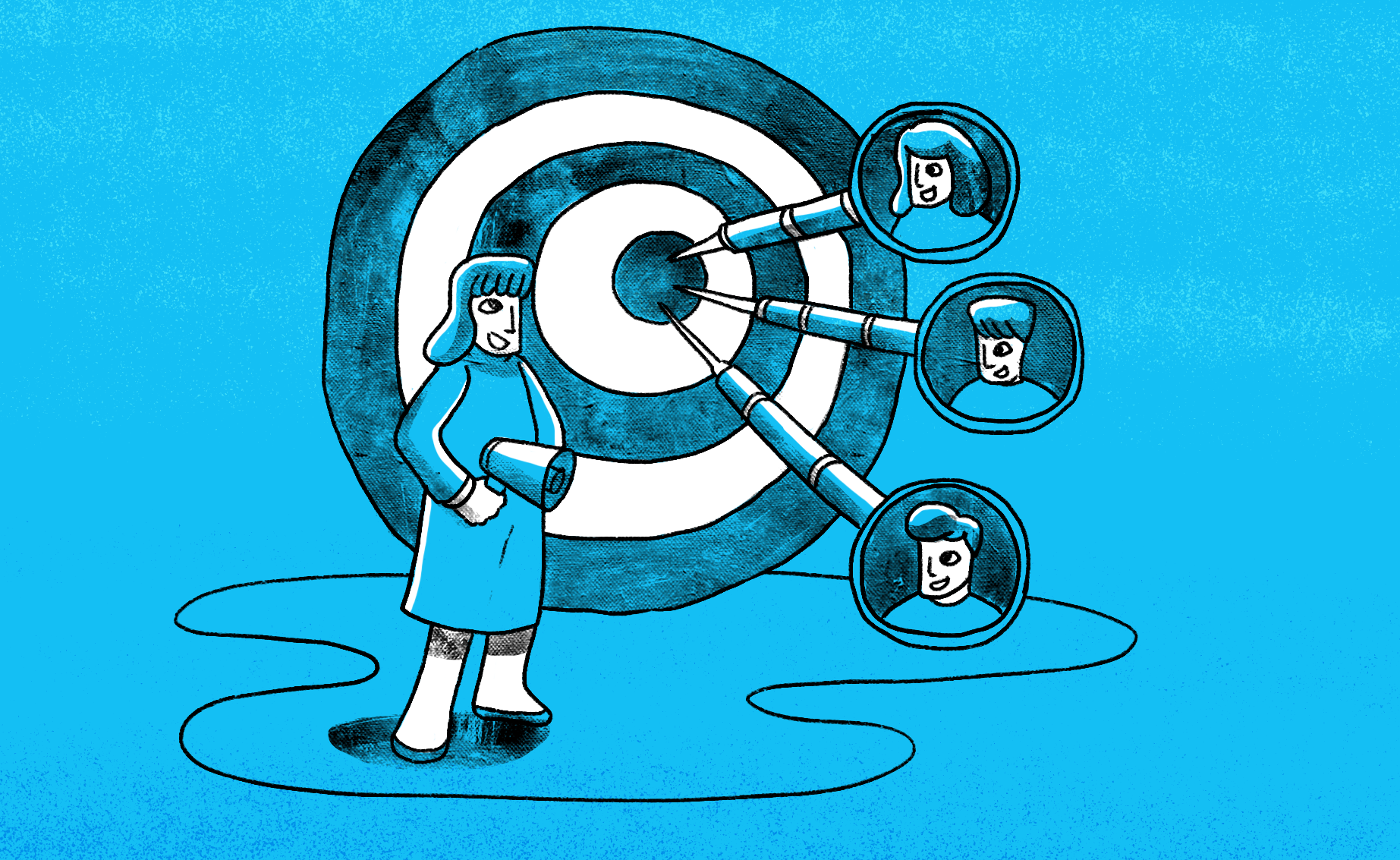
“B2B” does mean “business to business,” but it doesn’t mean businesses are your buyers—humans are—which is why many smart B2B marketers look to their B2C counterparts to understand how to better reach and connect with potential clients and customers.
To effectively market to the people who may want to do business with you, further developing your target personas—or creating them, if needed—ahead of investing additional time, money, and efforts into your marketing is a great place to start.
The key to developing effective personas is making sure they’re comprehensive, beyond simple demographic information. While certainly helpful and necessary, mere demographics seldom have a direct impact on your audience’s decision-making process—that’s why it’s incredibly important to include as much psychographic data as possible. Ensure your personas are people-centric and not just a collection of metrics.
Composed of your ideal customers’ values, interests, attitudes, habits, behaviors, and beliefs, psychographic data gives you much better insight into what motivates someone to solve problems, and thus, their buying process, allowing you to better gear your marketing efforts towards it. As you learn more about your customers, be sure to update these to optimize your efforts.

2. Base your marketing on how your buyer behaves
Once you understand how your ideal customers behave and what’s important to them, you need to identify the best way to reach them, and content is a good place to start.
According to Weidert Group, 76% of B2B buyers say content significantly impacts their buying decisions and 38% alone (according to HubSpot) used brand-created materials like case studies to do the same. Given the current trends, it’s one of the best places you can invest to better inform and connect with your prospects.
However, it’s important to note that doesn’t mean content is universal. You may have a buyer persona who doesn’t like to consume content, so you should develop and execute a strategy that aligns with how they might actually move through their buyer’s journey to become your client or customer. That means constantly analyzing behavior and having a willingness to be adaptable to improve your outcomes.

3. Develop an actual marketing strategy—then analyze and optimize
Every year, the Content Marketing Institute’s B2B report provides statistics showing that the most successful respondents are those with a documented content strategy. This year is no different.
While I’ve met plenty of B2B business leaders who say they have a documented strategy, many of them simply had a list of methodologies with no plan to see them through, let alone ensure their success.
Solid marketing strategy should—at minimum—outline the marketing methods you will employ and your objectives for each. Ideally, you should show how these strategies influence and complement each other, and have SMART goals (specific, measurable, attainable, relevant, and time-bound) as guidelines for success.
For example, you might be using blogging to attract inbound traffic and promote your content offers. Those content offers might exist to educate site visitors as you convert them to leads. From there, based on previous analytics or industry benchmarks, you should plot out how much of each activity is needed to drive desired overall results.
Once you’ve developed your strategy, it’s just as important—if not more important—to circle back to analyze the results. Being able to measure the outcomes of your efforts is one thing, but using it as a basis for change is another. If you want your success to be perpetual, and your results to always be improving, find the best way to capitalize on what’s working, ditch what’s not, then test it all, and repeat the process.
Of course, this is only the tip of the iceberg. Whipping up a sound marketing strategy isn’t that easy, but just knowing what is or is not an actual strategy may already give you a leg up on your competition.

4. Market to your audience’s wants and needs
Time and time again, B2B organizational leaders want to see their marketing be all about their business. They want it to be all brand, all the time: on the website, blog, social channels, and anywhere else their marketing reaches.
Simply put: don’t do that. It’s simply too self-focused—and no one likes someone who only talks about themself.
Content Marketing Institute’s extensive B2B content marketing research uncovered that the most successful marketers prioritize the audience’s informational needs. 88% of these marketers found that eschewing company rhetoric and giving target personas what they want to consume was a big part of the path to success. It’s a major key to improving your marketing’s engagement and conversions.
In short, your content should focus on your audience’s wants and needs, not your brand. If any of your content doesn’t—whether that’s emails, blog or social media posts, or even site content—change it, or risk undercutting your chances of engagement.

5. Market across the buyer’s journey
While delivering the right message is important, so is delivering it at the right time, as this can greatly improve conversions. That’s why it’s vital to be mindful of what stage of the buyer’s journey your prospects are in, from Awareness (top of the funnel), to Consideration (middle), to Decision (bottom).
At each of these stages, your buyer is in a different mindset with different wants, needs, questions, and concerns, and therefore requires different types of marketing and messaging to resonate with them.
For example, someone in the Awareness stage is likely to be searching for help on how to do something, such as alleviate a pain point, and is likely to turn to blog content to learn more. However, someone in the Decision phase knows how to alleviate their pain point and may want a case study to help ensure they’re choosing the right solution before they move forward.
If your marketing doesn’t align with your buyer’s current stage, there’s a good chance they might lose interest. Even worse, if they feel you’re not in alignment with their needs, they may be more inclined to seek out a competitor who is.

6. Offer relevant opportunities to convert
On top of developing stage-appropriate content that resonates with your audience’s needs, it’s also important to give them relevant opportunities to convert.
All too often, B2B organizations only offer bottom of the funnel, Decision stage conversion opportunities such as free trials, demos, or requests to “contact us”. At the same time, these same businesses often focus exclusively on Awareness stage, top of the funnel marketing activities such as social media and blog posts—and it’s a huge mistake. Many who are earlier in their buyer’s journey aren’t ready for these kinds of conversions yet.
Isurus compared various reports and found that B2B customers complete somewhere between 50% - 80% of their buyer’s journey before they feel it’s time to reach out to a sales rep. If it’s not time yet, they’ll simply move on to something else instead of converting, leaving you without a potential future lead, and them without you as a potential future solution. Increasing conversion opportunities that span the buyer’s journey and touch on several topics is an avenue to pursue for most businesses looking to improve their marketing performance.
Of course, this is just the beginning. These keys to B2B marketing improvement will start you on your path to a more optimized effort. The reality is that a marketer’s work is never done if you want to achieve an even higher degree of success and maximum return on investment.
Illustration provided by freelance illustrator Kurt Rojas.


.svg)


