How to Become a Freelance Editor in 6 Steps
Learn how to become a freelance editor step-by-step with this freelance editing guide.

.png)
.avif)
Writers rely on editors to make sure their copy is ready for publishing. An editor is a writer’s partner, helping to shape a story, make sure sentences flow, and catch any mistakes along the way. Instead of working full time for one employer, many editors choose to work independently as freelancers, offering their services directly to clients from the comfort of their homes (or wherever they’re traveling).
If you’re interested in becoming a freelance editor, this guide will act as a step-by-step explanation of how to get started:
Working as a freelance editor: what you need to know

Photo by Vlada Karpovich on Pexels
Skills and educational requirements for editors
An editor’s primary goal is to ensure that copy has improved language and vocabulary, correct syntax, and maximum impact. Hence, being an editor requires an in-depth knowledge of spelling, grammar, and punctuation—basically, a good editor should have quality writing skills and be able to spot any irregularities or mistakes.
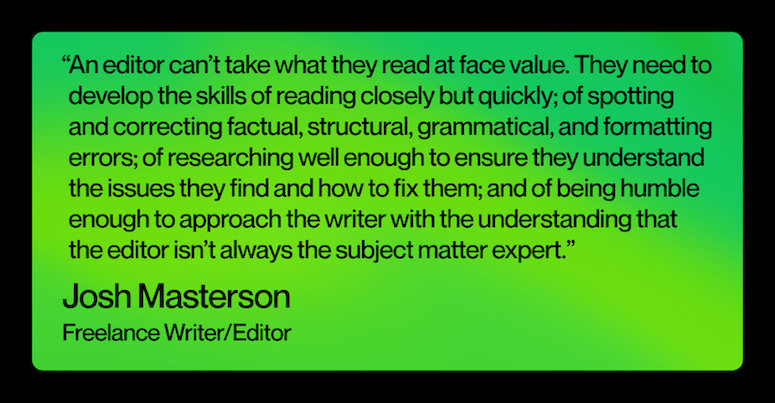
You don’t need a bachelor’s degree in English to become an editor. However, most editors have previous work experience in journalism, communications, public relations, marketing, literature, or related industries before setting up their freelance business. An educational or professional background and a portfolio of samples can help you win contracts as a new freelancer.
Editors are often avid readers and even writers themselves, mastering style guides and best practices for different content formats. Having a passion for literature, linguistics, and rhetoric can help make you a talented editor.
Working as a freelance editor, you’ll need to effectively communicate with your clients to build relationships. Successful freelancers have soft skills like organization, time management, critical thinking, self-motivation, and patience. Editors specifically need to pay attention to detail, have high emotional intelligence, adapt their style, be curious, and have cultural awareness.
Types of projects editors work on
As a freelance editor, you’ll be working as a contractor on a per-assignment or per-project basis with your clients, which means you can choose the types of editing, the types of projects, and where you work. However, freedom can be a double-edged sword because working with more than one client means you may need to know more than one type of editing. You’ll have to be flexible and adapt your approach to accommodate different platforms, as well.
From editing marketing content to proofreading website copy and improving product instructions, freelance editors can help organizations in many facets of their work. As a freelancer, your client may not necessarily specify what type of editing they need; they simply might not know enough to differentiate. Editors often aren’t limited to just one type of editing for a project either–you may be doing both line editing and proofreading of a draft.
Here are the different types of editing you can choose to offer:
- Developmental editing. A developmental editor works with writers from start to finish, helping to shape their content. This is a hands-on type of editing that can include refining themes, developing ideas, organizing structure, and making sure the material resonates with its audience.
- Structural editing. This type of editing focuses on the structure, organization, and style of a piece. Structural editing pays attention to the flow, engagement, and alignment of messages to improve readability and clarity.
- Stylistic or line editing. This type of editing is often used for manuscripts—both fiction and nonfiction, but can be used in other types of content. Line editors aim to enhance the writer’s voice and tone, including clarifying what the writer wants to get across, polishing dialogues and descriptions, and checking that the material’s reading level matches the target audience.
- Copy editing. Copy editing pays attention to grammar, sentence structure, punctuation, and spelling errors and ensures consistency in style. It also includes checking for references to ensure the facts and statistics mentioned are accurate and valid.
- Proofreading. Proofreading is the final polish before the copy goes to publication. Proofreaders look for any remaining typos and errors in tense, grammar, spelling, or punctuation, as well as consistency across design elements, such as page numbering, line breaks, and formatting.
On Upwork, you can market your editing skills and submit proposals for editing projects that you find interesting. Thousands of opportunities are available every day.
6 steps to becoming a freelance editor

Photo by ROMAN ODINTSOV on Pexels
Many roles are available for freelance editors to fill, such as managing editor, freelance editor-in-chief, and book editor. Depending on your education, work experience, and interests, you’re sure to find an industry or specialization where you can put your love of words to good use. Below is a step-by-step guide to setting up your freelance editing business in 2025.
1. Research the industry and type of content you want to work with
Editors are needed anywhere written words are published. But if you enjoy a specific genre, media platform, medium, or publication, you may want to start there. For instance, if you like romance novels, you may want to determine what you need to do to become a romance novel editor.
Different editorial jobs will also require certain experience and knowledge. Additionally, some industries and specializations may be easier to break through than others. For example, editing scientific journals and medical literature generally requires higher education and significant years of experience–which can often mean less competition if this is your niche.
2. Gain relevant education or training
From your research, you probably know there’s more to becoming an editor than the love of reading. Generally, editors need to possess knowledge of text editing and an understanding of publishing environments. Depending on the type of content you plan to work with, you also need to be familiar with social media platforms, search engine optimization (SEO), and content management systems (CMSs).
As an editor, you can use editing tools to be your second set of eyes on a draft and help you be more efficient and productive. While AI is becoming increasingly helpful for writing and editing, the human touch is still essential for creating and editing exceptional content.
Think of AI tools as your partner or assistant. Depending on the tool, you can get help catching grammatical errors and simple mistakes or review suggestions to improve the content's flow.
These are some popular editing and AI tools:
You may need to familiarize yourself with style guides, such as The Chicago Manual of Style or the Associated Press Stylebook. Below are some organizations that offer editing courses, training, and seminars to check out.
- The American Copy Editors Society
- The Editorial Freelancers Association
- The Chartered Institute of Editing and Proofreading
3. Build your portfolio
If you’re just starting as an editor, you may not have a lot of work experience to showcase in your portfolio. You can start building your portfolio by offering your editing services free of charge or at a discounted rate to local businesses or colleagues.
You can also ask around your community and volunteer to edit your homeowners association newsletter, for example. Check online for internships or volunteer opportunities where you can gain editing experience. Don’t forget to ask for testimonials.
Working on a platform like Upwork can make it easier to find clients. Instead of having to send cold emails to clients to see if they need your services, you can submit proposals to open jobs they post. You can also list your editing services on Project Catalog™.
Landing your first couple of clients as a freelancer on Upwork can be challenging until you have reviews and a portfolio. Many new freelancers submit proposals to smaller projects at a lower rate at first to help get reviews. Letting your client know that you’re bidding less for this reason can be helpful. Sometimes, clients see rates that are significantly above or below the average bidding range as red flags.
4. Network
As a freelancer, you’re responsible for finding your clients and projects. You never know where your next client may come from. Expanding your network and promoting your editing services can help you find more leads. Let your friends, family, and followers know that you’ve started a freelance editing business and you’re ready to take on clients.
Consider visiting forums and events where writers in your desired niche may meet. Have your elevator pitch explaining your editing capabilities ready to share with potential clients attending online or live literary or industry conferences.
Take advantage of social media platforms to build an online presence. Make sure to create a professional profile (separate from where you share pictures of your family and pets). LinkedIn and X are also great ways to connect with other freelance editors, freelance writers, and potential clients.
Don’t think of other freelancers as competition but colleagues who may have an experience or two to share with you. They could even refer you to your first client. On Upwork, if you decline a job invite, you have the option to refer another freelancer.
5. Determine what you’ll charge
You’ll want to determine how much you need to make an hour to cover your expenses–this is your target hourly rate. The Freelance Rate Calculator can guide you. Keep in mind you may not be able to charge your target rate right away. As you gain experience and reviews, you can slowly begin to raise your rates.
Once you have an idea of how much you want to charge per hour, you can track how many words you can edit in that time period. This is helpful if you want to charge per project or per word. Many editors charge a set amount per word for the different types of editing they offer.
Average per-word rates:
- Developmental editing: $0.03-$0.10
- Structural editing: $0.05-$0.15
- Line editing: $0.02-$0.06
- Copyediting: $0.02-$0.04
- Proofreading: $0.03-$0.10
You can also check the pricing guides set out by the editing and proofreading organizations listed above. Editors on Upwork typically charge $15-$40 per hour.
6. Niche down
Since publications and platforms have different standards and rules, you may benefit from establishing a niche you want to specialize in. Your niche could be a type of content, such as novels or blogs, or an industry, such as technical editing for medical journals.
Having a niche, such as being a copy editor for science fiction novels or autobiographies, will also help you gain authority as an expert on that particular type of editing and publication, which will help you attract potential clients and ultimately charge a higher rate.
When freelancing on Upwork, niching can help you land clients. When they see your profile, they should be able to identify the type of editing that you’re best at. Having a profile and portfolio that closely matches the job description can help get your proposals and profile seen by clients.
Editing niches to consider:
- Book editing. Focuses on improving the structure, flow, and content of a book to make sure it meets the author’s vision and engages the target audience.
- Fiction editing. Concentrates on strengthening key story elements such as plot, character development, dialogue, and pacing to create a compelling narrative.
- Nonfiction editing. Checks for factual accuracy, clarity, and logical organization while maintaining the author’s voice and message.
- Social media content editing. Reviews captions, posts, and ads for conciseness, engagement, and alignment, while making sure they adhere to the platform’s best practices and audience.
- Website content editing. Optimizes web copy for clarity, readability, and SEO, while confirming it fits with brand messaging and user experience.
- Script editing. Refines scripts for movies, TV shows, or plays, focusing on dialogue, pacing, and narrative flow.
- Academic editing. Reviews scholarly papers, theses, or dissertations for clarity, accuracy, and compliance with academic standards and citation styles.
- Medical editing. Maintains accuracy and clarity in medical documents like research papers, patient materials, and regulatory submissions.
- Legal editing: Examines legal documents for readability, consistency, and compliance with legal standards and formatting requirements.
Benefits of being a freelance editor

Photo by cottonbro studio on Pexels
Instead of working for a single employer, like a publishing company, newspaper, or marketing agency, freelance editors provide their services directly to clients. Freelancing as an editor gives you more flexibility over the day-to-day of your work because you can set your schedule, negotiate your rates, and decide what projects and clients you want to accept.
Rather than having a manager who assigns you projects and needing to commute to an office, you can work from home and are responsible for submitting proposals and pitching clients. This responsibility is also freedom. You have more control over your career and earning potential.
As the demand for your services rises and you have less free time in your schedule, you can raise your rates. Instead of having to ask your manager for a raise, you can simply increase your hourly rate in your next contract.
When freelancing, work doesn’t have to start at nine and end at five. You can work from anywhere with Wi-Fi. You can take breaks in your day to go to an appointment or run an errand as long as you meet your deadlines and attend any meetings you set up with clients. Being able to create your own schedule and work the hours that fit your lifestyle best can allow you to travel, be a caretaker, or freelance part time.
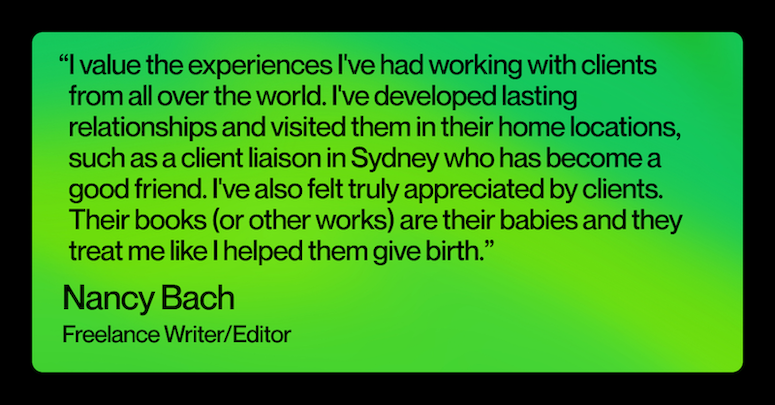
The clients you make as a freelancer can be long-lasting. Some freelancers work with the same clients for years, editing each of their books as they finish drafts or being their go-to editor for projects.
Find editing opportunities on Upwork
If you’re interested in becoming a freelance editor, you can sign up for Upwork, create your Upwork profile, and start submitting proposals to editing jobs that fit your skills and experience. Earn positive reviews from clients and build your portfolio. Over 30 percent of Fortune 100 companies rely on Upwork to hire the freelance talent they need. Start connecting with authors, publishers, bloggers, and business owners who are looking for your skills and expertise.
If you need help perfecting your writing, consider hiring a freelance editor on Upwork.
Upwork is not affiliated with and does not sponsor or endorse any of the tools or services discussed in this article. These tools and services are provided only as potential options, and each reader and company should take the time needed to adequately analyze and determine the tools or services that would best fit their specific needs and situation.

.avif)

Author Spotlight

Cassie is a storyteller and content creator with over eight years of experience helping brands communicate to their customers through different channels. She enjoys finding new coffee shops to work from and spending time in nature with her dog, Sweeney.