Why Curiosity Drives Stan's Success as a Creative Professional

.png)
.avif)
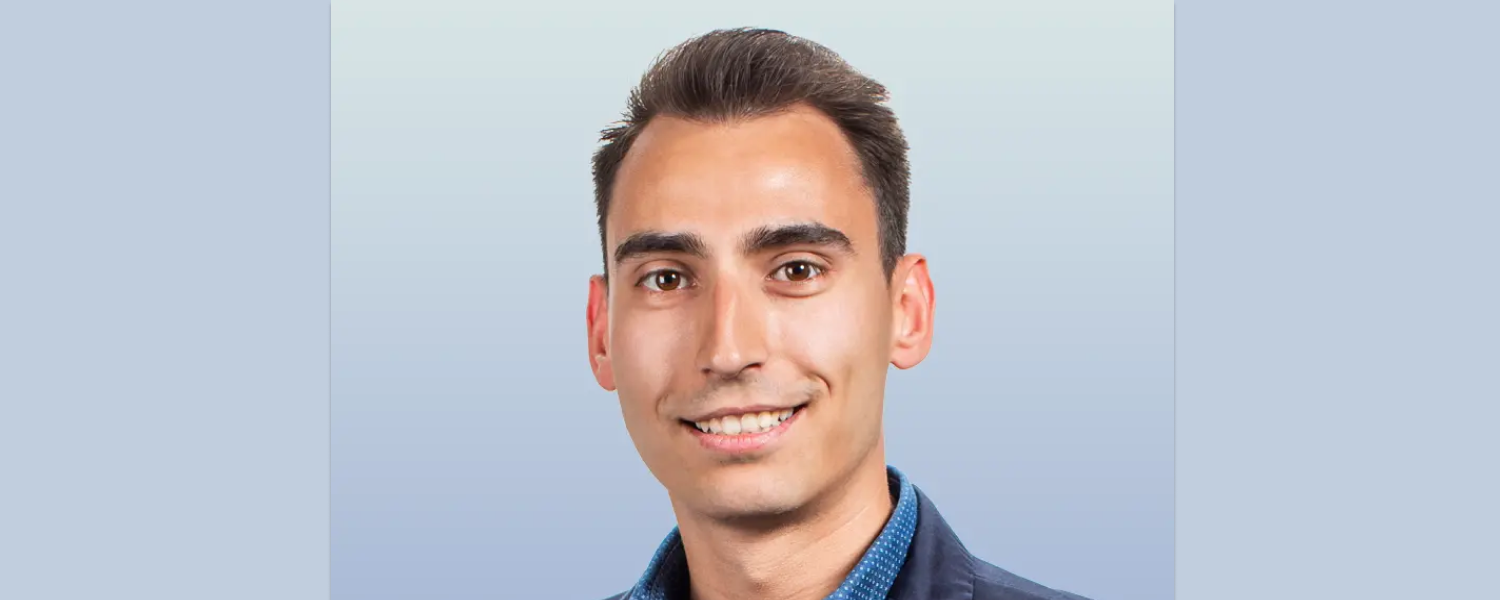
More than 10 years ago, Stanislav “Stan” Slavev convinced his first employer—also, coincidentally, his last—to hire him even though he hadn’t yet used the tools he’d need as a graphic and media designer. His winning pitch? He had an established track record of figuring out how to make things work.
“Before I’m a designer, before I’m a creative professional, I’m a problem-solver,” Stan said. “I’m not afraid of a challenge and I’m very driven about improving every day. That’s my North Star.”
In an industry that’s constantly in motion, adaptability isn’t just a strength; it’s a survival skill. Led by curiosity and always ready for a good challenge, Stan has an entrepreneurial spirit that has helped him build a successful freelance business and stay ahead of the curve.
Keep skills sharp by following curiosity
As a teenager in Bulgaria, Stan was completely drawn in by Hollywood. “I love scary movies. I watched one behind-the-scenes movie that showed how they make the monsters. It was incredible to me that there was a step-by-step process.”
Driven to figure out how it all came together for himself, Stan quickly picked up skills in 3D animation and 3D modeling using whatever free tools he could find. However, what he really wanted was hands-on work to test his skills, solve problems, and earn money.
Stan landed his first freelance clients at the age of 17 while also supporting an early-stage startup as its lead designer. Shortly after, he left home to study business informatics in Austria and take the aforementioned design job. “I convinced them it would be fine—and it was,” Stan recalled.
Initially, his job mostly involved making banners with a mix of Flash and static or GIF images for ads. “Then Flash died and we moved to HTML5, a whole new challenge with a whole new tool,” he recalled. “Before long, I was teaching my coworkers the skills I was learning.”
That rapid skill cycle has become the norm. The half-life of skills has been shrinking for decades and it’s shrinking more and more rapidly. According to a 2023 survey by edX, executives believe nearly half the skills that exist in their workforce today won’t be relevant in 2025.
But when you’re always asking questions and testing new things, the jump from one change to the next becomes much smaller. “For me, it’s fundamental to find the solution myself, rather than waiting for something to happen,” Stan said.
To that end, Stan has also tried different business models: as an independent professional, as an agency owner, and as a production partner with other agencies. “At different times, I’ve been more or less focused on different segments of the creative field,” he said.
After leaving an agency he’d co-founded in Bulgaria, he decided to refocus on his own business.
“Upwork allowed me to build a lifestyle that matches my inner nature as a person and as a professional. It allowed me to meet with clients and people that changed my life personally and professionally. And just the idea of having the ability at any time to open my computer and find a new financial opportunity—that’s honestly amazing.”
Honing a long list of skills has its challenges, however. With a portfolio of work that spanned a wide range of skill sets, Stan found it difficult to convince potential clients of his expertise. He decided to pursue a niche in graphic and video development for paid advertisements. “Focusing on a niche was a pivotal change for me,” Stan said. “It became easier to explain and sell my services to clients, but I also saw more streamlined progress in my projects and processes.”
He also learned something else: Having a niche is a great way to get an introduction.
Stan has built strong relationships with a diverse group of clients, from enterprises like Microsoft to non-governmental organizations and personal brands. But entrepreneurs and startups have always been a bit of a sweet spot and, once he’s established trust with a new client, he’s found that a larger scope of work often follows.
“We share a mindset—entrepreneurs are problem-solvers, they’re proactive. It’s extremely valuable to my clients to have someone working alongside them who shares that mentality. I think there’s an interesting bridge of communication and trust that happens over such relationships.”
Build trust by solving problems
By pushing himself and his business in multiple directions, Stan has put himself in a variety of positions—not just piloting creative work or production but also engaging with different sets of responsibilities and perspectives. The result is a much more flexible approach to his work.
“I can put myself in my client’s shoes, as the owner of the company or a manager, and see things from their perspective,” Stan said. “Then I get back to my shoes and drive the train to get us there. I can see how to get to the endpoint.”
Three years ago, he connected with Suzan Brown, the founder of Token of Me, a startup whose product aims to capture biometric data related to being in flow—a productive mental state also known as “being in the zone.”
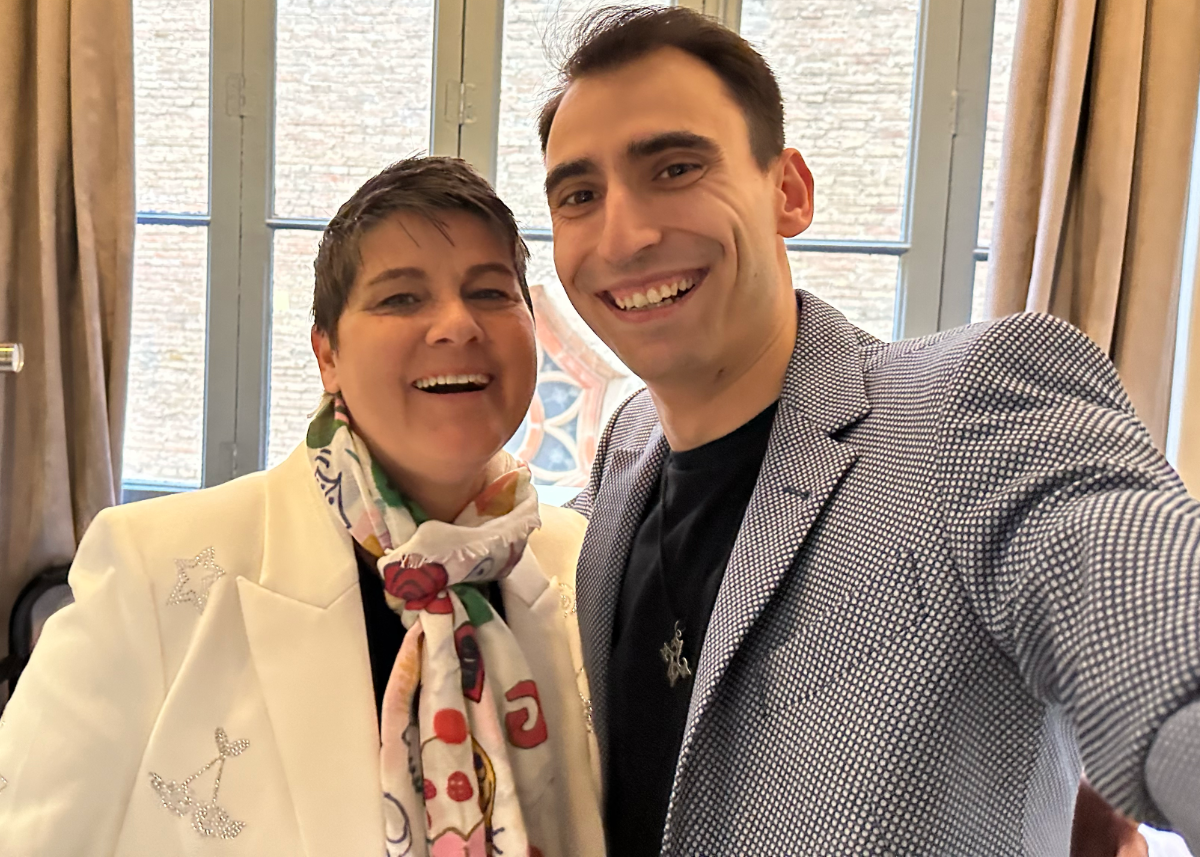
Stan and Suzan meet in person—for the second time!—in Barcelona (2024)
“At first the project was vague and I asked myself, ‘What does she actually need?’ It’s since become the most life-changing project for me,” Stan explained. “I’ve been through many different fronts on the creative field—graphics, the website, videos, pitch decks, even product development. My client knows she can ask a question about anything creative and I can point to a solution.”
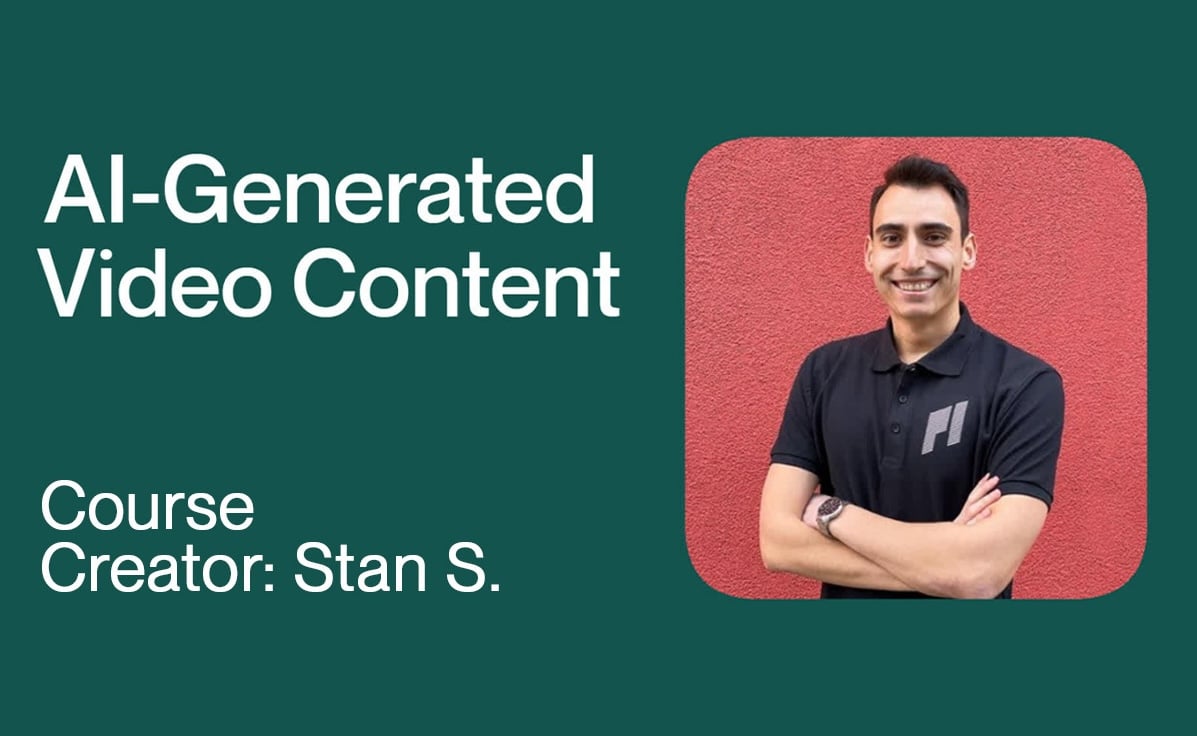
After taking on his first client-related AI project in 2023, Stan then took a deep dive into AI production when he connected with Virtual Fútbol Academy (VFA), a startup in the sports training industry. “I’m using AI to create avatars—digital twins of players on the teams they work with,” Stan said. “We’ve produced more than 300 videos so far and I’ve seen how valuable it is, for the startup as well as for their clients.”
3 tips to build professional resilience
To help fellow freelancers in Bulgaria establish themselves, Stan founded IAmFree—АзСъмFree in Bulgarian—a group that offers free courses and resources, including a YouTube channel. He’s also a community guide in Upwork’s group for Bulgarian professionals.
“I'm not afraid of a challenge and I'm very driven about improvement,” Stan said. “Every day you challenge yourself, every day the proposal needs to be a bit better, every day you're asking: What can I improve? For some people, this isn’t the way they want to operate. For me, I feel like myself and I love that.”
Even so, Stan suspects the choice between full-time employment and freelance work is increasingly less black and white than it’s been in the past. “I think freelancing is the way to go for anyone who wants a challenge. But I think the industry is starting to be somewhere in between,” he said.
“Self-employment is a skill you need to build wherever you work. You need to think of yourself as a product on the market,” he said. “The skills that you can develop as a freelancer are skills you apply everywhere in your professional life.”
Here are three activities Stan suggests that can help you stay agile and perform at your best in any situation:
1. Know when to invest in yourself
When should you spend money on new tools, new equipment, or training? You don’t want to overcommit yourself right at the beginning, but Stan feels it’s important to learn when it’s worth the investment for you.
“If you want to make money, you’ve got to spend money,” he said. “The upside of spending this money is that the value of that goes back to me. So in other words, I'm putting money in myself.”
Investing in a better computer or getting a new software subscription, for example, might give him better tools to use. “This means I can do more things. This means I can sell my service better or for more money or I can solve different problems,” he said. “Or if I pay for this tool, which is $10-20 dollars per month, maybe I can get an upper hand over another freelancer, so let me use that to get a $2,000 project this month.”
2. AI has reset the playing field so use it to your advantage
Many AI tools are web based, which gives them a low barrier to entry—most people can access them through their phone. And most of the tools give you the ability to use them and even produce something without paying. “Everyone is in the exploration phase of AI,” Stan said. “As a creator, give me the tools and I’ll play with them to see what’s possible.”
At the same time, AI has leveled the ground in a lot of industries. “There are no experts with 10 years of experience in MidJourney prompt engineering,” Stan pointed out.
“If you start with AI now, it will produce a compound effect in a couple of months or in a couple of years,” he said. To help other professionals learn about AI tools and developments, Stan is a community guide in Upwork’s AI and Machine Learning community group; he was recently interviewed for the group’s Inspiration Podcast about the role of AI in video editing.
“AI is a field where curiosity and proactiveness are being rewarded heavily. But few people are pushing one step deeper than just playing around with ChatGPT.”
3. Use AI to uplevel your business
Stan has a lot of strengths, but he also knows where he could do better. “I know marketing, I know how to structure video, I know how to write a script, I know how to use specific power words,” he said. “But I'm not a copywriter.” With AI, he can quickly refine a script, then shift his energy to everything else.
“Some mundane tasks can be automated with AI while others can be done 10x faster,” he said. “Other things just wouldn’t have been possible before.”
A future where creativity and problem-solving are paramount
Looking ahead, Stan is as excited about the opportunities to expand his business into AI services as he is about the possibilities for his clients—and himself.
“Within a very short period of time, I think we’ll have more ways to interact with technology in a more frictionless way, so the focus will be on our creativity and ability to solve problems rather than whether we know how to use a specific tool.”
Looking for clarity around an AI-related project? Connect with Stan directly to discuss your ideas or read about other talented professionals on Upwork.
.avif)
.avif)


