Freelancing After a Career Break: Steps for a Smooth Transition
Learn how to transition to freelance work after a career break, from updating your skills to landing your first projects and managing your schedule.

.png)
.avif)
Taking time away from your career has become increasingly common. Professionals step away from full-time jobs for various reasons, including health and well-being, caring for family, or pursuing education.
Going freelance after a career gap offers unique advantages. This guide explains how to transition successfully into independent work, from updating your professional presence to landing your first projects. You'll learn how to position your career break effectively, choose the right services to offer, and build a sustainable freelancing career that aligns with your goals.
Steps for transitioning from a career break into freelance work
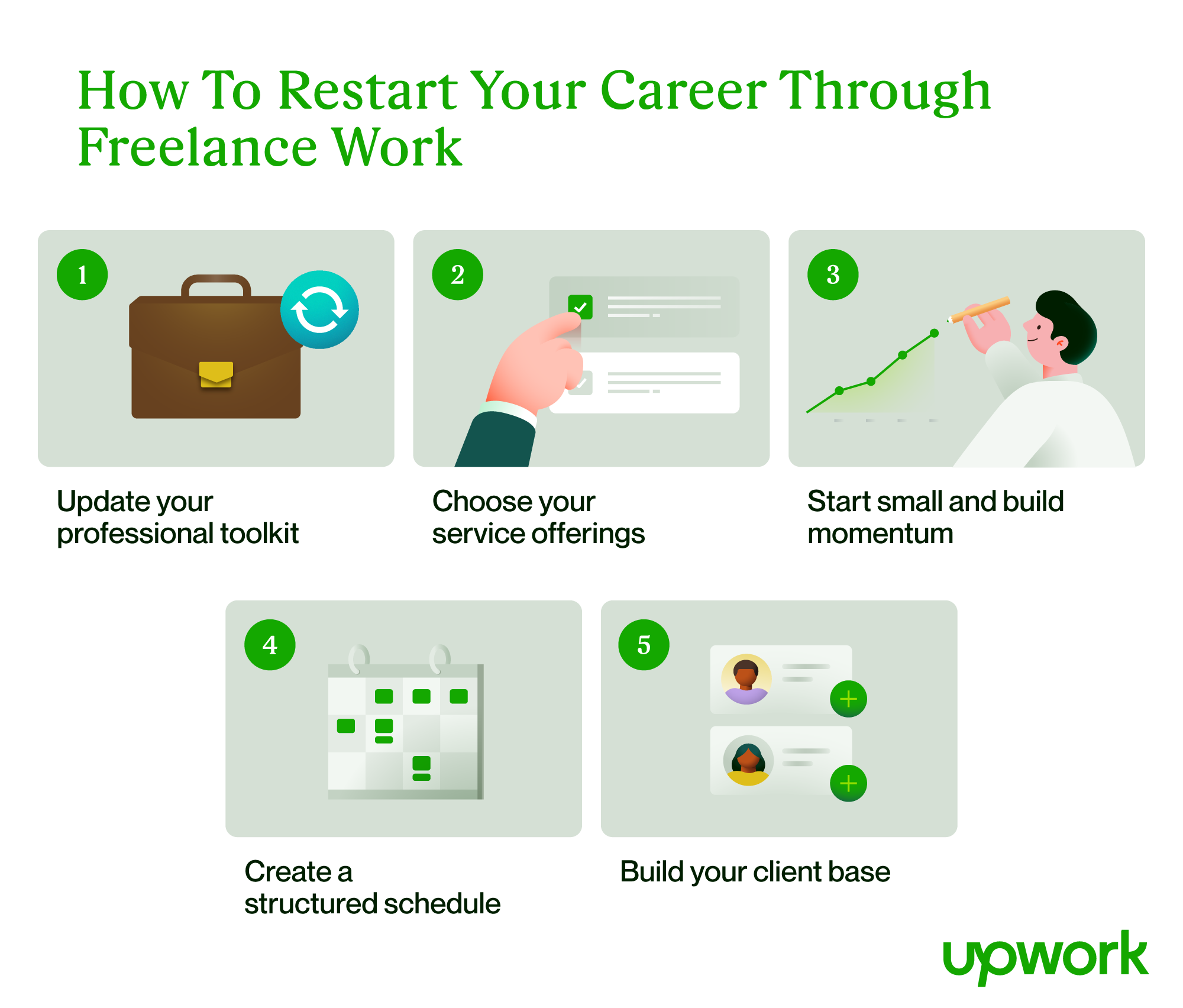
Returning to professional life through independent work offers unique advantages. Whether you're interested in getting back to work gradually or diving into full-time independent projects, these top tips will help you make it a success.
1. Update your professional toolkit
Before seeking your first independent projects, ensure your professional presence reflects your current goals and expertise.
Follow these steps:
- Refresh your skills. Review industry developments from last year and identify any key milestones in your field that occurred during your break.
- Polish your digital presence. Update your LinkedIn profile to highlight relevant experience and create strategic social media accounts that showcase your expertise.
- Gather your portfolio. Compile past work samples, even if they're from before your career break, focusing on pieces that demonstrate enduring skills.
- Document your growth. Include any courses, certifications, or volunteer work completed during your break that enhanced your professional capabilities.
2. Choose your service offerings
Start by identifying services that align with your proven expertise and current market demand. A freelance writer might focus initially on copywriting projects that match their industry knowledge and experience. For those with visual skills who know how to use graphic design tools, offering graphic design services can provide a strong foundation for building an independent business.
Consider a niche
If you can, start with a focused service offering—for example, specialized freelance writing for a specific industry—rather than marketing yourself as a generalist. This helps you stand out to potential clients and command higher rates.
For example, a general "content writer" competes with thousands of other professionals offering similar services. However, a "health care technology content strategist" immediately signals specific industry knowledge that health care tech companies need, such as HIPAA compliance and medical device documentation.
Consider the difference in these cover letter excerpts:
- General: "I'm a freelance writer with five years of experience creating various types of content."
- Niche: "I've created educational content for three major health care technology platforms, translating complex medical procedures into clear documentation that increased patient portal engagement by 45% and reduced support calls for medical staff by 25%."
See how one is more specific than the other? The "niche" example is likely to get you more work because it immediately demonstrates measurable outcomes and industry-specific expertise.
3. Start small and build momentum
Starting with targeted part-time projects helps you establish a strong foundation for your independent career. For example, a freelance writer might begin with two blog posts weekly to determine how long each project will take them, while a graphic designer could start with logo design projects since they tend to take less time than larger, more complex engagements.
Then, test out different project types to find your sweet spot. A web developer who started with some quick-turnaround website updates might expand into longer-term freelance projects, while a content strategist could go from a few one-off assignments to ongoing retainers.
These measured approaches to freelance work let you fine-tune your hustle without becoming overwhelmed.
4. Create a structured schedule
A set work schedule does more than organize tasks—it creates essential boundaries between your work and personal life, especially if you work from home and your office is steps from your living room. Setting start and end times for your workday helps prevent the "always on" mindset that often leads to burnout among independent professionals.
A clear work schedule also helps you maintain momentum and manage client expectations. Here are some tools that can help streamline your workflow:
- Time tracking. Toggl Track helps you monitor project hours and identify your most productive periods.
- Project management. Trello simplifies your time organization with visual task boards.
- Calendar management. Calendly lets you and your clients schedule meetings without the back-and-forth.
- Focus tools. Forest helps you maintain concentration during dedicated work blocks.
5. Build your client base
Start by optimizing your Upwork profile to attract potential employer attention. Focus on projects that match your expertise level—many successful independent professionals build positive referrals by beginning with smaller freelance jobs that are not overly challenging.
Here's how to build a strong foundation for client relationships:
- Perfect your profile. Showcase past achievements, clearly outline your services, and highlight any specialized skills or industry expertise that sets you apart.
- Start with smaller projects. Take on manageable freelance jobs that let you deliver exceptional results while building your confidence and client feedback.
- Engage strategically. Respond promptly to project invitations, customize your proposals, and focus on opportunities that match your expertise level.
- Follow up consistently. Check in with clients after project completion to maintain relationships and encourage referrals for additional work.
- Track your outcomes. Document project successes and client testimonials to strengthen your profile and attract higher-value opportunities.
- Expand thoughtfully. As you build positive feedback, gradually increase your project scope and rates to align with your growing expertise.
Career break FAQ for freelancers
Taking time away from professional work is more common than you might think. Here's what the data tells us about career breaks and returning to work as an independent professional.
How long do most professionals pause their careers?
Career break durations vary widely based on individual circumstances. You could step away for six to twelve months for personal health or professional development, or take several years to focus on family care or childcare responsibilities.
What matters isn't the duration—it's how you use your time and position your experience when returning to professional work. You can build a thriving career on your own terms after a career break of any length.
What makes independent work ideal after a break?
Independent work offers unique advantages for professionals returning to their careers. The flexibility to choose projects and set your schedule eases the transition back to professional life. Starting with smaller projects lets you build confidence while maintaining work-life balance, which is crucial to personal well-being and career success.
How can I explain my career gap to potential clients?
Focus on framing your career break in terms of acquired skills and perspective. For example:
"During my two-year break caring for my family, I enhanced my project management skills by organizing a successful fundraising campaign and learned new design software through online courses."
Here's how to position your break effectively:
- Highlight relevant activities. Discuss volunteer work, courses, or personal projects that demonstrate your continued engagement with your field.
- Focus on outcomes. Emphasize skills gained or strengthened during your break rather than just explaining the gap.
- Connect to client needs. Show how your unique experience brings fresh perspective to projects.
Your next chapter begins now
Your career break doesn't have to be a setback—it can be valuable time to prepare for your next professional evolution. Plenty of independent professionals have successfully transitioned after career breaks and even built thriving businesses that better served their goals and lifestyle.
Ready to launch (or relaunch) your freelance business? Clients can hire freelancers on Upwork for diverse projects, and freelancers can find freelance jobs on Upwork. Get started today.

.avif)

Author Spotlight

Upwork is the world’s largest human and AI-powered work marketplace that connects businesses with independent talent from across the globe. We serve everyone from one-person startups to large organizations with a powerful, trust-driven platform that enables companies and talent to work together in new ways that unlock their potential.