How To Create a Social Media Campaign That Delivers Results
Track engagement, build followers, and learn to run a successful social media campaign with our comprehensive guide.

.png)
.avif)
A successful social media campaign doesn’t just go viral—it aligns with business goals, drives conversions, and builds long-term brand awareness. Social media platforms like TikTok, Instagram, and Facebook reach about 6.7 billion active users worldwide. Businesses that understand how to reach the right target audience have a real edge.
This guide walks through a flexible campaign framework you can use again and again. You’ll also see where freelancers can help with everything from content creation to ad management. Let’s build a step-by-step strategy that helps your brand grow.
Build a foundation for campaign success
Every great social media marketing campaign starts with smart planning. Before you dive into posts and hashtags, take time to:
- Define your audience. Build personas using demographics, behaviors, and social listening. Know where your target audience spends their time and what type of content they engage with.
- Conduct a competitive analysis. Review other campaigns in your space. Which social networks do they focus on? What kind of content formats do they use? What campaign goals are they tracking?
- Set your budget. Allocate spend for organic efforts and paid social media advertising. Freelancers can help you stretch that budget further by offering flexible, specialized support.
- Choose the right social media management tool. Platforms like Hootsuite or Buffer simplify scheduling, analytics, and multi-channel publishing.
Map out the campaign framework
You’ll need to look at every angle of your social media campaign to strike the right balance. You should already have a solid grasp on your ideal audience, which will help you map out the best framework.
1. Plan and align on goals
Start by setting clear, measurable campaign goals. These should tie directly to your business goals, such as increasing website traffic, growing social media presence, or launching a new product.
A good campaign goal should follow the SMART goal format (specific, measurable, attainable, relevant, and time-based). Use the SMART framework to set goals and KPIs like:
- Increase TikTok followers by 20% in 3 months
- Generate 500 clicks to a landing page through Instagram Stories
- Achieve a 5% click-through rate (CTR) on promoted LinkedIn posts
Freelance strategists or social media consultants can help you identify realistic benchmarks and marketing goals.
2. Produce high-impact content
Once goals are in place, it’s time to build your content strategy. Use a content calendar to plan visuals, captions, and calls to action across different platforms.
Freelancers can plug in for:
- Content creation. Designers for Reels or carousel posts, copywriters for captions and CTAs, and video editors for TikTok or Instagram.
- Brand asset development. Ensure every piece aligns with your brand voice and visuals.
Incorporate user-generated content (UGC) to increase credibility. A well-timed piece of UGC can outperform branded content in engagement and trust.
3. Distribute, test, and optimize
Get strategic with how and when you publish social media posts:
- Post natively or schedule with a social media management tool.
- Consider posting times based on platform algorithms and real-time user behavior.
- Repost high-performing UGC with hashtags and brand mentions.
Freelance specialists can help with:
- Paid ads. Media buyers who understand platform-specific targeting can help you maximize your return on investment.
- Community engagement. Moderating comments, responding to DMs, and boosting social media engagement can help your social media stay on-brand and interactive.
Choosing the right social media platforms to target
Choosing a social media platform for your marketing campaign is essential. Today, you can incorporate a number of social media platforms into your campaign. However, these platforms differ in terms of the number and demographics of users, usability, ad structure, and other aspects. The most popular social channels include Facebook, TikTok, Instagram, LinkedIn, and X (formerly Twitter).
You should select a social platform that suits your needs. A social platform like Facebook allows individuals to connect with friends, relatives, and even different brands. X helps users stay updated with the latest trends, while LinkedIn is mainly for professionals and organizations.
If you have lengthy messages, you may prefer Facebook over X (the platform has a 280-character limit, which may force you to break down the message into smaller bits). Nevertheless, you can still use X to create hashtags and other smaller messages. You can also use Instagram to share pictures or use TikTok to share videos of your brand.
Always ensure that the platform you choose has demographics that reach your target audience. For example, the largest age group for Facebook, TikTok, and X is 25-34 year-olds. Using information like this in your campaign can help you focus your messaging on your target audience.
The evolution of social media algorithms
Social media algorithms are continuously redeveloped, shaping what content appears in users’ feeds. Marketers must understand the latest algorithmic changes to ensure their posts are optimized for visibility. For instance, Instagram’s algorithm prioritizes engagement and relevancy, so your posts need to foster meaningful interactions to boost reach.
Similarly, TikTok’s algorithm thrives on virality, emphasizing the importance of timing and trending topics. Adapting your social media content strategy to these algorithms ensures your campaigns stay effective and visible to your target audience.
Use social listening to fine-tune your social media strategy
Social listening goes beyond monitoring mentions of your brand—it involves tracking conversations around specific keywords, hashtags, and trends relevant to your industry. By analyzing social media conversations, you gain invaluable insights into your target audience’s needs, pain points, and desires.
This information can be used to fine-tune your social media strategy, adjust your content calendar, and stay ahead of competitors. Platforms like Hootsuite and Sprout Social offer tools that help businesses listen in real time, giving you the competitive edge needed to craft engaging content that resonates with your audience.
Popular social media campaign tools
These popular social media tools can help you plan, publish, and analyze campaigns across multiple platforms with greater efficiency.
Buffer
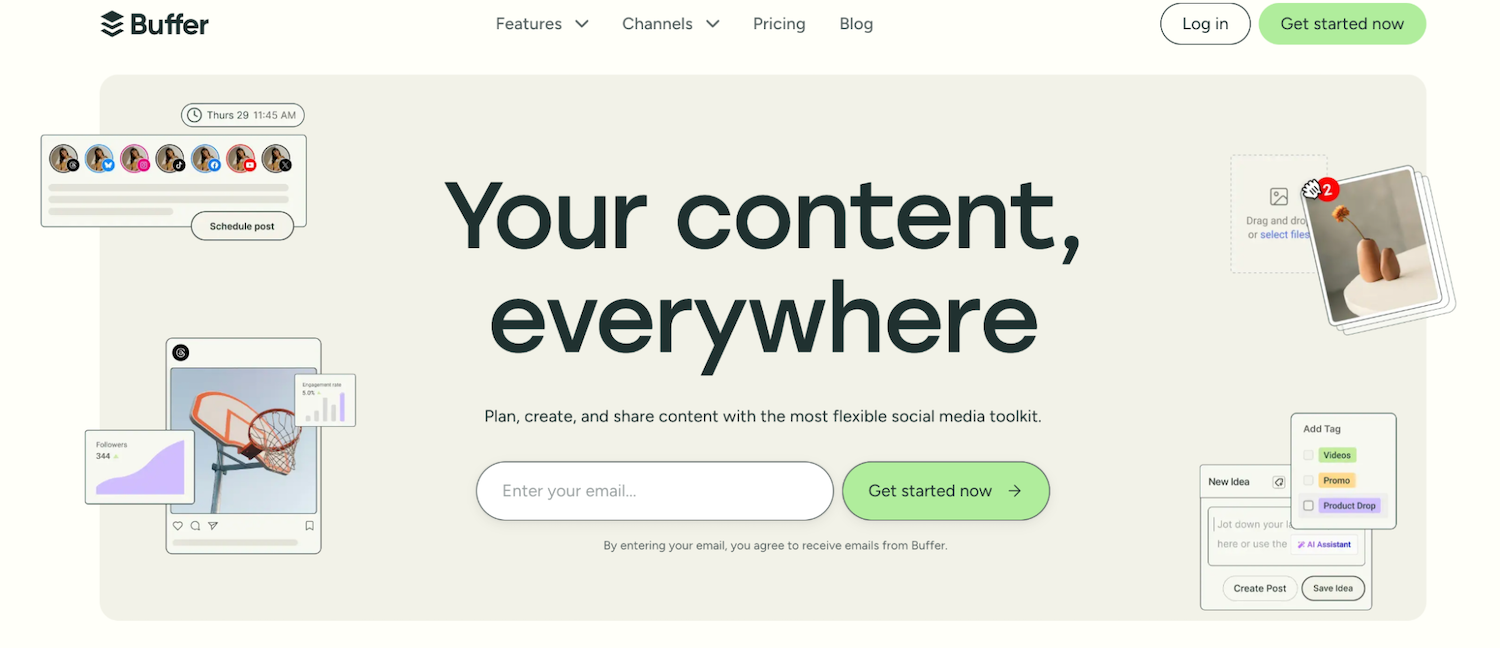
Buffer allows you to create and publish content, analyze social posts and generate reports, engage your target audience, and build customized landing pages. Furthermore, you can use Buffer to add and monitor several social media accounts.
You can access Buffer’s basic features in the free version. You need one of the paid pricing plans to access more advanced options.
Hootsuite
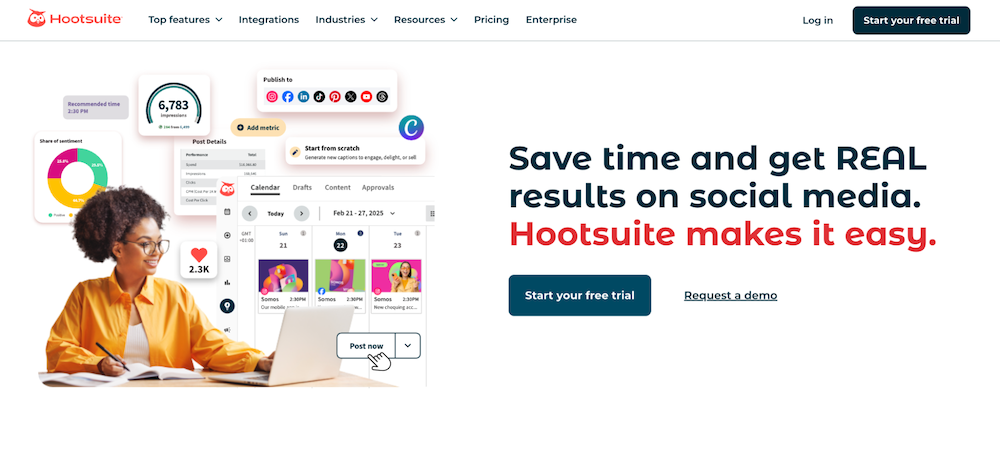
Use Hootsuite to target customers on multiple social platforms. You can also collect and analyze data easily using the incorporated analytics tool. As a result, measuring your social campaign’s return on investment (ROI) is easy. Hootsuite also acts as a scheduling tool so you can write posts and specify the time you’d like them to go live.
Sprout Social
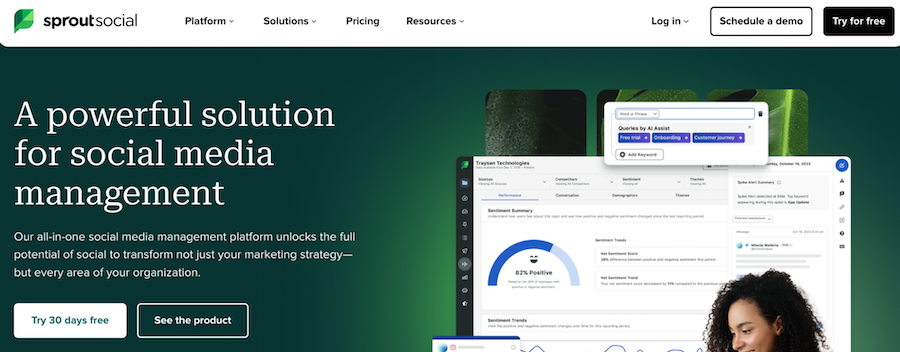
Sprout Social looks to simplify your social media campaign by providing marketing tools for scheduling and publishing content. Sprout Social also provides insights and reports about your social media activities. The software’s user-friendly dashboard lets you monitor the different aspects of your campaign on a real-time basis.
Using social media analytics to optimize your campaigns
Social media analytics are more than just numbers—they're a roadmap for improving your overall social media marketing strategy. Metrics like engagement rate, click-through rate, and conversions reveal which social media posts resonate with your target audience and which ones fall flat.
Instead of only tracking basic numbers, dig deeper into the why behind the performance. Are certain types of content—like short-form videos or carousel posts—driving more interactions? Are specific hashtags consistently increasing reach across social networks? This kind of insight helps you refine your content calendar, adjust your campaign goals, and better align with your audience’s preferences.
Platforms like Google Analytics, Hootsuite, and Facebook Insights make it easier to compare post performance across different platforms and campaigns. Use these tools to test different formats, calls to action, and publishing times. The goal isn’t just to report on campaign performance—it’s to continuously improve it. Teams that prioritize social media analytics create more engaging content, sharpen their targeting, and get closer to their marketing goals with each campaign.
How social media drives conversions
While brand awareness is a common goal for many social media campaigns, businesses should also focus on driving conversions through their social platforms. Conversions could mean different things, from increasing website traffic to generating sales or gaining email subscribers.
By using a clear call to action (CTA), creating targeted offers, and leveraging social media advertising, brands can move beyond mere awareness to achieve tangible results. Incorporating conversion tracking and key performance indicators (KPIs) ensures that your campaigns are designed both to engage and to generate measurable business outcomes.
Navigating influencer partnerships
Influencer marketing has become an integral part of successful social media campaigns, especially for reaching niche audiences. Collaborating with influencers who align with your brand values and target demographic can help increase your credibility, engagement, and brand awareness. Influencers already have the trust of their followers, making their endorsement powerful.
Whether through product reviews, sponsored posts, or collaborations, influencer partnerships offer businesses an opportunity to tap into new audiences and drive results quickly. Developing a strategy for selecting the right influencers and tracking their impact on your social media marketing campaign is essential for optimizing ROI.
User-generated content (UGC) for building authenticity
User-generated content (UGC) plays a pivotal role in establishing brand authenticity and trust. When your followers or customers share their experiences with your products or services, it adds a layer of social proof that can significantly influence purchasing decisions. A successful social media campaign often incorporates UGC to build a stronger connection with your audience, encourage engagement, and amplify your reach.
Highlighting real-life testimonials, reviews, and photos shared by customers humanizes your brand and increases its credibility on platforms like Instagram, TikTok, and Facebook.
Social media marketing trends to watch
As social media platforms evolve, so do the strategies brands use to connect with their audiences. To keep your campaigns effective, stay up to date with trends reshaping the social media marketing landscape:
- Short-form video. TikTok, Instagram Reels, and YouTube Shorts dominate social media content. To stay relevant, brands need to prioritize visual content that captures attention quickly and feels native to each platform.
- Social commerce. Shoppable posts are turning social channels into digital storefronts. Social media platforms are becoming powerful sales channels, not just spaces for brand awareness. This shift is changing how marketing goals are set and measured—conversions can now happen in real time without ever leaving the app.
- AI and automation. There are tools now that help write captions, schedule posts, and analyze performance faster. AI tools are helping marketers scale their efforts and make data-backed decisions faster. Adapting to these changes can give your brand a competitive edge and ensure your social media marketing strategy stays future-proof.
Campaign support: When to bring in freelancers
It can be hard for internal teams to do it all while keeping up with trends. Scaling your social media strategy often means tapping into freelance talent. Consider help from marketing professionals and freelancers when you need:
- Overflow support during launches
- Help with niche platforms (e.g., TikTok, LinkedIn)
- Creative variety for different social media platforms
- Specialized skills like SEO, animation, or influencer marketing outreach
Build out a freelance talent bench you can activate during peak periods or for future campaigns.
Get help from a social media expert
Due to the popularity of social platforms like Instagram, Facebook, and X, a social media campaign is one of the best ways to reach your target audience. You can deliver your message to thousands of social media users in a short time and at little cost. You can also use analytics to track your progress and make adjustments.
Creating a social media campaign can be fun and interactive. You’ll need to define your social media campaign goals, choose the right social media channels, develop and publish content, and track your progress.
If you are searching for social media experts to help kickstart your campaign, or if you are a social media professional looking for work, you can easily get started by finding talent or work on Upwork today.
Upwork is not affiliated with and does not sponsor or endorse any of the tools or services discussed in this article. These tools and services are provided only as potential options, and each reader and company should take the time needed to adequately analyze and determine the tools or services that would best fit their specific needs and situation.

.avif)

Author Spotlight

Upwork is the world’s largest human and AI-powered work marketplace that connects businesses with independent talent from across the globe. We serve everyone from one-person startups to large organizations with a powerful, trust-driven platform that enables companies and talent to work together in new ways that unlock their potential.