What is Generative Engine Optimization?
Generative Engine Optimization (GEO) is an important marketing strategy that gets your website cited by AI search tools. This guide breaks it down.

.png)
.avif)
Generative Engine Optimization (GEO) is all about optimizing web content so artificial intelligence search tools source and cite your work.
These AI-driven tools, which include Google AI Overviews and AI Mode, ChatGPT, Claude, and Perplexity, work differently from traditional search engines. They’re becoming increasingly popular, too—which means marketers and content creators need to understand the ins and outs of GEO.
Why GEO is necessary in 2025
I’ve focused on search engine optimization (SEO) for the better part of 15 years. During this time, I’ve heard about countless technologies that would “disrupt search”—from video to voice and even wearables. Ultimately, though, things like Apple Watches and Amazon Alexa speakers led people to traditional search results. We all kept Googling, and SEO didn’t change too drastically.
Unlike those earlier technologies, though, AI really has changed how we find information. Over 70% of people use AI to find information … and they’re increasingly staying in the AI interface, not clicking through to individual websites.
In fact, SEO software company Ahrefs found that an organic search result that includes an AI Overviews section leads to a 34.5% drop in website click-throughs.
Despite that, it’s still important to have your site and its content picked up by AI-driven search engines. Repeated brand mentions and increased website visibility can drive interest in your company, even if website clicks happen less frequently or later in the customer journey.
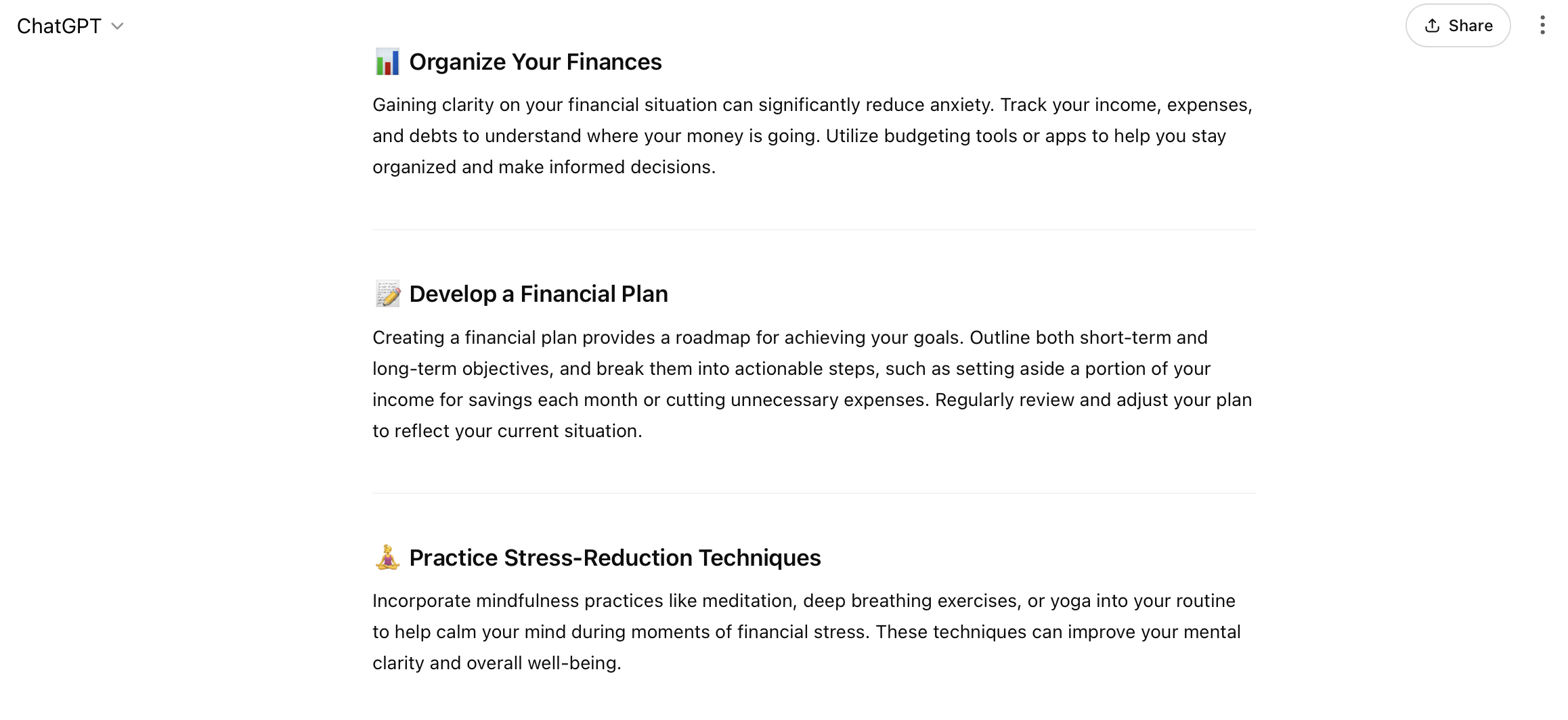
And while website citations in ChatGPT aren’t always readily apparent, they do exist, as illustrated in the following screenshot.

Traditional SEO vs GEO
The AI search shift has pros and cons.
Traditional Google search engine results pages (SERPs) prioritize large e-commerce sites and news aggregators. This makes it hard for smaller companies and publications to appear in search results through organic SEO alone.
According to a report from Semrush, AI tools are doing a better job at serving up results directly from brands and individual subject matter experts. The Semrush report found that:
- ChatGPT prefers to reference sites owned by specific brands. For example, if you ask ChatGPT about Nike shoes, it’s more likely to show you results from the Nike website vs Amazon.
- Perplexity often references sites that have good structured data on each page and offer technical information or resources.
This shift can make visibility a little easier for smaller brands and subject matter experts publishing informational content.
And while AI tools still can’t read in the same way a person does, they’re better at parsing natural language than traditional search engines are.
This is because of the natural language processing (NLP) technique used when training AI tools like ChatGPT. NLP gives AI algorithms and crawlers the ability to interpret more subtleties in human speech patterns.
Look at how each type of search tool might interpret the same query:
Search engines vs AI search tools: how the results compare
Will traditional search engines go away?
Traditional search engines won’t be going away any time soon. Semrush found that Oracle, the company with the most traffic from ChatGPT, still gets fewer than 10% of its visitors from OpenAI tools. Traditional search engines are still a massive traffic driver—but you need to consider AI as a digital marketing channel along with social media, YouTube, podcast searches, and more.
7 GEO strategies
You don’t have to scrap all of your marketing efforts or begin reinventing the wheel. It’s all a matter of understanding how to make your website accessible to AI crawlers—and presenting information in a way that aligns with how people use AI chat tools.
1. Build a good technical SEO foundation
You can have the best website content in the world—but if you put it on a poorly built site with bad code and lots of dead links, your SEO will suffer. A good technical SEO foundation is essential for both traditional SEO and GEO.
A technically sound website will have:
- An accessible sitemap.xml file
- A correctly structured robots.txt file
- An SSL certificate
- Compressed, lightweight images that load quickly
- Good mobile usability
- Easy-to-navigate page layouts
- Few plug-ins and trackers
- Backlinks from reputable domains
- Few, if any, broken links
- Appropriately configured redirects
If you’re not confident that your website ticks the above boxes, stop here. You’ll want to hire an SEO consultant to audit your website and address any big issues before investing in other GEO efforts.
2. Use proper website schema markup
Next, make sure that your website uses the right kind of structured data, also called schema markup.
Schema markup is a set of code attributes you can add to your website and label specific things. These can include product prices, location addresses, author names, and more.
By adding the right schema attributes to your site, you can more efficiently communicate your location, products, prices, name, and other data to search engines … or AI tools.
Yes, a crawler can find this information on your site without using schema. But adding structured data speeds up the process and helps to make sure the correct information about your business appears in search results or AI outputs.
3. Focus on long-tail keyword research
Gone are the days of targeting keywords that were literally one word. When people use AI, they’re asking questions in the middle of a conversation, so the “keywords” you need to target may look like full sentences!
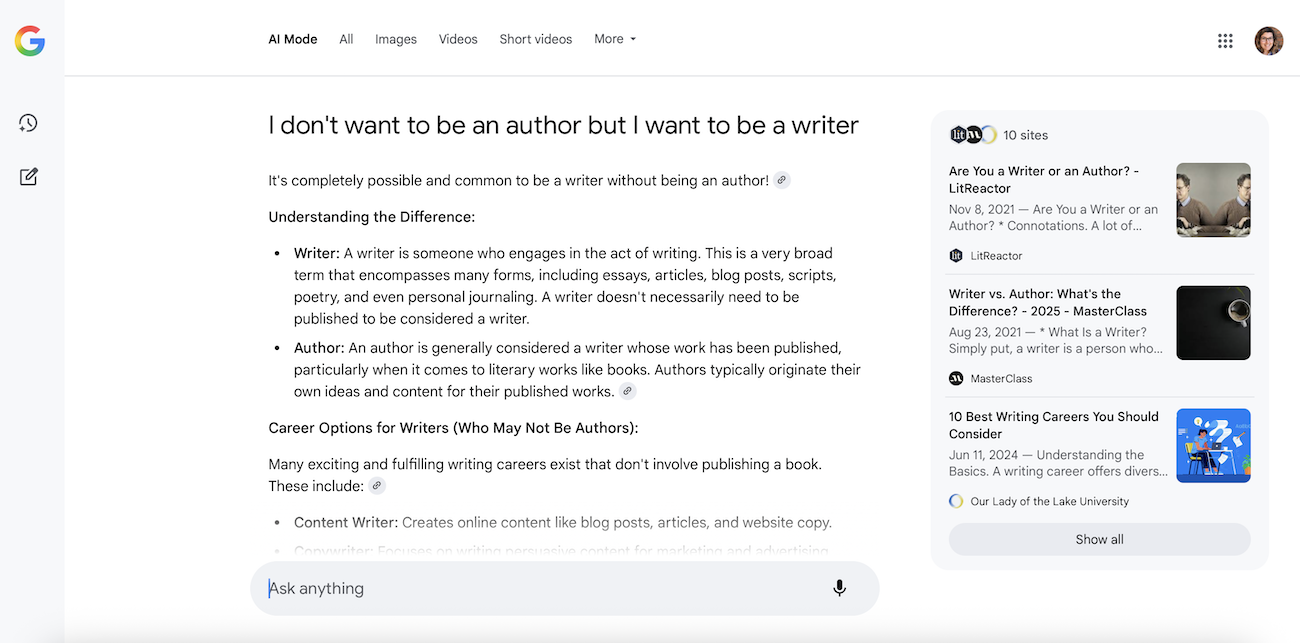
Targeting long-tail keywords—highly specific search terms that contain multiple words—is the best approach for GEO content marketing. This means you’ll want to:
- Come up with very specific phrases that a customer might type when looking for a service or product you provide
- Add FAQ sections in pages that show common questions immediately followed by a clear answer
- Always provide full answers to questions, even if the question isn’t stated verbatim on your page
- Use short, concise paragraphs that can be easily repurposed by an AI tool as part of its search answer
- Liberally use subheadings labeled as H2 or H3 headers—placing them above specific definitions, answers to questions, tables, and more
- Write authoritatively and provide clear solutions (use “should” more than “could”)
- Continue to avoid keyword stuffing, which was already a bad SEO strategy
4. Create conversational content that’s easy to read
People like AI chat tools because they’re easy to use and enjoyable to read; you can talk to it just like you would a person, and get information delivered to you in the same manner.
By structuring your content in a way that feels conversational, you can better align your website with what generative search tools (and users) want. While tools like ChatGPT typically rewrite information into a new answer and provide citation links, the AI Overview lifts sentences out of content verbatim and squishes them into new paragraphs.
You might even see tangentially related content showing up in AI search results. This is because AI tools “fan out” from someone’s initial query and try to pull in related information. So if you can naturally segue from one topic to the next (either on the page or via a link), you’re already speaking the AI search algorithm’s language.
5. Optimize content for position zero
Traditional Google SERPs contain different features that can put you at the top of a page—even above the ads! Landing in one of these spots is called ranking for position zero.
One of the best examples of position zero is the Google featured snippet. It’s the paragraph of text that appears at the top of search results and contains a direct answer to what you’re searching for.

This snippet has now been replaced by the AI Overview on many SERPs.
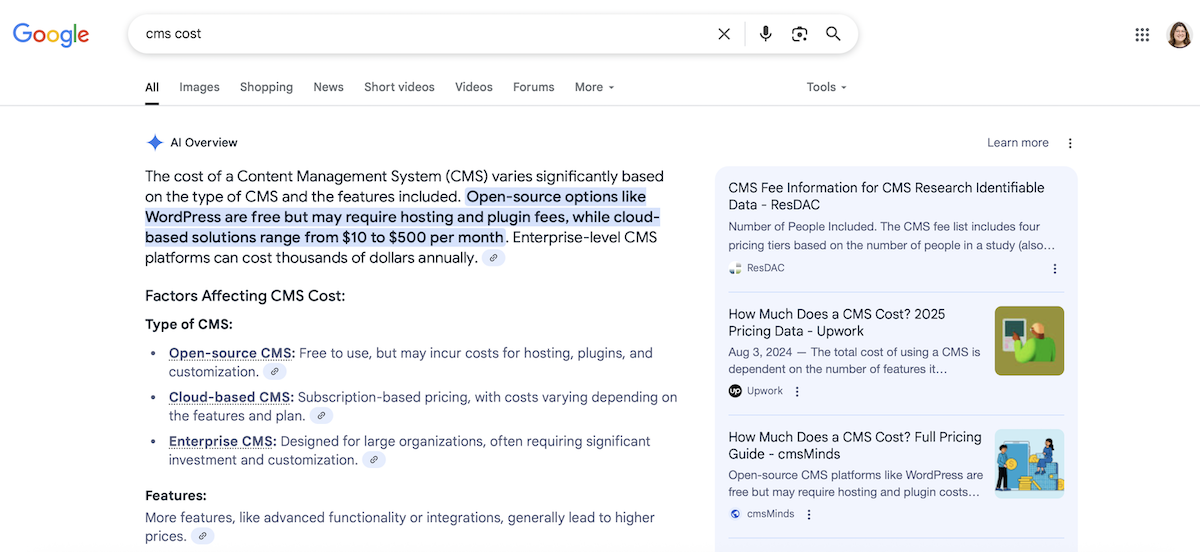
In order to land in the snippet—and now the AI Overview—you need to focus on creating content with good EEAT. This acronym is short for experience, expertise, authoritativeness, and trustworthiness.
Demonstrate good EEAT by making sure that your webpages:
- Are written by someone with documented experience on a topic
- Exist on a well-respected, healthy domain that provides a good user experience
- Is regularly updated to be accurate and relevant
- Matches the user intent for a keyword—what searchers want to find
- References reputable sources
- Contains clear definitions
It’s also helpful to include a lot of good semantic keywords. These are contextually relevant terms that relate closely to your primary keyword and help machine learning algorithms better interpret your content.
6. Create content in multiple formats
Creating content in multiple formats—particularly text, video, and still images—gives you more than one way to appear in a generative AI engine’s search results.
Chat GPT and Perplexity both include multimedia results in some search queries, including both images and videos that you can watch right in the chat.

This means that in order to maximize your chances of appearing in an AI-generated search result, it’s important to create different types of content.
You’ll want to:
- Always put your logo or brand name on images and in videos, as the AI may not include a link to your website
- Host videos on a service that provides a universally embeddable player, such as YouTube or Vimeo
- Focus on answering specific questions (those long-tail keywords) in both text and video content
- Use target keywords—the terms you want the AI to associate with your content—in video titles
7. Prioritize high-quality content by humans
AI search algorithms prioritize content written by people—as counterintuitive as that may sound.
A big part of both GEO and modern SEO is something called information gain. When you add information gain to a search result, it means that your content provides something that competitors’ webpages don’t. Of course, this added information has to be relevant—you won’t win the GEO game by talking about sneakers in an article titled “How To Care for Your Crested Chameleon.”
AI content creation tools take information that’s online or in their training data and mix up concepts and words in new ways using probability. If an idea doesn’t already exist, it’s unlikely to be generated by the AI. This technology doesn’t create new ideas.
Therefore, to really add new information to a search result, a person must be involved—whether that’s you or a freelance writer you hire to help.
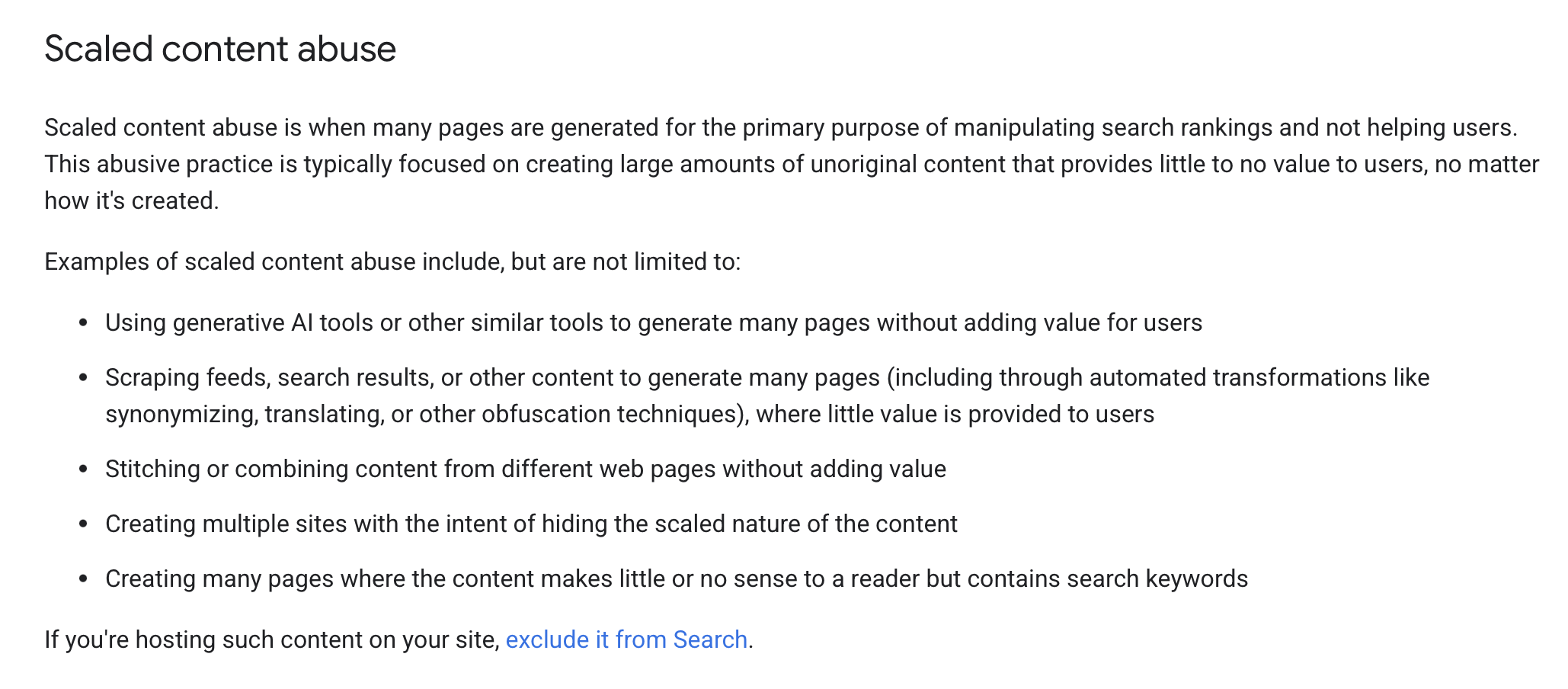
And if you’re using AI to create content “at scale”—aka in massive amounts that can be produced and published faster than a person could do it—you’ll actually run afoul of Google’s developer guidelines on scaled content abuse. This type of high-volume AI-generated content production can be considered spammy … which will actually bring your site down in search results, not up.
That said, you can still use AI in your content production workflow. Think of it as a collaborator, not a producer, and use it for things like:
- Conducting web searches
- Organizing and sorting datasets
- Brainstorming headlines
- Creating outlines (that a person then enhances for information gain purposes)
- Proofreading and spell-checking
- Suggesting internal and external links
- Analyzing content readability
Remember, though, that generative AI platforms can hallucinate, or produce results with factual inaccuracies. It’s important to always double-check what an AI generates for you, no matter how “confident” or correct it seems on the surface.
How to tell if your GEO efforts are working
Remember, the conversational nature of AI search results means that an increasing number of users are likely to stay in the chat—not click through … even if your content visibility is growing.
This changing search behavior means that we need to rethink metrics of success when it comes to GEO.
Gather other types of information
Rather than strictly relying on organic traffic and click-through rates as a measure of performance, I suggest:
- Tracking when and how new content is picked up by traditional and AI search engines (I’ve seen content land in the featured snippet, AI Overview, and ChatGPT results in just hours).
- Creating position tracking reports for both your standard target keywords and longer-tail questions that you think people may ask about the content. A growing number of SEO tools are letting users track ChatGPT response frequency and position.
- Updating “how did you hear about us?” fields on your contact forms to include popular AI tools
Filter Google Analytics results to show AI traffic
Even though clicks are down thanks to AI search results, it’s still worth tracking how much traffic you get from AI services. Google Analytics doesn’t offer an AI traffic report by default, but you can create one by following these steps:
- Go to the “Reports” section of your Analytics account
- Click “Acquisition” under “Life Cycle” and choose “Traffic Acquisition”
- Click “Add Filter”
- Set “Dimension” to “Session Source”
- Set “Match Type” to “Matches Regex”
- Enter the following regex from Search Engine Land:
--CODE language-markup--
^.*ai|.*\.openai.*|.*copilot.*|.*chatgpt.*|.*gemini.*|.*gpt.*|.*neeva.*|.*writesonic.*|.*nimble.*|.*outrider.*|.*perplexity.*|.*google.*bard.*|.*bard.*google.*|.*bard.*|.*edgeservices.*|.*astastic.*|.*copy.ai.*|.*bnngpt.*|.*gemini.*google.*$
When done, click “Apply.” The resulting graph will show you traffic from the listed AI sources—though it may show up in Google Analytics as “referral” or “unassigned.”
Improve your GEO strategy with freelancers
If just thinking about targeting a new type of search makes you feel like you’ve run a mental marathon, you aren’t alone. It’s a lot to take in—and it’s constantly changing. That’s overwhelming!
But if SEO isn’t your personal area of expertise, you don’t need to become a GEO expert overnight. SEO and marketing freelancers on Upwork make it their job to understand how AI search works, and they can help. Just log in to your Upwork account or sign up and post a job to find a freelancer with the right skills.
And if you’re a marketing consultant who’s confident you’ve cracked the code around GEO and AI optimization, you can offer your services to others who need help—sign in now to get started.
Upwork is not affiliated with and does not sponsor or endorse any of the tools or services discussed in this article. These tools and services are provided only as potential options, and each reader and company should take the time needed to adequately analyze and determine the tools or services that would best fit their specific needs and situation.

.avif)

Author Spotlight

Emily Gertenbach is a B2B writer who creates SEO content for humans, not just algorithms. As a former news correspondent, she loves digging into research and breaking down technical topics. She specializes in helping independent marketing professionals and martech SaaS companies connect with their ideal business clients through organic search.