Aligning Your Tech Stack for Fast-Emerging Technology Adoption
Nearly all businesses are facing tough headwinds right now—but work innovators know how to leverage technology to help. Here’s how.

.png)
.avif)
The 2024 Work Innovators report revealed something interesting: All of our respondents are facing the same types of barriers to progress right now. What sets Work Innovators apart, though, is how they move past these challenges.
While our report looked at several different key hurdles faced by Work Innovators, one of the biggest barriers to innovation is the integration of new technologies. More specifically, the adoption of AI applications.
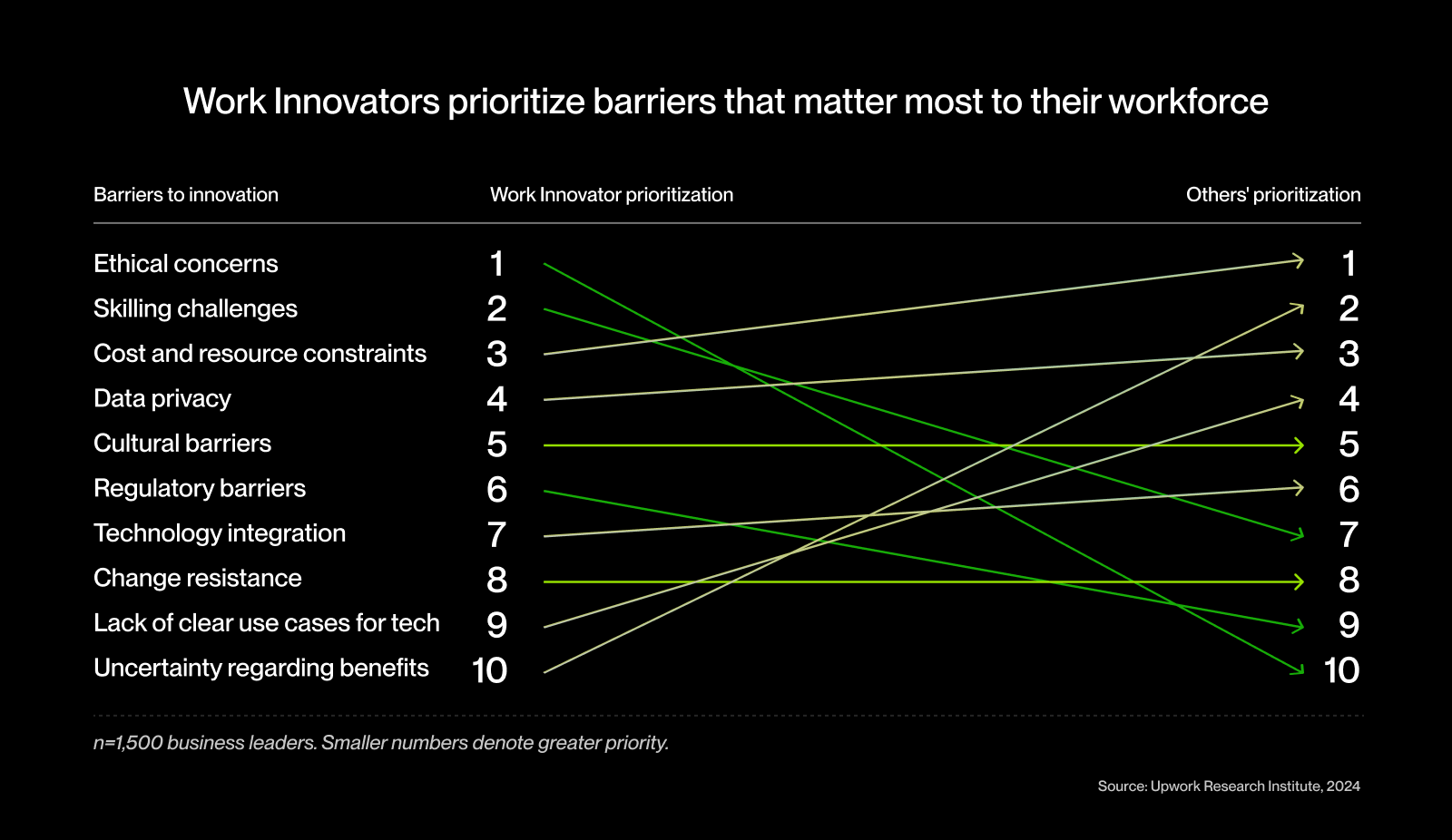
Artificial intelligence isn’t a plug-and-play technology
Yes, the hype is real when it comes to adopting AI models, natural language processing, and other machine learning technologies. This tech has the potential to be truly transformative in business. But rapid adoption can create more problems than it solves if you try to add AI into an environment that isn’t prepared for it.
The easy access to and relatively low cost of predictive AI tools, chatbots like ChatGPT, and API tokens for AI models might lead you to think that it’s easy to add AI capabilities into any company. But integration isn’t simply reliant on an organization’s ability to purchase and deploy tools.
Clean, organized, and cloud-based data is essential for deploying effective, responsible AI solutions. Our research shows that 26% of business leaders want to focus on innovation through the use of AI and other tools—but with only 48% of non-work innovators having what can be described as a mature cloud infrastructure, they may be headed down a frustrating path.

Unless, of course, they take a page out of the Work Innovators’ playbook.
How a Work Innovator’s approach to tech is different
A typical company tends to think about its tech stack as separate initiatives. They may choose different tools for different silos—one system for HR, another for project tracking, a third for support ticketing, and so forth. When a new technology comes along that seems interesting, they may try to pile it onto their stack and fit everything together after the fact.
Work Innovators, on the other hand, think about their tech stack as deeply integral to every other aspect of their businesses. Every year, we’re seeing that Work Innovators are first looking forward to new technologies, then taking a step back and evaluating where they need to invest in existing or supporting systems.
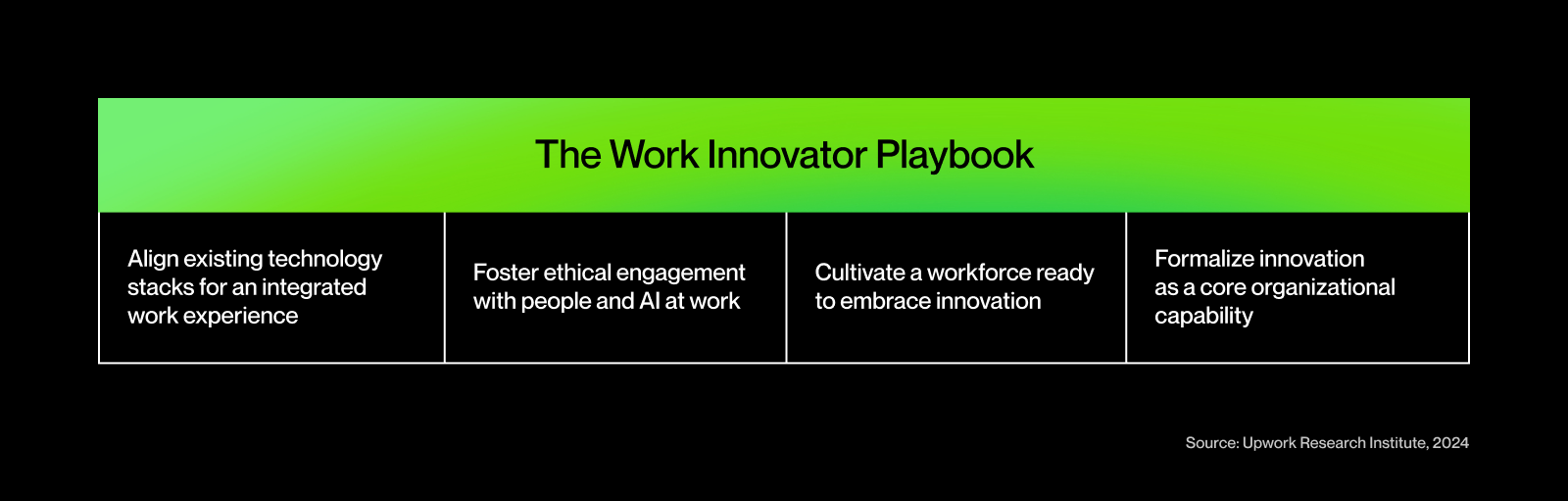
This may look like moving more data to the cloud, engaging consultants to identify the best available solutions, doing a complete tech stack audit to identify redundancies, and more.
Align your tech stack like a Work Innovator
While tech stack alignment may not be the only thing your organization needs in order to innovate (hiring for specific skills is essential, too), adopting a Work Innovator mindset toward your tech is a fantastic step forward.
- Identify your biggest problem. Before checking out the latest tech you’ve been hearing about, take a step back. Consider what’s on your need-to-do list that you haven’t been able to get done—either due to a lack of resources or because it’s simply too complicated and expensive with your current tech. Deconstructing the way you think about work can help here. Are there business processes you can isolate from a current workflow and automate, freeing up your team’s time for more valuable work?
- Review options for new tech. Once you’ve identified a problem to tackle, now it’s time to find tech that can help. The answer might indeed be generative AI adoption, but other legacy technologies still have great value in many industries. True innovation may call for a full-scale digital transformation, not just the addition of one AI-driven tool to your tech stack.
- Evaluate compatibility. Your new tech won’t help with optimization if it isn’t compatible with the rest of your system. Conducting a thorough audit can identify areas to change, eliminate, or upgrade. For instance, you might discover that some of your data management practices result in inefficient silos. Moving to a cloud-based data warehouse could be an essential step to take before implementing other tech like generative AI systems.
- Consider what support you need. If your people aren’t ready to incorporate new technology into their work, you may wind up with a burned-out team. Upskilling your existing workforce, implementing training programs, and hiring freelancers with specific skill sets are all ways to help workers adopt new technologies without burnout.
- Start making changes. Work Innovators plan, but they’re also action-oriented. Once you’ve identified a path forward, it’s time to begin pulling technology and staffing levers as needed in order to advance toward innovation.'
Keep working like a true innovator with AI technologies
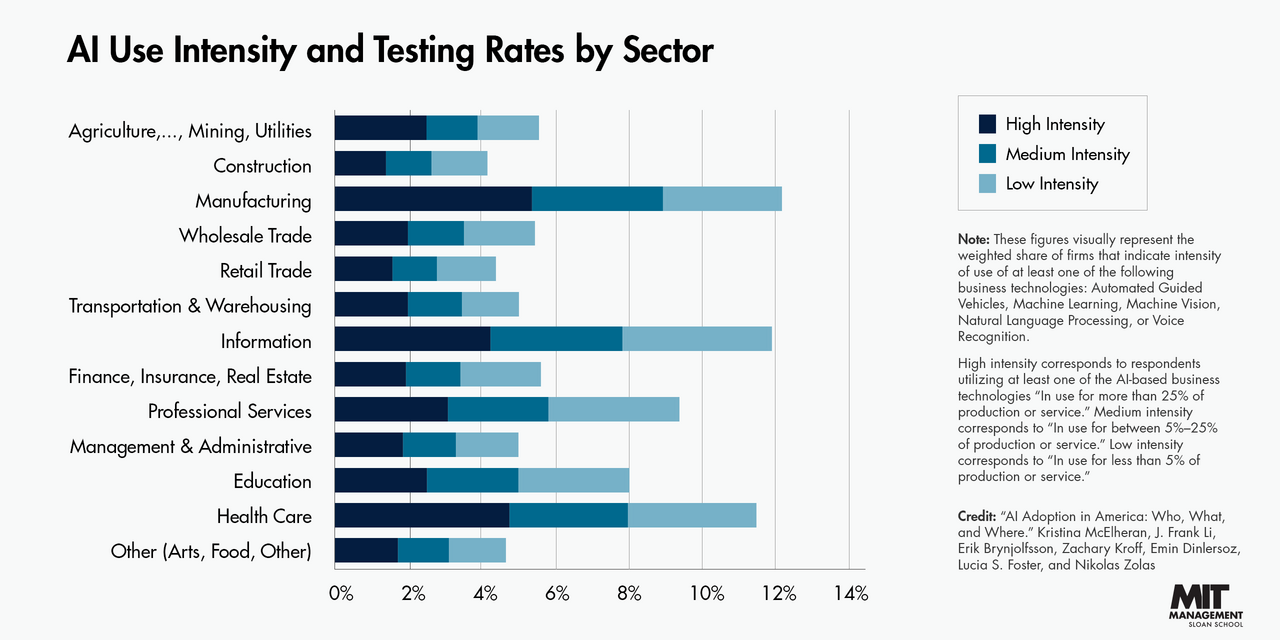
The best part of adopting a Work Innovator’s mindset toward your tech stack is that it works in all industries. With AI adoption rates skyrocketing in sectors from manufacturing to health care and financial services—and new technologies like edge computing on the horizon—leaders in every vertical need to be taking a critical look at how they approach technology integration.
But you don’t need to stop at tech innovation, either. Thinking like a Work Innovator can help you create a culture of useful experimentation, improve utilization of existing resources, motivate employees, and break down silos that hold back explosive growth.
Want to learn more? You can assess how well your company embodies the approach of a Work Innovator and uncover insights specific to your business with the help of our Work Innovator Research Assistant.

.avif)

Author Spotlight

Dr. Kelly Monahan is Managing Director of the Upwork Research Institute, leading our future of work research program. Her research has been recognized and published in both applied and academic journals, including MIT Sloan Management Review and the Journal of Strategic Management. In 2018, Kelly released her first book, “How Behavioral Economics Influences Management Decision-Making: A New Paradigm” (Academic Press/Elsevier Publishers). In 2019, Kelly gave her first TedX talk on the future of work. Kelly is frequently quoted in the media on talent decision-making and the future of work. She also has written over a dozen publications and is a sought-after speaker on how to apply new management and talent models in knowledge-based organizations. Kelly holds a B.S. from Rochester Institute of Technology, an M.S. from Roberts Wesleyan College and a Ph.D. in Organizational Leadership from Regent University.