Going Back to School at 30: Reboot Your Career Now
Discover how returning to school at 30 can transform your career. Learn strategies to balance education with life and achieve your goals.

.png)
.avif)
Going back to school at 30 comes with a mix of excitement and uncertainty. For many adults, it’s prompted by burnout, a toxic work environment, or the growing realization that their current career path no longer aligns with their goals. Add the pressure of feeling “behind” peers or navigating school with a full-time job, and it’s easy to feel overwhelmed before you even begin.
But here’s the truth: Returning to school in your 30s is a smart, strategic step toward a more fulfilling career. Whether you're looking for a career change, exploring new degree programs, or simply upskilling through online learning, adult students are reshaping what modern education looks like. And the outcomes speak for themselves.
With flexible formats, growing support systems, and clear economic benefits, it’s never been a better time to take control and reboot your career path.
The value of education mid-career: What the data says
If you're a working adult reconsidering your career goals, going back to school can feel like a gamble. But the numbers tell a different story. For adult learners—whether you're pursuing an associate degree or a bachelor’s degree, or following a graduate program—higher education is a proven investment in long-term earning potential.
Even in today’s shifting job market, a college degree offers meaningful returns. And for those returning in their 30s or later, the added maturity, focus, and life experience often lead to better outcomes.
Whether you're hoping to move up in your current job or pivot to a new career path, higher education can be the bridge between where you are and where you want to go.
Higher education pays off
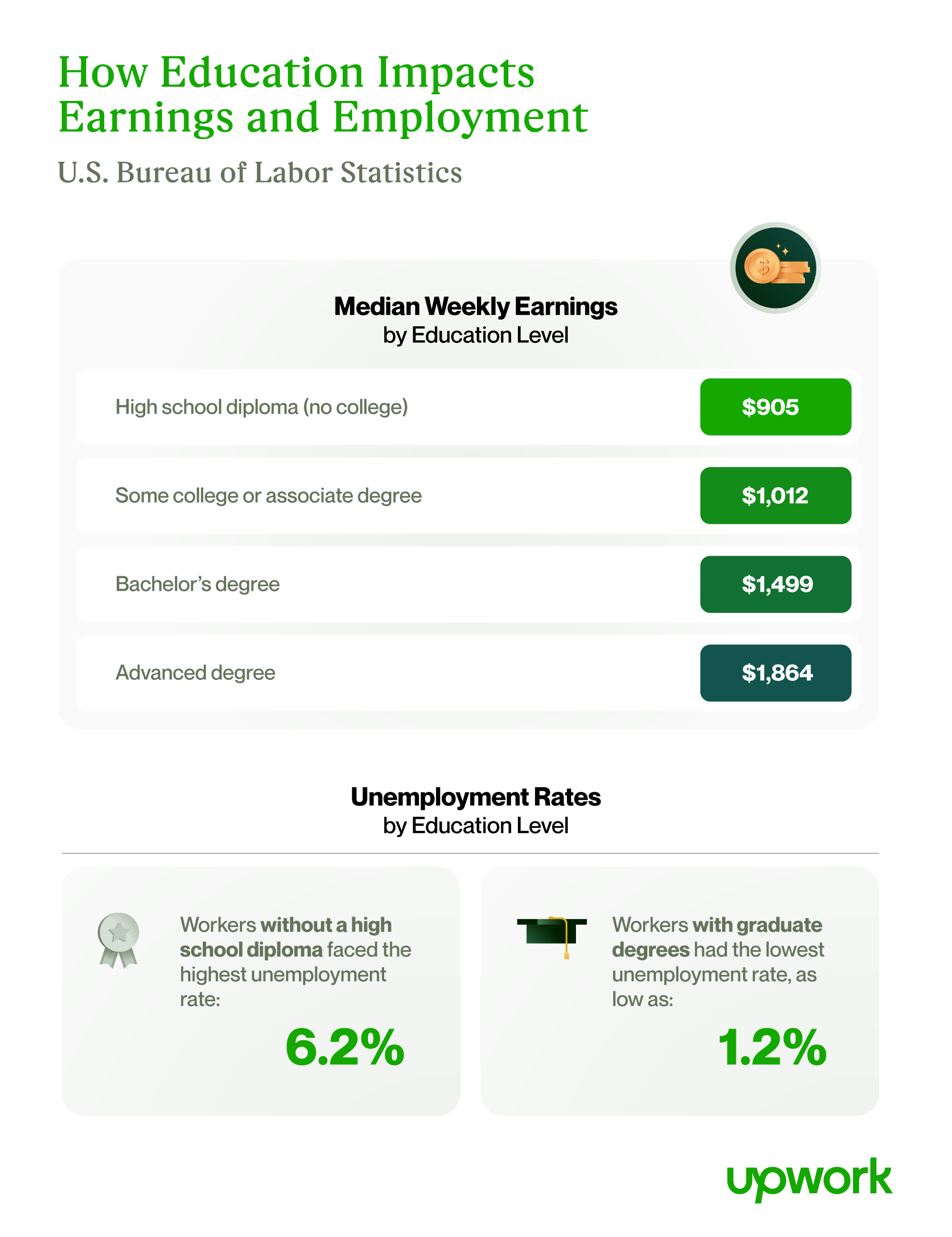
The data is clear: Education pays. According to 2023 U.S. Bureau of Labor Statistics (BLS) data, workers with a bachelor’s degree had median weekly earnings of $1,499. Those with an advanced degree earned even more—$1,864. By contrast, workers with some college or an associate degree earned $1,012 weekly, while high school graduates with no college earned just $905.
Over the course of a career, those gaps add up significantly. A bachelor’s degree or higher can translate into hundreds of thousands more in lifetime earnings compared to those with only a high school diploma. And with flexible online college options now widely available, returning to school doesn’t require stepping away from your job or family obligations to pursue a better-paying career path.
Education also lowers unemployment risk
Education also protects against job loss. BLS data shows that in 2024, workers aged 25 and over without a high school diploma faced the highest unemployment rate at 6.2%, along with the lowest median weekly earnings at $738. On the other end of the spectrum, workers with graduate degrees had the lowest unemployment rates and the highest earnings.
In a competitive job market where automation, AI, and economic fluctuations are shifting demand, education remains one of the most reliable tools for stability. For adult learners considering online learning or returning for a bachelor’s or master’s degree, the payoff goes far beyond paychecks—it’s about long-term job security and flexibility in a developing economy.
Common challenges adults face, and how to overcome them
For many adult learners, the decision to return to school comes with a unique set of challenges. Juggling coursework with a full-time job, parenting responsibilities, or financial obligations isn’t easy—and neither is walking into a classroom as a 30-year-old surrounded by younger students.
But these obstacles aren’t roadblocks. With the right tools, mindset, and support systems, working adults can navigate the transition successfully and build a meaningful college experience that fits their lifestyle.
Balancing work, family, and school
Time management is one of the biggest challenges for non-traditional students. Many are working adults who must balance a full-time job and family life while pursuing a degree. These overlapping responsibilities often make it difficult to commit to a traditional college schedule.
That’s why many adult learners choose part-time or online college options that offer the flexibility to study when and where it works for them. It’s a practical way to stay on track without sacrificing personal or professional obligations.
However, research shows the struggle is real. According to data from UT System academic institutions, non-traditional students had lower persistence rates and lower four- and six-year completion rates compared to traditional students. Choosing flexible formats and building a realistic schedule can help close that gap.
Financial constraints and affordability
Cost is a major concern for many older students considering going back to school. Tuition, books, and living expenses can add up fast—especially for financially independent working adults who may not have access to parental support or savings.
Fortunately, adult learners are often more likely to qualify for financial aid like Pell Grants, which don’t have to be repaid. Online degree programs also offer cost savings on commuting, housing, and other fees associated with traditional campuses. Many degree programs now offer payment plans and part-time options, making the financial burden more manageable.
Another smart solution is freelancing. Working adults can use platforms like Upwork to generate income while studying and avoid taking on excess debt. Freelancing can also help turn your life experience into marketable skills, giving you a head start in your new career while reducing reliance on loans.
Feeling out of place
For some, the emotional hurdle of returning to college is just as real as the financial one. Many mature students worry about fitting in with younger college students, keeping pace in class, or simply feeling like they don’t belong.
In one Reddit thread, older students shared stories that helped normalize these concerns:
Age brings focus and purpose
“I finished my undergraduate degree in my 30s. It’s a different experience, being there with a specific mission in mind instead of as a way of burning up five years… Once I was wrapping up my major, everyone was just focused on the work.”
Maturity can be an advantage
“You will be closer in age to your instructors, and they relate to you more easily than a younger student… Most of them had kids and could empathize with my situation.”
A professor’s perspective
“I love my older students. You guys know the value of what you’re doing, and you know why you’re here. If I ask you to do a thing, you do it. It’s wonderful.”
These reflections show that being a mature student isn’t a liability—it’s often a superpower. If you're thinking, “I want to go back to school, but I’m afraid I’ll be the only one like me,” know that you're not alone. Your life experience, your goals, and your discipline can help turn the classroom into a stepping stone toward your dream job.
Success factors and program flexibility
Not all college experiences look the same, especially for adult learners. Whether you're looking to move up in your current job or pursue a new career path entirely, the best degree programs offer flexible options that align with your lifestyle, experience, and career goals. Today’s online college landscape is built to serve working adults, offering new ways to turn work experience into college credit and to earn a degree without stepping away from your paycheck.
More than just a perk, flexibility is a success factor. When adult learners have access to online degree programs, part-time enrollment options, and support for real-world learning, their chances of completing their education and meeting their career goals increase significantly.
Online and part-time options are growing
More colleges and universities now offer flexible, part-time degree programs built specifically for working adults. Whether you're earning a bachelor’s degree or an associate degree, the ability to learn at your own pace through online learning is a major reason adult learners are succeeding.
Online college formats allow students to balance their education with a full-time job or caregiving responsibilities. From asynchronous classes to on-demand resources, these degree programs are designed to reduce scheduling friction and improve time management. For many, this is the difference between quitting and completing their program.
Transfer credits and prior learning assessments
If you've taken college classes in the past or built a career through on-the-job training, you may be closer to a degree than you think. Many colleges now offer transfer credit policies and Prior Learning Assessments (PLAs), which allow students to earn course credit for professional certifications, military service, or real-world experience.
This can significantly reduce the time and cost required to earn a college degree. Mature students with work experience in fields like business administration, health care, or IT may already qualify for credit based on their life experience, streamlining their path to graduation.
Use freelancing to bridge the gap and test new careers
Freelancing can be a strategic tool for adult learners. It offers a way to earn income while studying, and also helps you build real-world experience in your new field. Whether you’re exploring writing, web development, marketing, design, or nearly anything else, you can use freelance projects to grow your skill set, test your career goals, and build a portfolio as you learn.
According to Upwork’s In-Demand Skills Report, some of the fastest-growing freelance categories are aligned with industries seeing massive hiring and salary potential. Freelancing doesn’t just fund your education—it becomes part of it.
Steps to start your return-to-school journey today

If you're thinking about going back to school but don't know where to start, a step-by-step plan can help you move from indecision to action. The right development plan will consider your current skill set, finances, and long-term career change goals while taking full advantage of flexible degree options and financial aid opportunities offered by today’s online college programs.
1. Explore flexible, accredited programs
Look for schools that support adult learners through:
- National accreditation. Ensure your degree is recognized and transferable.
- Asynchronous learning. Choose online degree programs that let you work on your schedule.
- Community college partnerships. Start part-time at a local college, then transfer to a four-year university.
- Dedicated support. Look for programs with advisors and resources for working adults.
2. Estimate ROI based on your target career path
Before enrolling, use EducationData.org to compare tuition costs with potential earnings in your chosen field. For many career paths—especially in tech, business administration, or health care—a bachelor of science degree can lead to a significantly higher salary.
Mapping the cost against your future earning potential helps you create a realistic development plan and make smarter financial decisions.
3. Set realistic timelines and build a financial cushion
Time management is essential for working adults heading back to school. Consider starting part-time and using freelancing to cover expenses and build experience in new industries. This approach offers flexibility while allowing you to grow your skill set and meet your long-term career goals without pausing your income.
Look for online learning formats and online degree programs that support flexibility and prioritize adult learner success. You don’t have to do it all at once—steady progress is still progress.
It's never too late—the data backs you up
Going back to school in your 30s is a strategic, data-supported investment in yourself. More non-traditional students than ever are enrolling in online college programs and pursuing higher education to unlock new skills and better opportunities.
A college degree can increase your earning potential, reduce your unemployment risk, and help you build a career path that aligns with your values and goals. Whether you're upskilling, shifting careers, or chasing a long-held dream, it’s never too late to become the mature student who takes the leap and changes their future.
Ready to act? Build experience with freelancing while you learn
You don’t have to wait until graduation to start gaining experience. Begin your journey today by exploring freelance opportunities on Upwork. Create a profile, browse categories aligned with your career goals, and start building a portfolio that reflects your growing skill set.
Freelancing lets you apply what you’re learning in real time, build professional development momentum, and boost your earning potential, all while preparing for your next big career move.

.avif)

Author Spotlight

Upwork is the world’s largest human and AI-powered work marketplace that connects businesses with independent talent from across the globe. We serve everyone from one-person startups to large organizations with a powerful, trust-driven platform that enables companies and talent to work together in new ways that unlock their potential.