How to Present Military Experience on your Resume (and Upwork Profile)
Military experience is valuable in the private sector—learn how to highlight your skills in civilian-friendly ways and attract new employers or clients.

.png)
.avif)
As a veteran returning to civilian life, you may feel like you’re starting over in your career. While the military is familiar, the outside world is not. Figuring out where you fit in can sometimes feel overwhelming.
The first step of this transition is finding a new role. While as a vet, you have valuable experience and useful skills, you may find it difficult to know where or how to begin to put those skills to use in a civilian job. You can begin by updating your resume. This guide will help you figure out how to successfully write a military-to-civilian resume (and we’ll give you tips for setting up a great Upwork profile, too).
1. Put your contact information at the top of your resume
It’s important to start your civilian resume with your name, phone number, email address, and location. You might not currently live in the same area you’re searching for jobs in, and that’s OK. Put the location you will be living in after your military discharge or separation, with “as of [date]” in brackets next to the location.
You don’t need to put your contact information on your Upwork profile, though. In fact, Upwork’s Terms of Service require you to communicate with prospective clients through the platform. This helps to keep you safe and makes it easier for our team to support you if you’re contacted by a suspected scammer.
2. Write an engaging resume summary
A resume summary is a short statement that usually appears at the top of your resume. It highlights your relevant experience, skills, and qualifications for a role. Its purpose is to “sell yourself,” i.e., explain your suitability for a position and convince the hiring manager to continue reading the rest of your resume.
A summary only needs to be two to three sentences long. However, these sentences should be packed with concrete details and wholly targeted to the job description you’re applying for. For example:
Ex-U.S. Army Infantry Senior Sergeant (General Manager) seeking operations role at management level. Experienced in leading, planning, and coordinating operations of multiple departments. Expertise in policy formulation, resource allocation, and human resources modeling.
With regard to your Upwork profile, specifically, pay attention to your profile title and overview:
- Your title. Did you know that clients often see a well-written title as the first indication of a freelancer’s expertise? Write a short, catchy, unique, and specific title to describe your profile. Avoid generic phrases such as “reliable” or “hardworking.” Make it meaningful enough to capture your work, specializations, and expertise.
- Your overview. The profile overview is your first chance to pitch to potential clients. Keep it brief. Only the first 250 or so characters will appear in the freelancer search results list. (The rest of your information is there, but your client won’t see it unless they click to view more—so be sure to grab their attention with the first line!) Be original, bold, and creative. Let your personality shine through. Make it memorable.
Here’s a profile example from Marcy, a project manager. Marcy’s military experience in the U.S. Air Force has made her a great fit for project management roles on Upwork. Her profile overview uses terms that a civilian business owner might immediately notice and understand:
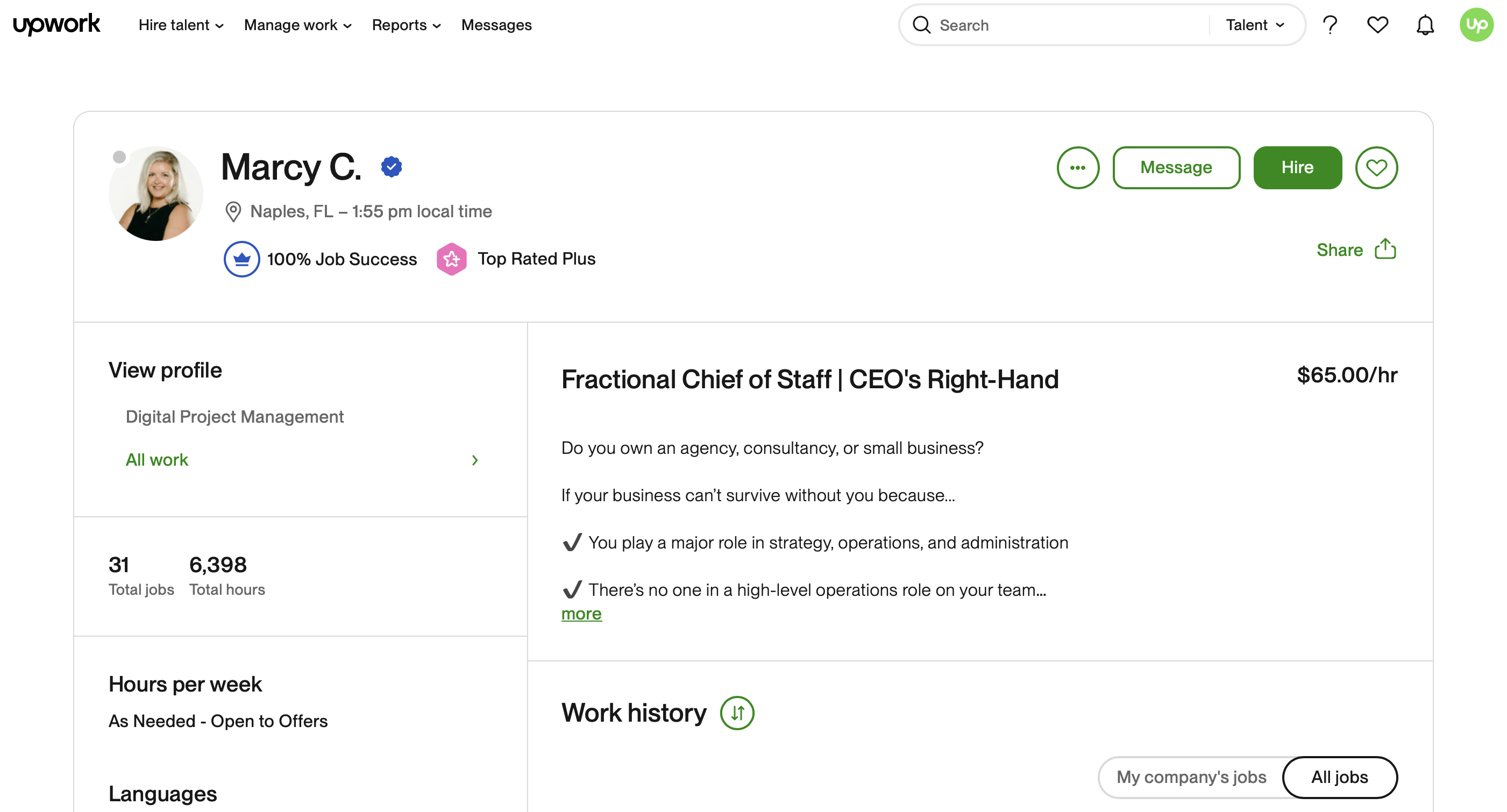
If a client scrolls down and looks at Marcy’s work history, they’ll see that she’s proudly listed her military service, along with her years of experience in the U.S. Air Force. She’s also explained her job in a way that potential employers can understand even if they have no prior experience working with military personnel.

Want to learn more about what it takes to create a winning Upwork profile? Be sure to read our tips to help you create a freelancer profile that stands out. If you’re not sure what a job-winning profile looks like, take a look at these freelancer profile examples as well.
3. Make a list of your skills
The military equipped you with a lot of transferable skills, and it’s important to include them on your resume. This includes both technical hard skills (like writing code) as well as interpersonal soft skills (such as problem-solving). Think about all your duties, responsibilities, and accomplishments while you served in the military and write them down. Don’t worry about translating military terminology at this stage. Just make a list. This step alone can be challenging for many veterans.
Note that military skills resumes are usually more technical than civilian resumes. Civilian roles and projects often look for a holistic combination of hard and soft skills. When making your list, try not to become hyperfocused on technical expertise alone. Make a note of relevant soft skills like leadership, timeliness, and teamwork as well.
Identify hard skills that transfer from your military role
Depending on your military role, your hard technical skills could include:
- Technology and software skills
- Project management
- People management
- Budgeting
- Language translation
- Logistics
Identify soft skills that translate from your military experience
Your soft skills might include things like:
- Communication
- Problem-solving
- Leadership
- Teamwork
- Time management
- Performance under pressure
- Global perspectives
- Dedication
- Work ethic
4. Translate military terms and titles
Once you have a list of your hard and soft skills, it’s time to work on translating these terms and acronyms into language that a civilian employer or recruiter will understand.
It can be helpful to get a copy of your Verification of Military Experience and Training (VMET) document. This document describes your service occupations in civilian terms. It can be a convenient resource for creating your military experience resume.
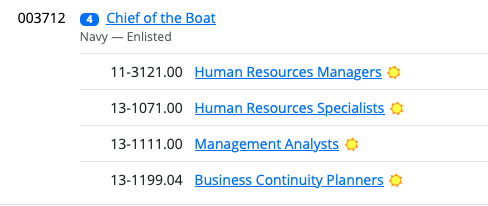
The Military Crosswalk Search tool on O*NET Online is another excellent resource for demystifying military resumes. It allows you to search by military occupational classification (MOC) or job title and cross-reference MOCs to civilian equivalents. For example, if you served as Chief of the Boat in the Navy, you could describe this in one of several ways based on your duties:
After you’re finished translating your military skills into their civilian equivalents, you’ll want to create a skills section on your new resume. List the most applicable hard and soft skills for your intended role here.
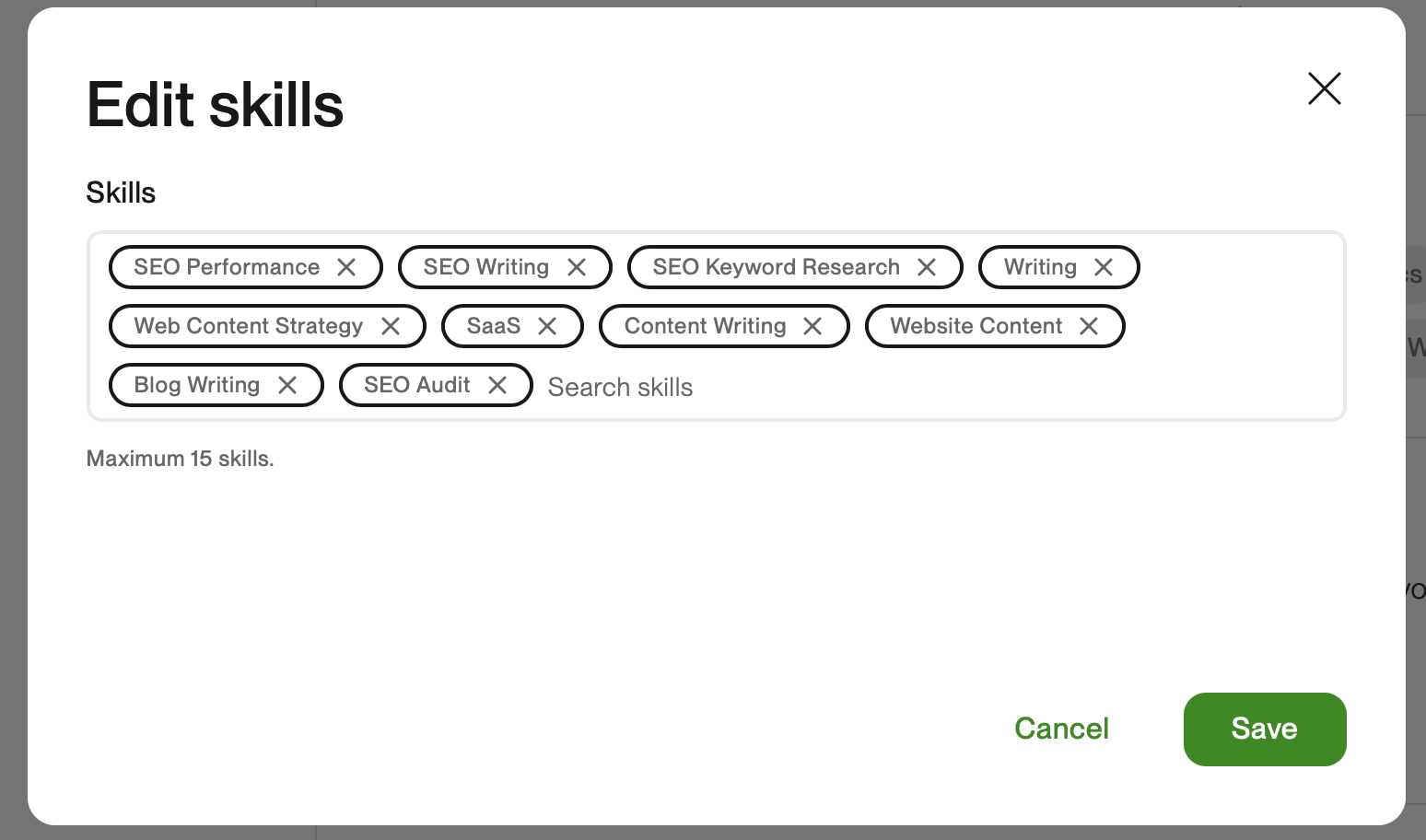
You can add these relevant skills to your Upwork profile, too! Each profile includes a skills section you can edit at any time. Keeping this section up to date can help you stand out when clients search for someone with your experience on Upwork.
Advice from a fellow veteran
Jeff Stock is a former program manager at Upwork. After serving in the U.S. Marine Corps for almost nine years, he transitioned to a civilian role. According to him, “One of the biggest challenges veterans face is understanding how their military ranks and responsibilities translate to a civilian scenario.”
Similarly, he found hiring managers often could not understand military titles and the responsibilities that come with these roles.
“Understanding military ranks and job responsibilities can be a big puzzle even for experienced hiring managers. Veterans have many valuable skills. However, their challenge lies in being able to expose these military skills on a resume—in a way that makes sense to civilian hiring managers,” said Stock.
For example, when interviewing for program manager roles, Stock found mentioning his military title alone was meaningless. Instead, he found, “most interviewers were looking for a one-to-one match for the role they were hiring for.”
Stock realized he needed to present his military experience in a context that made sense in the private sector to address this disconnect. Instead of focusing on his specific military rank alone, he learned to emphasize his job function and responsibilities in civilian terms.
It’s simply about learning how to contextualize your role, skills, and experience to the civilian world. Stock reminds veterans not to discount their military skills and experience. “Have faith in yourself and learn how to present your experience in a way that makes sense in a civilian setting.”
Stock encourages veterans to reframe their own points of view about what makes for a valuable skill. Vets should learn to see some of their basic military training as an asset. “Don’t get hung up on the specifics of your specialty. Yes, that’s important and relevant. But some of the more general military skills you’ve acquired are also relevant in many job scenarios,” said Stock.
Qualities like punctuality or clear communication that service members might take for granted are seen as huge assets in the corporate world, for example.
Stock said, “Most veterans don’t stop to consider these skills or think about highlighting them. They don’t see them as having any importance or value.” He advised veterans to think beyond the job title and expand their idea of what counts as valuable. “It’s usually much broader than what you may think of at first,” he asserted.
On the flip side, Stock pointed out that veterans may have to face assumptions and preconceived notions about their skills. Instead of feeling pressured to include a skill because it’s considered essential in the military, he encourages veterans to be realistic and specific about which skills they bring to the table. “If you don’t identify with a certain military skill or trait, don’t feel like you have to highlight that on your resume. Be honest.”
5. Highlight your military service
While it’s important to translate your military jobs for the sake of civilian clients—don’t try to hide it completely. Your military experience is an asset that you should own proudly. Don’t be afraid to include your military title and rank in your resume and job application, but provide a civilian translation as well.
As you write the work experience section of your resume, list your military positions with separate subheadings. Within each subheading, include rank/position, company or organization, and dates of employment. You can follow this with a brief description of your job responsibilities and duties. This can be in bullet points for better presentation.
Pro tip: Focus on highlighting military experiences where you used the skills required for the role you’re currently applying for. Your VMET documentation will come in handy here, too. Use the VMET along with any transcripts, awards, or other documentation you have to illustrate how your military service gave you the skills needed for your next civilian job.
Additionally, you can make use of Upwork’s Military Veteran status option. This tool adds a “Military Veteran” status and flag representing the country served to your Upwork profile and lets clients know you’re a military veteran. Many clients would love to give opportunities to veterans like you, and this can help them find you.
[Use existing image with US and India military status]
6. Quantify your accomplishments
As a veteran, you probably have several military accomplishments worth advertising. Don’t hold back. Highlight your accomplishments in your resume. To make it more relevant, these achievements can be listed in your work experience section, underneath each specific role subheading.
Try to write about your accomplishments in terms that are easy to understand. This helps potential clients see how you can help their business should they choose to work with you.
Be specific about these accomplishments. Try to quantify them with numbers wherever possible. For example, “reduced training time by 25%” or “managed a team of 15 people.” Specific details help to create a clear picture of your accomplishments.
7. Include your education, training, and certifications
For a well-rounded resume and Upwork profile, don’t forget to include other important details such as your education experience! This doesn’t have to be formal higher education, either.
If you have completed (or are enrolled in) any college or university degrees, include those along with the institution. But don’t hesitate to include any certifications or specialized military training relevant to your job function. Once again, you’ll want to try to demilitarize it into civilian terms. Try searching online to see if there’s a civilian equivalent for your training, or find the LinkedIn profiles of other veterans with similar training and see how they frame their experience.
You can also add specific certifications to your Upwork profile. This helps to further show off your skills and qualifications.
Pro tip: If you feel like there are gaps in your knowledge or skills, taking an online course is a great way to bridge the gap. Upgrade your skills and acquire new ones via online learning platforms and sites to further boost your resume.
8. Write a strong cover letter
You’ll want to pair your resume with a strong cover letter (or, on Upwork, a great proposal). Resume Builder suggests that veterans open their letter by highlighting a military accomplishment that directly translates to the civilian role they’re applying for. And, as with your resume, you’ll want to do your best to keep your cover letter or proposal free of military jargon that the reader may not understand.
If you’re applying for an in-person job in a location you plan to live in, you can also use a portion of your cover letter to explain when you’ll be moving.
9. Find your ideal post-military career
According to the LinkedIn Veteran Opportunity Report, 61% of veterans’ first civilian jobs are highly skilled roles—and eight of LinkedIn’s top 10 most in-demand skills are top veteran skills, too.
But the same report also notes that despite having nearly two times more work experience than nonveterans, military vets are half as likely to reach top leadership roles in civilian jobs. That’s why it’s so important to clearly translate your military resume into one that makes sense in civilian business. And it’s also important for veterans to take charge of their careers and find work that makes sense for them, whether it’s employment in an established company, starting a business, or becoming a freelancer.
If you’re not sure what work opportunities are available to you, you can use various resources available to help you transition to civilian work. The O*NET Interest Profiler career assessment offered by the U.S. Department of Veteran Affairs can help you figure out the best civilian career path for you.
You can also participate in programs like the DoD SkillBridge to access training and development opportunities. The program helps make the transition to civilian work easier.
And if you do decide to be a freelancer, you won’t be alone in this choice. Many ex-service members decide to start a freelance career for the diverse work opportunities, work-life balance, freedom, and flexibility that it offers. You can even build your own team and start an agency as a freelancer, too.
Sign up to begin exploring freelance job opportunities on Upwork today. And if you’d like to hire a veteran on Upwork, that’s easy too: Simply log in and search “military veteran” to see the profiles of skilled veterans offering a wide range of professional services.
Upwork is not affiliated with and does not sponsor or endorse any of the tools or services discussed in this article. These tools and services are provided only as potential options, and each reader and company should take the time needed to adequately analyze and determine the tools or services that would best fit their specific needs and situation.
If you are communicating with a hiring manager for a job through the Upwork platform, please note that sharing your personal contact information, such as email address, phone number, or LinkedIn profile, is not permitted in cover letters or at any time prior to the start of a contract. Additionally, all pre-contract communication should take place through the Upwork Messages feature. Learn more about using Upwork Messages here, and see more details on sharing information on Upwork here.

.avif)

Author Spotlight

Radhika is a self-confessed word nerd and content expert with over 15 years of experience writing content for businesses around the world. She is a cheerleader for flexible work, a passionate world traveler, and spends her free time alternating between a good book and a good hike.