How SMBs Are Driving Business Agility Amid Disruption in 2026
Discover how confident SMBs are approaching talent acquisition and macroeconomic factors in 2026.

.png)
.avif)
Executive summary
- Small- and medium-sized businesses (SMBs) are facing challenging market conditions due to economic uncertainty, inflation, skills gaps, and other factors.
- Despite these challenges, SMB leaders are largely confident about their ability to attract talent and navigate macroeconomic conditions.
- Key to this confidence is a strategic view on engaging freelancers. High-confidence SMB leaders leverage skilled freelancers to fill skill gaps and enhance business agility.
Businesses across industries and of all sizes are navigating significant disruption in 2025, including economic uncertainty, new and proposed tariffs, inflation, and skills gaps. Amid these challenges, business leaders are looking to optimize costs.
In the first quarter (Q1) of 2025, the Upwork Research Institute surveyed decision-makers at small and midsize businesses (SMBs) to better understand their perspectives on macroeconomic conditions, business performance, and hiring intentions.
The research unveiled insights related to market conditions, business performance, hiring plans, and top strategic priorities. In this report, we’ll focus specifically on SMB leaders’ points of view about performance, along with their outlook for the coming months.
SMBs have been the most challenged by market conditions
One of the key findings from the survey was that SMB decision-makers were the most pessimistic about market conditions, with 61% indicating conditions were challenging and only 28% believing market conditions were favorable. For comparison, only 40% of very small business leaders and 51% of enterprise leaders agreed market conditions were challenging.

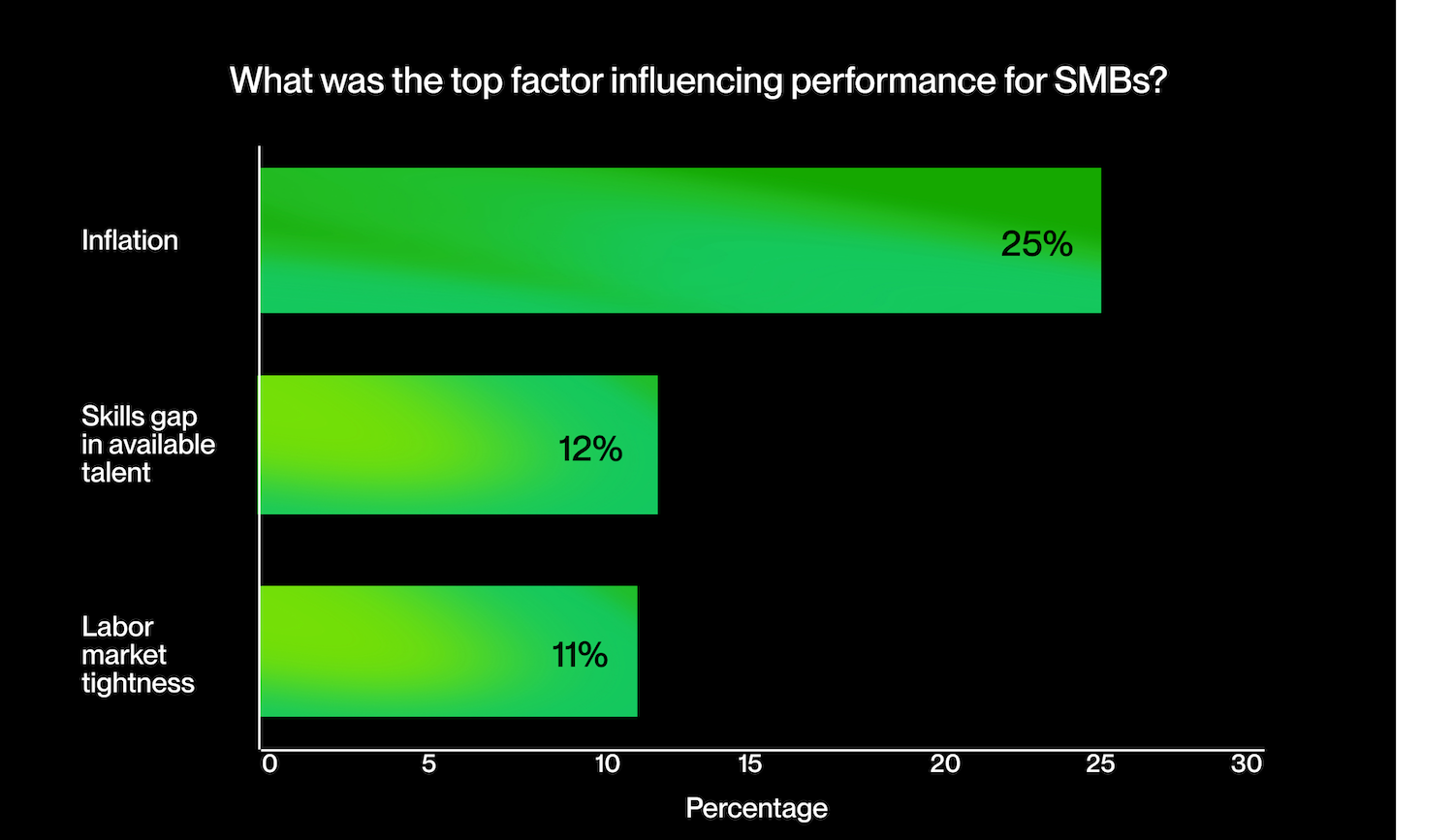
With nearly two-thirds of SMB decision-makers perceiving the market conditions as challenging, which headwinds are impacting business performance the most? While factors such as technology disruption, regulatory disruption, workforce productivity decline, and geopolitical uncertainty dominate headlines, these were less likely to be chosen as the top factor influencing SMB performance.
According to SMB decision-makers, inflation (25%) was the top factor impacting Q1 performance, followed by a skills gap in available talent (12%) and labor market tightness (11%).
SMBs were the most dissatisfied with their performance
As businesses navigate challenging market conditions, SMB decision-makers were the most dissatisfied of all business leaders with their performance outcomes.
Of the areas where they felt their companies excelled, SMB leaders were the most satisfied (46%) with their organization’s customer satisfaction efforts. However, customer satisfaction is the only performance outcome where satisfaction among SMB leaders was higher than leaders from other business sizes.

More than half of SMB leaders have high confidence in navigating macroeconomic shifts
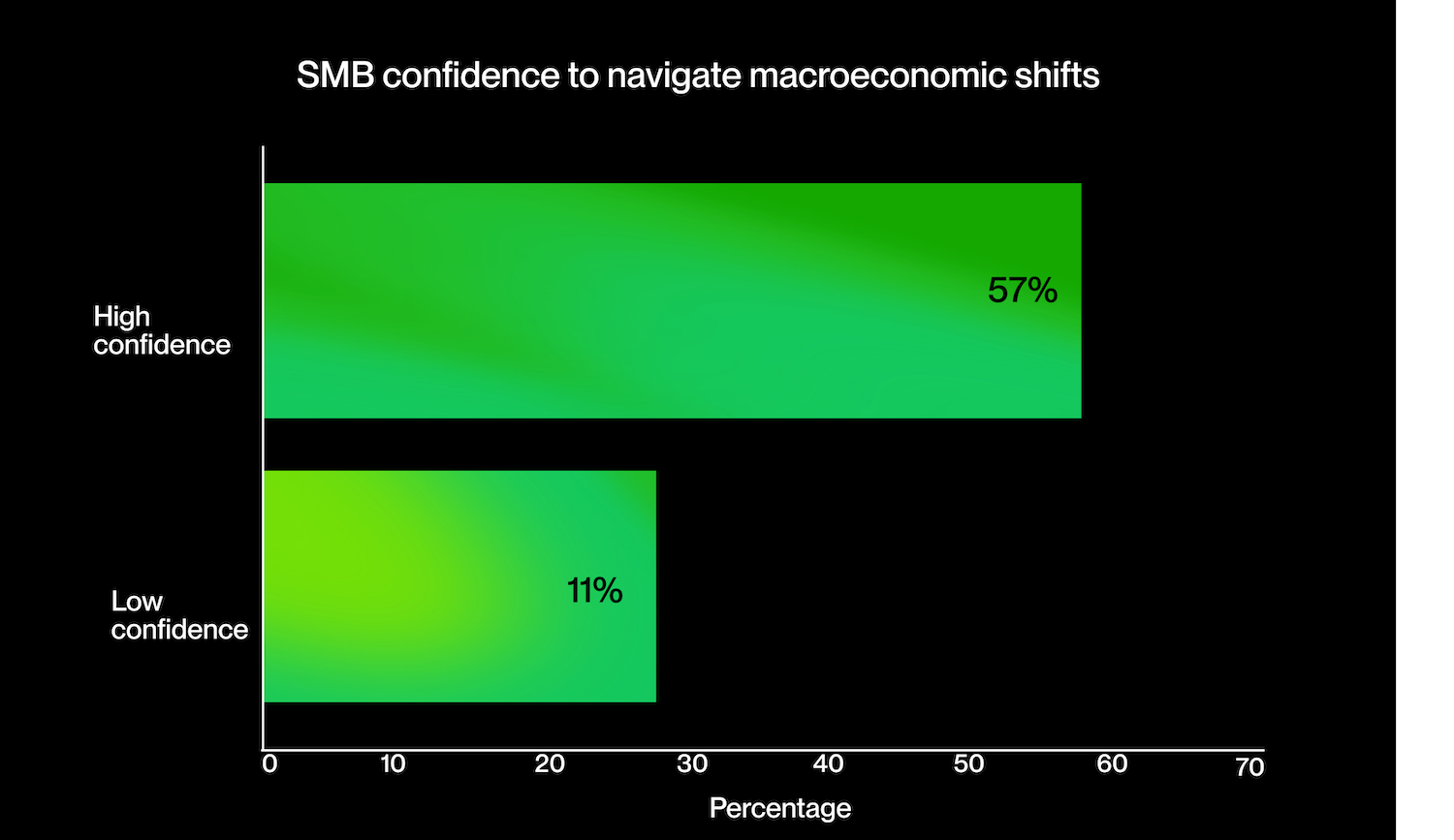
Despite their pessimistic perspective on market conditions and performance outcomes, the survey found that more than half (57%) of SMB decision-makers have high confidence in their ability to adapt to macroeconomic shifts.
Our research shows that the outlook of these high-confidence leaders is driven by the following organizational behaviors:
- A clear leadership vision and strategy
- Access to the right tools and technologies
- Flexibility in work arrangements
- An ability to attract top talent in today’s labor market
- A willingness to delegate tasks to AI agents
How high-confidence leaders think about freelancers
The data shows that 68% of all SMB decision-makers have fully integrated flexible work arrangements and 56% have high confidence in their ability to attract top talent.
The survey data also found that high-confidence leaders are more likely to successfully engage and integrate freelancers into their teams, which helps support workplace flexibility and an organization’s ability to attract workers with the skills they need.
Supporting flexible work arrangements by expanding your talent pool to include remote, distributed freelancers can help your organization attract qualified workers who value flexibility. By engaging and integrating freelancers, businesses can also more effectively scale up and down while driving cost efficiencies, which is critical as small businesses look to optimize operating costs.
Top motivators for hiring freelancers
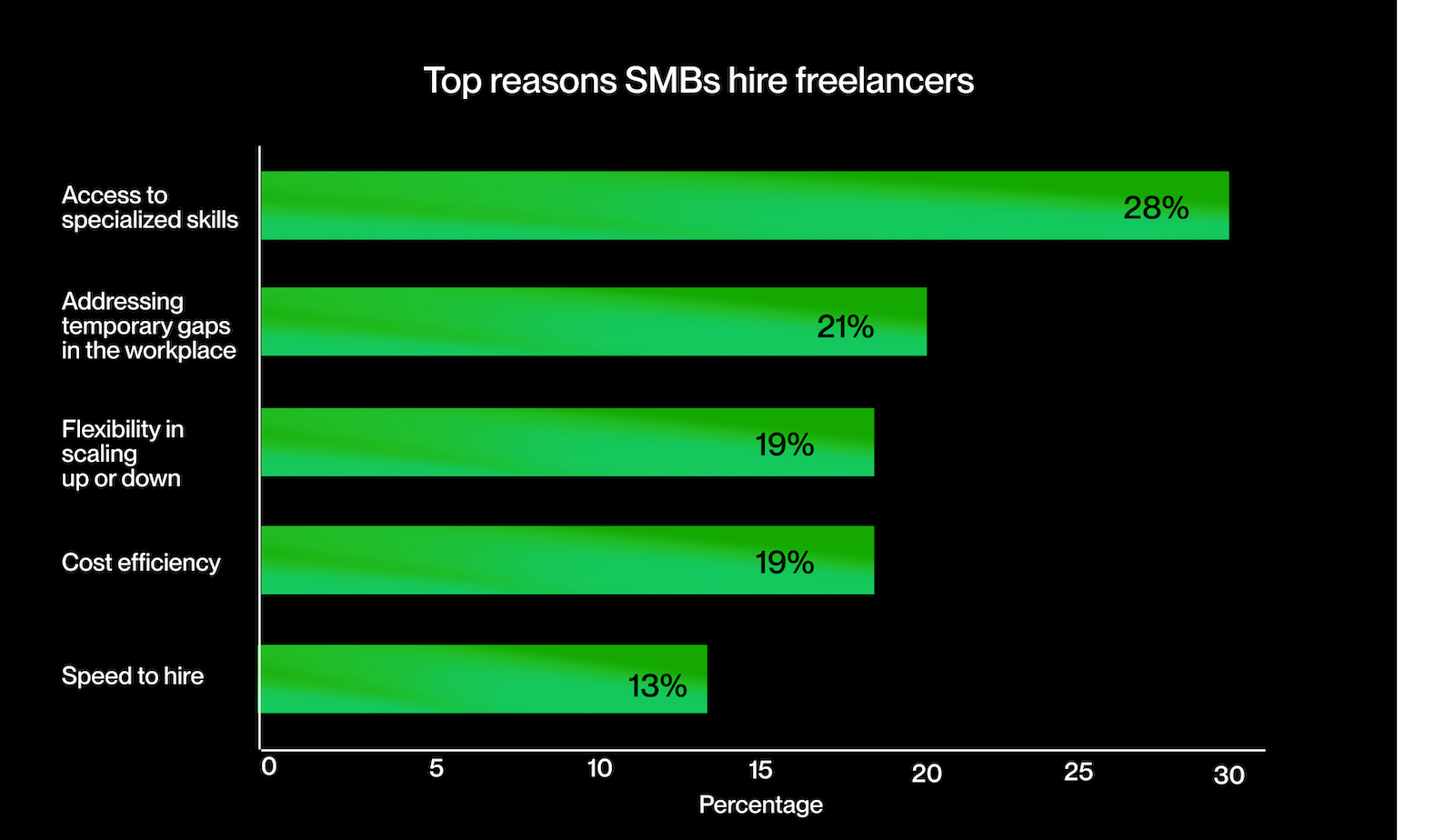
Organizations that turn to freelancers to access in-demand skills are reaping the benefits. SMB decision-makers also shared their top reasons for hiring freelancers, with access to specialized skills (28%) being the top choice.
By engaging freelancers on a work marketplace like Upwork, you can access professionals with more than 10,000 skills across a range of specialties, such as software engineering, graphic design, accounting, and digital marketing.
Freelancers can help businesses cost-effectively address temporary gaps in the workforce, such as partnering with freelancers on a project basis during a formal hiring freeze or engaging a freelance artificial intelligence expert to implement an AI tool or train team members on the latest AI technology. By searching for skilled freelancers on a platform like Upwork, organizations can also begin working with a skilled professional within a matter of days, saving significant time compared to a traditional hiring process.
Listen to Work Week: How Do Work Innovators Prepare for Economic Headwinds?
SMB decision-makers’ outlook and strategic priorities
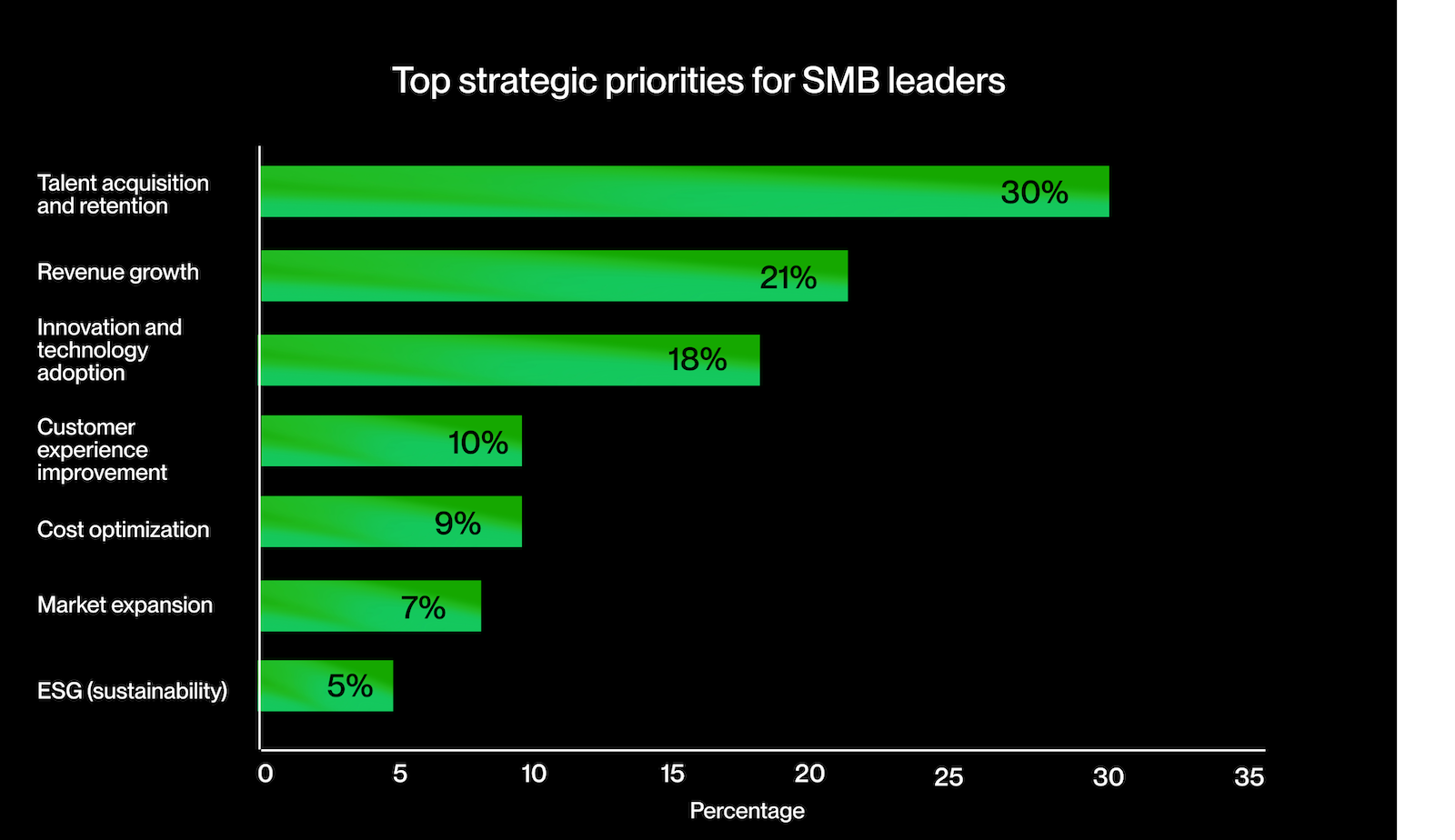
As businesses continue to face challenges related to inflation, tariffs, skills gaps, and other factors, SMB leaders shared their top strategic priorities for Q2 2025. Despite the labor market showing signs of cooling, such as increased unemployment rates in many states, the top priority for SMBs is talent acquisition and retention (30%).
SMBs have moderate hiring goals
While many organizations may implement hiring freezes or reduce head count during times of economic uncertainty, SMBs have moderate hiring goals, with 72% anticipating an increase in full-time employees and 62% anticipating an increase in freelancers.
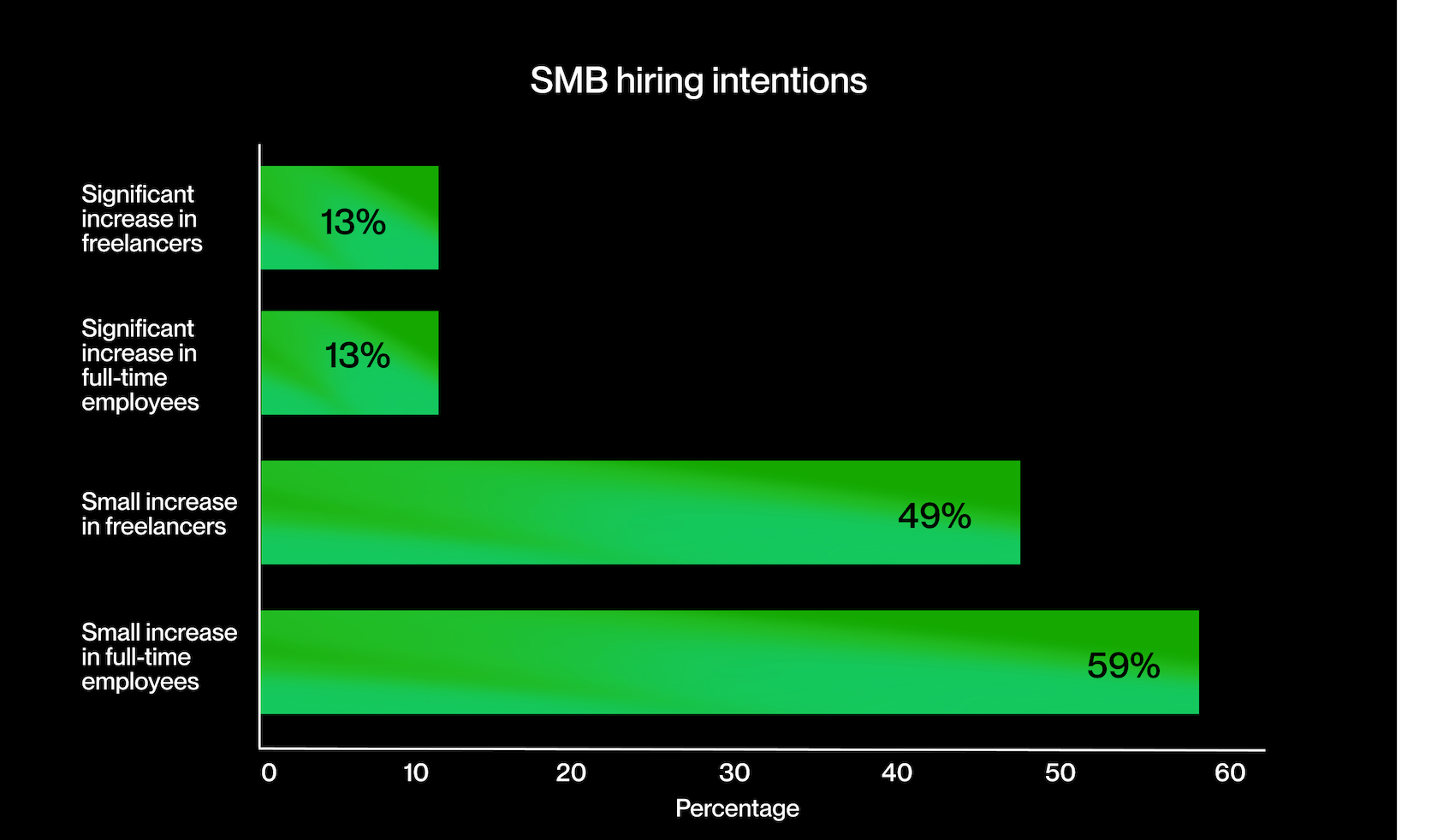
As SMBs look to prioritize talent acquisition and retention and add additional head count, engaging freelancers can be an effective option to quickly adapt teams in response to evolving market demands. Hiring full-time employees requires significant time and resources, which can hold organizations back from supporting business agility in an unpredictable market. Enlisting the support of freelancers can help SMBs and companies of all sizes quickly access in-demand skills and get started working on critical projects right away.
Methodology
The Upwork Research Institute distributed a survey to 500 U.S. business leaders to understand their sentiment on macroeconomic factors, hiring intentions and AI. Business and professional services, health care, manufacturing (including computer manufacturing), retail and tech industries were included. Survey respondents include C-suite leaders (28%), video presidents (25%), senior directors (20%), and directors (27%). Twelve percent of respondents work at companies with less than 10 employees (VSB), 47% work at companies with 10-1,000 employees (SMB), and 41% work at companies with more than 1,000 employees (enterprise). Data for Q1 was collected between mid-January and mid-February 2025.

.avif)

Author Spotlight

Beth Kempton is a B2B writer with a passion for storytelling and more than a decade of content marketing experience. She specializes in writing engaging long-form content, including blog posts, thought leadership pieces, SEO articles, case studies, ebooks and guides, for HR technology and B2B SaaS companies. In her free time, you can find Beth reading or running.