How To Use AI for Customer Segmentation
Use AI for customer segmentation to boost personalization, retention, and ROI, plus real-world examples and tools to get started.

.png)
.avif)
For many businesses, doing customer segmentation is both beneficial and challenging.
Breaking down your customer base into smaller groups or segments based on their shared characteristics allows for more personalized marketing and better engagement.
But effective customer segmentation requires good customer data, the knowledge to segment and then target customers appropriately, and the ability to bring your customers through more nuanced buyer journeys.
Artificial intelligence (AI) and machine learning provide many tools that can help. These technologies make the segmentation process more efficient and help businesses make more informed, data-driven decisions.
In this article, we discuss how you can harness the power of AI to improve your customer segmentation process.
What is customer segmentation?
Customer segmentation is a process businesses use to divide their customers into segments or categories with similar characteristics. This helps them understand and meet the unique needs and wants of different customer groups, with the ultimate goal of increased customer retention and customer loyalty.
Traditionally, the customer segmentation approach has relied on three main types of data:
- Demographics. This category includes basic factual information about customers, such as their age, gender, occupation, income level, and education.
- Psychographics. This type of data delves into customers' psychological attributes, including their attitudes, interests, values, and lifestyles.
- Behavioral data. This focuses on how customers interact with products and services, including their purchasing habits, brand loyalties, and usage patterns.
While these traditional metrics are still used, advancements in technology let marketers uncover deeper motivations behind customer choices by tracking their buying journey.
Sentiment analysis reveals customers’ feelings toward products or services, helping businesses pinpoint which customer segments to concentrate on to enhance sales. Additionally, assessing customer lifetime value enables marketers to identify and categorize their most valuable customers.
Regardless of the metrics chosen, customer segmentation leads to more personalized experiences and marketing messages for each segment, potentially improving conversion rates and sales.
How AI streamlines customer segmentation
AI is revolutionizing how businesses approach customer segmentation, offering unprecedented accuracy, efficiency, and insight. Advanced algorithms and machine learning capabilities can transform vast amounts of raw data into actionable intelligence, enabling companies to understand and target their customers with remarkable precision to boost customer engagement.
From processing complex datasets in real time to predicting future behaviors, AI can streamline every aspect of customer segmentation. Let's explore the key ways in which AI-driven customer segmentation is reshaping this critical marketing function, making it more dynamic, personalized, and effective than ever before.
Advanced data processing
AI revolutionizes data analysis by quickly processing vast amounts of information from multiple sources, including social media, purchase history, and customer interactions. Machine learning algorithms within AI systems can identify complex patterns and relationships that humans might miss, leading to more nuanced and accurate customer segmentation.
This advanced processing capability allows businesses to gain deeper insights into their customer base, enabling more effective marketing strategies and improving their ability to deliver customer satisfaction.
Real-time segmentation
AI-powered tools continuously analyze incoming data, allowing businesses to adapt their segmentation strategies on the fly. This real-time capability enables companies to respond quickly to market changes and emerging trends, ensuring that their customer segments always reflect the most current information available.
Predictive analytics
AI excels at predicting future customer behavior based on historical data and current trends. By analyzing patterns in customer data, AI can forecast the likely actions, preferences, and needs of different customer segments. This predictive capability enables proactive segmentation, allowing businesses to anticipate customer needs and tailor their marketing efforts accordingly, often before the customers themselves are aware of their changing preferences.
Personalization at scale
AI facilitates hyperpersonalization by creating microsegments based on very specific criteria. Manual segmentation methods previously made this granularity impossible.
AI can analyze countless data points to create highly specific customer segments, each with its own unique characteristics and preferences. This allows businesses to tailor their marketing messages and offerings with unprecedented precision, significantly improving the effectiveness of their marketing campaigns.
Automated decision-making
AI systems can automatically adjust marketing strategies based on segmentation insights. As the AI analyzes customer data and identifies new patterns or changes in existing segments, it can take action to update marketing campaigns, adjust product recommendations, or modify pricing strategies.
This automation reduces the need for manual intervention and speeds up the implementation of targeted campaigns, allowing businesses to be more agile in their marketing efforts.
Enhanced customer profiling
By integrating data from various touchpoints, AI creates comprehensive customer profiles that provide a 360-degree view of each customer. These profiles go beyond basic demographic information to include behavioral data, preferences, purchase history, and even sentiment analysis.
This holistic approach to customer profiling provides deeper insights into customer motivations and behaviors, enabling businesses to create more accurate and effective customer segments.
Dynamic segmentation
Unlike static, traditional methods, AI allows for dynamic segmentation that evolves as customer behaviors change. AI systems continuously update segments based on the latest data, ensuring that segmentation remains relevant and accurate over time.
This dynamic approach allows businesses to stay in tune with their customers' changing needs and preferences, maintaining the effectiveness of their marketing efforts even as market conditions shift.
Improved ROI tracking
AI tools can accurately measure the performance of different segments and campaigns, providing detailed insights into return on investment (ROI). By analyzing vast amounts of data, AI can identify which segments are most valuable, which marketing strategies are most effective for each segment, and where resources should be allocated for maximum impact.
This improved tracking and analysis enable businesses to optimize their marketing spend and focus on high-value segments.
Advanced data processing
AI with natural language processing (NLP) capabilities can analyze unstructured data such as customer feedback, reviews, and social media posts. This ability to process and interpret human language allows businesses to gain valuable insights from sources that were previously difficult to quantify.
NLP-enabled AI can detect sentiment, identify trends, and uncover customer preferences that might not be apparent through traditional data analysis methods, leading to more accurate and nuanced customer segmentation.
Cross-channel integration
AI excels at seamlessly integrating data from multiple channels, creating a unified view of the customer across all touchpoints. This ensures consistent segmentation across all marketing efforts, from email campaigns to social media advertising to in-store experiences.
By breaking down data silos and providing a comprehensive view of customer interactions, AI enables businesses to create more coherent and effective marketing strategies that resonate with customers across all channels.
Steps businesses take to segment customers using AI
Businesses experimenting with AI for segmentation often follow a series of practical steps—from evaluating their data to selecting the right models and tools. While every strategy looks a little different, the steps below reflect how real companies integrate AI into their customer segmentation efforts. You can use these to plan internal projects or guide freelance consultants supporting your segmentation work.
1. Understand your business needs
When looking to implement AI into your operations, consider your business needs to understand how AI will fit in. This determines the types of AI tools and data you’ll need for a successful AI implementation.
Identifying challenges in customer behavior, customer experience, and marketing efforts narrows down the areas where AI will be most beneficial.
2. Collect relevant data
The accuracy of AI models depends on the quality of data used for training. As a result, you need to be equipped with the right data points before using AI.
When collecting data, consider different sources to get the most relevant and up-to-date information. Start by extracting the data from traditional customer relationship management (CRM) systems and databases. Next, consider digital touchpoints on e-commerce and social media platforms to gain more understanding of your customers’ online interactions.
Collecting data is usually a time-consuming process. Automated tools like Bright Data and Scrapingdog gather data from various online platforms. Alternately, work with data scraping experts on Upwork to find the right training data.
3. Choose the right machine learning models
Once you have relevant data sets, the next step is to find the right ML models. Examples of machine learning algorithms include linear regression, classification, clustering, transfer learning, and dimensionality reduction.
ML models are tailored for different roles in the customer segmentation process. Traditional algorithms are more suited for specific tasks, while deep learning models are more capable of addressing complex problems.
Consider collaborating with machine learning experts on Upwork to help you find a suitable model to refine your customer segmentation techniques.
4. Train and test the model
AI models are trained on large data sets to perform different roles like personalization and content generation. They can only achieve these functionalities if they have access to accurate and reliable data. Clean, process, and transform your data to make it suitable for training.
While initial results can provide insights into customer preferences and behavior, you’ll need to continuously refine the model based on testing outcomes to improve its performance.
5. Integrate with existing systems
Once the training process is complete, you can move to the implementation stage. You likely have existing systems like CRM and marketing platforms, and you’ll want to ensure your AI technology is compatible with them.
The AI model should integrate seamlessly with these systems to streamline your marketing process. A successful integration leads to several benefits, including real-time insights, better decision-making, and improved customer segmentation.
6. Monitor and optimize
Monitor AI performance regularly to address challenges as they arise. You should update AI models to keep up with changing customer behaviors, market trends, and business goals. This ensures you always have access to the latest valuable insights to make data-driven decisions.
Real-world examples of AI-powered customer segmentation
AI-powered customer segmentation isn't just theoretical—many companies are already seeing measurable outcomes by integrating AI into their marketing strategies. Here are a few real-world examples showing how AI improves customer targeting, personalization, and retention.
- ASOS (e-commerce). ASOS, a leading online fashion retailer, uses AI and machine learning to segment customers based on browsing behavior, purchase history, and even returns data. This enables the company to personalize homepage content, emails, and recommendations, boosting conversion rates and customer satisfaction. They generated $77.5 million in incremental revenue as a result.
- Netflix (entertainment). Netflix segments its audience using behavioral and demographic data to power content recommendations. Its AI models analyze watch history, genre preferences, and time-of-day viewing habits to deliver personalized suggestions, reducing churn and increasing user engagement. Netflix’s AI-powered personalization saves the company $1 billion annually in customer retention and keeps churn rates as low as 2.4%, well below industry averages.
- American Express (finance). American Express uses AI-driven segmentation to group customers by spending behavior and financial needs. By identifying microsegments with high lifetime value, they tailor offers and cross-selling campaigns, improving both retention and product adoption. Amex’s AI-driven audiences achieved up to 2.5 times higher engagement per impression and two times better campaign performance compared to third-party audiences.
- L’Oréal (consumer goods). L’Oréal leverages AI tools for real-time segmentation in digital campaigns. By using customer preferences, skin tone data, and browsing history, the company delivers personalized product recommendations across its website and social platforms. L’Oréal’s media campaign achieved a 22.22% conversion rate and a 26.25% increase in click-through rate after adopting AI-driven segmentation and personalization.
4 AI tools that enhance customer segmentation
Let’s dive into some AI-powered tools to help you automate the customer segmentation process.
1. Peak

Peak is a customer segmentation tool that can help you understand your customer base better and deliver personalized experiences. It automates your communication process to attract new customers and engage those you already have.
Peak has features like segment maps that categorize customers into different groups based on shared attributes and smart segments that alert you to changing customer needs.
Best for: Analyzing different customer profiles and segments
Pros:
- Brings information from different data sources into a centralized location
- Offers more than 35 AI attributes for segmenting customers
- Compatible with existing CRM systems
Cons:
- Pricing not publicly available
- May have a learning curve with its tools and features
Pricing: Prices are not publicly available. Contact the sales team for a demo and custom quote.
2. Klynk
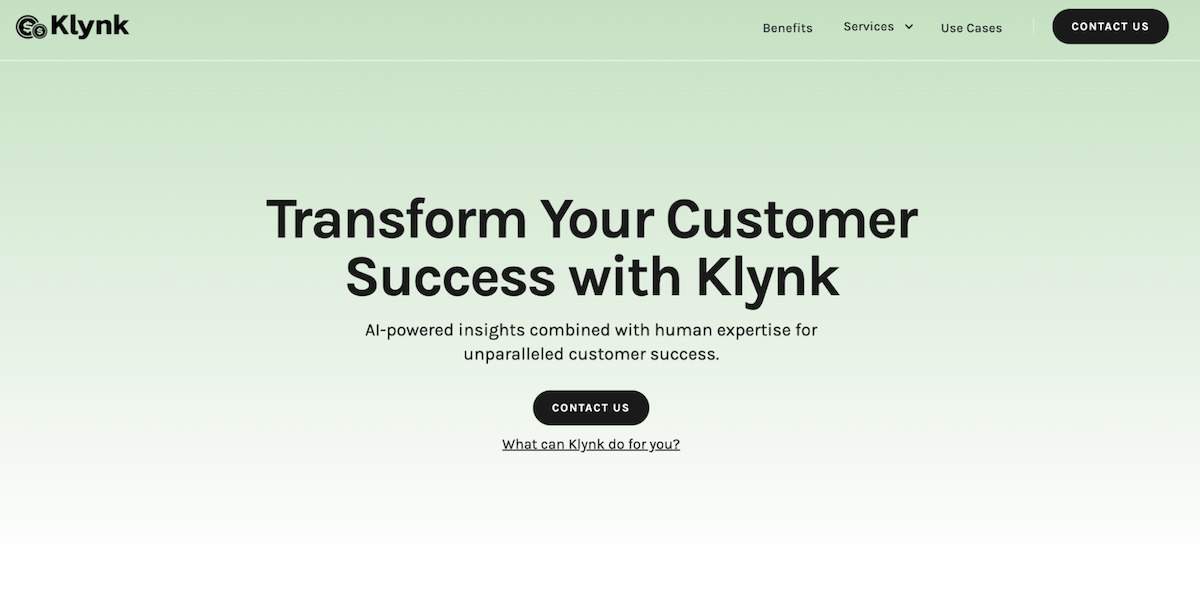
Klynk creates customized marketing campaigns, engages customers, and generates personalized content. You can also use Klynk to craft emails with the right tone and subject headlines to boost conversion rates. It has a copilot bot that assists in automating marketing, sales, and customer experience processes.
Best for: Running automated marketing campaigns
Pros:
- Can engage and communicate with customers directly from the dashboard
- Features a bot for crafting email marketing campaigns
- Supports running multiple campaigns concurrently
Cons:
- Can be expensive for small business teams
Pricing: Prices are not publicly available. Contact the sales team for a demo and custom quote.
3. Heap

Heap analyzes your digital marketing touchpoints, such as social media and websites, and segments users based on their online interactions. It provides heat maps and charts to help you visualize user behavior and take action. It also features an intuitive dashboard that keeps track of your key metrics.
Best for: Segmenting users based on their online behavior
Pros:
- Allows you to collect in-depth information through the customer journey
- Supports other CRM systems like Salesforce
- Monitors changes in customer segments and triggers alerts
Cons:
- Segments can be complex to set up and use, especially for beginners
- Segments can be inaccurate if data is not clean or complete
- Can be slow to update if you have a lot of data
Pricing: Free, Growth, Pro, and Premier plans available via custom quote
4. Optimove
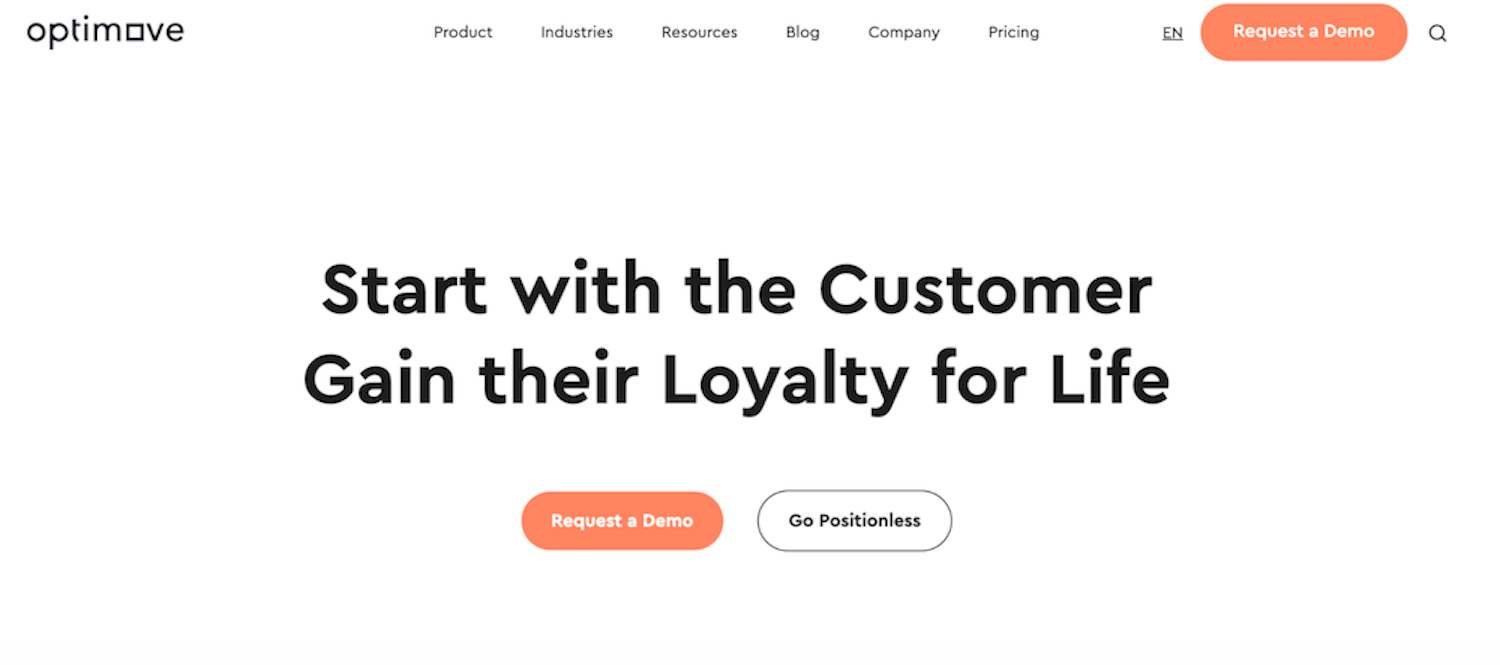
Optimove focuses on improving brand loyalty, helping users plan and deploy multiple customer-focused campaigns. It supports multichannel communication, ensuring messages reach audiences on different platforms. It also provides a bot that analyzes customer data to identify opportunities for increasing revenue.
Best for: Delivering personalized marketing content to different market segments
Pros:
- Processes and combines customer data, making it more accessible
- Ability to create customized content and layouts unique to different segments
- Performs historical, behavioral, and predictive modeling to create richer customer profiles
Cons:
- Pricing not publicly available
- Requires a lot of data to be effective
- Can be complex to set up for beginners
Pricing: Build, Grow, and Scale plans available via custom quote
Where to start: project ideas for AI-powered segmentation
If you're exploring AI-driven segmentation for the first time, you don’t need to overhaul your entire system. Starting with small, focused projects is a low-risk way to test tools, learn what's possible, and uncover immediate value.
Here are a few practical project ideas to get started:
- Segment dormant customers. Leverage AI to identify users who haven't engaged recently and group them by behavior or product history. This can help tailor reengagement campaigns that are more likely to convert.
- Build loyalty models. Apply machine learning to predict which customers are most likely to return—and which ones might churn—based on purchase frequency, recency, and support interactions.
- Personalize email campaigns. Rather than batch-and-blast emails, train an AI model to suggest the best content, offers, or subject lines for each segment based on past performance.
- Test predictive pricing sensitivity. Use historical and real-time behavior to group customers by how responsive they are to pricing changes or promotional offers.
- Enrich customer personas. Combine CRM data with external data sources—like social media or third-party insights—to give your personas more depth and accuracy.
For early-stage experiments, consider hiring a freelance data scientist or machine learning engineer on Upwork. These experts can help scope, build, and validate your segmentation models without the overhead of a full-time hire.
When to bring in expert help
AI customer segmentation offers powerful possibilities—but it can be complex. If you’re not seeing clear insights from your data or don’t have the in-house technical skills to implement machine learning models, it may be time to bring in outside support.
Here are a few signs it’s time to consult a pro:
- Your datasets are large or messy. A data scientist or machine learning engineer can help clean and prepare your customer data to make AI models more effective.
- You’re unsure which segmentation model to use. With so many algorithms available, an AI specialist can recommend the best fit for your goals and help fine-tune the output.
- You want to integrate segmentation with your CRM. A developer with AI experience can build smooth integrations between your AI tools and existing marketing systems.
- You’re running multiple experiments at once. A freelance AI strategist can help manage priorities and interpret your results so you can act on them confidently.
On Upwork, you can find specialists in predictive modeling, natural language processing, marketing automation, and CRM integration. These professionals can help you get more from your segmentation tools, without hiring a full-time team.
Bring more precision to segmentation with AI
AI-powered customer segmentation makes it easier than ever to personalize marketing at scale, understand customer behavior, and improve retention. With the right tools and talent, you can move beyond static customer profiles and toward dynamic, data-driven strategies that evolve with your audience.
Whether you’re just beginning to experiment or looking to refine your existing approach, bringing in expert help can make a big difference. On Upwork, businesses of all sizes connect with skilled AI professionals—from machine learning engineers to data analysts—who specialize in segmentation and predictive analytics.
Hire the consumer segmentation professionals, test your segmentation strategies, and start turning insights into action. Upwork makes it easy to scale smartly.

.avif)

Author Spotlight

Upwork is the world’s largest human and AI-powered work marketplace that connects businesses with independent talent from across the globe. We serve everyone from one-person startups to large organizations with a powerful, trust-driven platform that enables companies and talent to work together in new ways that unlock their potential.