How To Be a More Flexible Leader
Flexibility enables you to make faster decisions. And make the optimal decision that produces the best outcome. Get 9 tips to becoming a more flexible leader.

.png)
.avif)
A core trait of a great leader is the ability to embrace change. How well you embrace change depends on how flexible you are. This may look like ending a course of action that’s not working, or knowing when to be inspirational versus tactical.
Learning how to be a more flexible leader enables you to respond more effectively to changes in an increasingly complex world.
Why flexibility is a requirement for the best leaders today
Change may be constant, but disruption is its new bedfellow. Because change is happening faster and with more chaos and ambiguity than our current systems can cope with. Geopolitical instability could create supply shortages that last for years. A natural disaster half a world away could decimate your entire operation. And an emerging competitor could make a new product obsolete before it even launches.
As a leader, you can survive and excel amid such turmoil by becoming more flexible.
Flexibility enables you to make decisions more quickly while also producing the best results. Adopting a more flexible leadership style could also help you remain calm during stressful times, which affects how much a team trusts you and is willing to follow you.
Challenges to becoming a more flexible leader
Even with the best of intentions, you may not be able to lead with as much flexibility as you’d like. Some of the reasons may be out of your control, such as shrinking resources, having to adhere to rigid company policies, or lacking support from your boss.
Some obstacles to becoming more flexible are fully within your control. One of the biggest challenges is getting out of your leadership comfort zone.
It pays to get out of your comfort zone. In a Harvard Business Review article, the authors discuss research that details how effective leaders don’t focus on perfecting a “leadership sweet spot.” Good leaders develop skills to broaden their “leadership sweet range.” The wider your range, the more effective a leader you can be.

How to improve your own leadership flexibility: 9 Tips
Through intentional and regular practice, anyone can be a flexible leader. Here are a few ways to cultivate flexibility in your leadership style.
Stay attuned to the environment
Pay attention to what people are doing. When one of your main suppliers built a new facility, did that put them at risk of financial overcommitment? Knowing they may be unstable gives you a chance to take steps toward protecting your supply chain.
As important, pay attention to what people are saying. If your team is dragging their feet on executing a new initiative, is there an issue you may have overlooked? Maintaining situational awareness may produce timely and accurate information that could help you make more effective decisions.
Plan for things to not go as planned
Unforeseen changes can derail the most thoughtfully planned projects. A key team member may leave during a project’s construction phase, leaving you scrambling to fill the skill gap they left behind. A project may be paused due to budget cuts, which causes significant impact to your team. You may be asked to lead a new initiative, so you have less time for projects you’re currently on. Anything can happen, so be ready to regroup and come up with new solutions when they do.
Dive deeper: Keys to Ensuring Business Continuity
Look for opportunities
In some situations, you may only have minutes to make a decision. In others, you may have a few weeks. Whether you have seconds or days to plan a course of action, it’s easy to fall into old habits and make assumptions. But there’s usually time to remain flexible.
Before jumping into action, Professor Jeanette Landin suggests taking a moment to ask the following questions:
- What do my followers need me to do?
- What are appropriate alternatives?
- What’s the best course of action for all involved?
Harvard Business School professor Francesco Gino suggests that leaders be more productively rebellious. Instead of facing an issue asking, “What should we do?” ask, “What could we do?” Research shows using the word “could” and remaining open to conflicting ideas results in more creative solutions.
Stay positive
Compared to “plain old leadership,” positive leadership is shown to improve outcomes by increasing factors including job satisfaction, effort expended, and performance.
Being a positive leader is less about how you feel (e.g., happy and optimistic). It’s more about how you create an environment for employees to do their best work.
Instead of the old command-and-control leadership style, a positive leader builds a culture of collaboration, trust, and inclusiveness. When something negative happens, you may look to learn from it. Leadership strategist Alicia McKay suggests trying “to think of three different interpretations that might be more useful – what if this was a gift, or an opportunity for growth?”
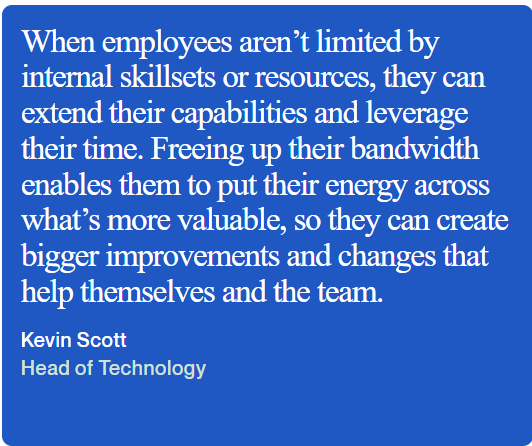
Rather than accept limitations, you could adopt new ways to help the team succeed. Such as how Kevin Scott at PGA of America enables his team to explore ideas and get help with tasks by contracting on-demand talent through Upwork. According to Scott, “When employees aren’t limited by internal skillsets or resources, they can extend their capabilities and leverage their time.”
Understand your team’s skills
Keeping the business’s short- and long-term goals in mind, list the hard and soft skills you need. Then identify current skills gaps, as well as gaps you predict in the future. This exercise can help you optimize each person’s skills and time so they deliver at their fullest potential.
By applying this and other talent management strategies, you can keep teams motivated and create efficient solutions to meet rising work demands with limited resources. Watch the video of how Southside Blooms, a Chicago nonprofit, used its $150 budget to earn $50 million in media coverage.
Understand yourself
The first step to improving any leadership skill is becoming more self-aware. But, “Often, it’s too easy to overestimate our strengths and underestimate our blind spots,” wrote Korn Ferry CEO Gary Burnison. For true self-reflection, he suggests asking others for an accurate perspective of your competencies, purpose, and motivators.
The feedback also tells you where you’re most comfortable. “Becoming more self-aware requires paying attention to areas in which you struggle or seek to avoid, or noticing when your colleagues aren’t relying on you to complete a task or assignment,” according to HBR researchers. They gave an example of one leader who was often assigned projects to dive deeper into existing ideas rather than explore new opportunities. Feedback showed his higher-ups felt he didn’t have the open and curious mind required to lead his team properly.
Self-awareness enables you to understand your emotions and how they can impact others. It may be tough to hear the feedback at first, but the payoff makes it worth pushing on. “In our careers, as in life, with perspective as our lens, personal development opens the aperture to our growth,” said Burnison.
Find a mentor
Within nearly every great leader’s story, you’ll learn they owe some of their success to a mentor. Maya Angelou mentored Oprah Winfrey, Steve Jobs mentored Mark Zuckerberg, and Steven Spielberg mentored J.J. Abrams.
Mentors can provide guidance and hold you accountable. Their lessons and perspectives could help you understand how to flex your leadership style to attain a desired outcome. Let’s say you tend to focus on details. A mentor may help you see that a specific situation benefits from being more visionary and inspirational.
Raise your emotional intelligence
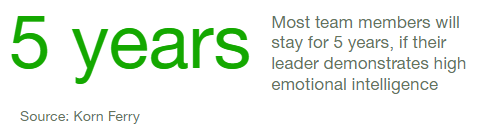
Numerous studies show that people who lead with greater emotional intelligence (EI) generate higher business results. A Korn Ferry survey shows leaders with high emotional intelligence could keep 69% of their team members for at least five years. One reason why emotionally intelligent leaders are more effective is because they can change their style to fit their teams, “Effective leaders have multiple styles in their toolkits, equipping them to respond flexibly to changing demands,” says Paula Kerr, senior manager at the Korn Ferry Institute.
Get help filling the gaps
As you’re learning to become more flexible, you may run into situations where you must apply a skill that isn’t developed enough to be effective. In such cases, you could fill the gap by getting help from a team member or external talent.
Imagine that you work in a dynamic environment where you excel at changing courses quickly. But you’re not skilled at communicating why you make those changes, which is impacting the team’s morale. Why not get help with explaining your changes? Such as contracting an independent writer or asking a team member to edit your talking points to show your decisions are in line with the team’s goals. Then you learn to strengthen your communication skills and the team remains engaged.
Ways to show flexible leadership
There are infinite ways to show more flexibility in your leadership style. Some may be as simple as asking someone for help when you’re used to doing everything yourself. Or it may be more complex like adopting a hybrid workforce model to increase your team’s agility and capabilities. Here are a few everyday examples.
Switch the approach
A customer service manager had a diverse team made up of agents from various backgrounds and generations. He treated everyone the same, but still had low productivity and engagement rates. Feedback showed team members didn’t feel equally valued or seen. He took steps to becoming a more inclusive leader by learning about each person beyond their role at work and adjusting how he communicated with them.
Shift the power
The director of an engineering team had a high voluntary turnover rate compared to other functions. She led with a command-and-control style, which created a culture of mistrust and in-fighting. Human resources helped her understand how her management style hindered her team. She began shifting to a collaborative leadership style by regularly asking her team for ideas and communicating with greater transparency.
Share the load
The creative director at Amway was tasked with creating a global video series that required filming in five countries. But COVID-related restrictions prevented her from traveling and she had a small budget. So she tried a completely different approach: handle the entire project remotely from her home office in Michigan. This video of Amway shows how she did it and saved $100,000.
Increase your leadership flexibility with Upwork
“Leadership today is not about merely surrendering to what’s happening. It’s about what you can change,” said Korn Ferry CEO Gary Burnison. But we all have blindspots and ingrained habits. So knowing what to change and how to do it requires help from others.
Upwork can help you get started today. Our marketplace is filled with top independent coaches and HR professionals ready to provide the guidance and training you need to become a more flexible leader. So that you can learn to respond more quickly while producing the highest results.

.avif)

Author Spotlight

Brenda Do is a direct-response copywriter who loves to create content that helps businesses engage their target audience—whether that’s through enticing packaging copy to a painstakingly researched thought leadership piece. Brenda is the author of "It's Okay Not to Know"—a book helping kids grow up confident and compassionate.