Signs an Employee Is About To Quit: 7 Subtle Indicators
Discover seven subtle signs an employee is about to quit. Learn how to identify the early indicators of disengagement to retain top talent.

.png)
.avif)
As companies face rising rates of employee turnover, the loss of a key contributor can derail productivity, morale, and project timelines. And while not every departure is preventable, there are telltale signs that many team members will show before they walk away. Recognizing these cues—especially among high performers—can make all the difference in retaining top talent.
Understanding the signs an employee is about to quit helps leaders intervene with empathy, offer growth opportunities, or rebalance workloads before it's too late. It also gives companies the chance to bring in freelance talent to support team members at risk of burnout, reduce bottlenecks, and ensure critical work doesn’t fall through the cracks.
Being proactive is essential for protecting your culture and retaining your top talent.
7 signs an employee or freelancer may be about to quit
Most employees don’t quit overnight. In many cases, they show subtle shifts in behavior that suggest disengagement, burnout, or exploration of new opportunities. Spotting these early signs—whether in full-time team members or freelance collaborators—can help leaders respond before momentum stalls or top talent walks out.
These are seven key warning signs an employee or freelancer may be preparing to leave their current role.
1. Decreased productivity
When high-performing employees begin turning in lower-quality work, missing deadlines, or moving at a slower pace, it’s often a sign they’re losing interest in their current role. A consistent dip in output—especially from a quality hire known for their reliability—should prompt a closer look.
Here are a few pre-quitting behaviors tied to decreased productivity:
- Missing deadlines that were previously met without issue
- Doing only the bare minimum to stay under the radar
- Turning in rushed or incomplete work
- Showing less initiative or interest in team-wide improvements
While occasional slow periods are normal, a sustained decline in performance is one of the clearest warning signs of disengagement.
2. Withdrawal from team engagement
Employees who once acted as active team players but now avoid team meetings or contribute less in collaborative settings may be quietly checking out. This withdrawal can signal quiet quitting, a growing trend in which workers stay on the job but pull back emotionally and creatively.
In hybrid and remote environments, these changes are even more likely to go unnoticed—unless leaders intentionally look for them. Regular one-on-one meetings and team-wide feedback channels are key to detecting these patterns early.
Engagement tools and touchpoints to monitor include:
- Participation in team meetings or virtual stand-ups
- Responsiveness in group chats or collaborative platforms
- Enthusiasm during brainstorming or project kickoffs
- Responses to pulse surveys or engagement check-ins
- Openness during one-on-one meetings
Reduced interaction doesn’t always mean disinterest, but a consistent lack of engagement often reflects deeper issues.
3. Increased absenteeism
A noticeable uptick in unplanned absences, frequent sick days, or extended vacation time can be a signal of burnout or disengagement. These types of absences are sometimes tied to mental health struggles, personal life events, or simply a lack of motivation to show up.
Tracking absentee trends can highlight when an employee is emotionally or physically withdrawing from their role. According to a 2023 peer-reviewed study published by the National Institutes of Health, higher burnout—especially exhaustion—was significantly associated with increased odds of unplanned work absenteeism
Common absentee-related warning signs include:
- Increased sick days without clear medical needs
- Using vacation time immediately after major project assignments
- Last-minute call-outs before team meetings or deadlines
- General avoidance of high-pressure days or key deliverables
Recognizing these patterns early allows HR or team managers to support mental health and address potential burnout before it leads to turnover.
4. Avoidance of long-term commitments
When a team member shows reluctance to join long-term projects or avoids setting future goals, it can indicate they’re mentally checking out. This hesitation may stem from burnout, a search for new opportunities, or uncertainty about their current role. Either way, it stalls team momentum and delays key initiatives that depend on long-term collaboration.
If you notice a pattern—like employees opting out of strategic planning sessions or only committing to short-term tasks—it could be a red flag that they’re not invested in the future of the team. To maintain progress, consider bringing in freelance professionals who can step in quickly and contribute to projects without long-term obligations. This approach helps stabilize workloads while offering flexibility to team members who may be in transition.
5. Shift in attitude or demeanor
A sudden change in tone—whether through irritability, sarcasm, or visible apathy—can be a warning sign of job dissatisfaction or deeper issues with the current job. These mood shifts may signal disconnection from the team, frustration with leadership, or a lack of career advancement opportunities.
Sometimes, these changes reflect growing misalignment with company culture or a breakdown in employee engagement. Rather than ignoring these shifts, leaders should approach them with empathy and curiosity.
As SHRM board member Steve Brown says:
“Empathy is not a soft skill… It’s a business skill.”
Similarly, Liz Lockhart Lance, Chief of Staff at Performica, suggests asking:
“What might they be feeling? Is there fear involved? What are they afraid of?”
6. Reduced communication
Open communication is essential in any work environment, especially in remote work setups. When team members go quiet—responding slowly to messages, skipping updates, or disengaging from group discussions—it impacts trust, visibility, and collaboration.
A sudden drop in responsiveness may suggest a deeper disconnect from the team or the work itself. To maintain employee engagement, human resources professionals and managers should proactively check in and use tools that support ongoing connection.
Digital tools that help gauge engagement and foster communication include:
- Slack offers real-time messaging and makes casual check-ins easy
- Donut pairs remote employees for informal conversations in Slack
- 15Five is great for structured weekly check-ins and team health tracking
- Lattice helps monitor engagement and performance over time
- Zoom keeps face-to-face interaction alive, even in distributed teams
These tools can help identify communication breakdowns before they turn into disengagement or departures.
7. Digital signals of job searching
Online behaviors often reveal more than people realize. While it’s perfectly normal for professionals to update their LinkedIn or refresh a resume occasionally, a sudden surge in activity—especially during work hours—can be a red flag.
Here are some digital clues that a job search may be underway:
- A fully updated LinkedIn profile with new keywords or public availability toggled on
- Polished resumes or cover letter drafts appearing on shared drives
- Increased interaction with recruiters or job opportunity posts on social media
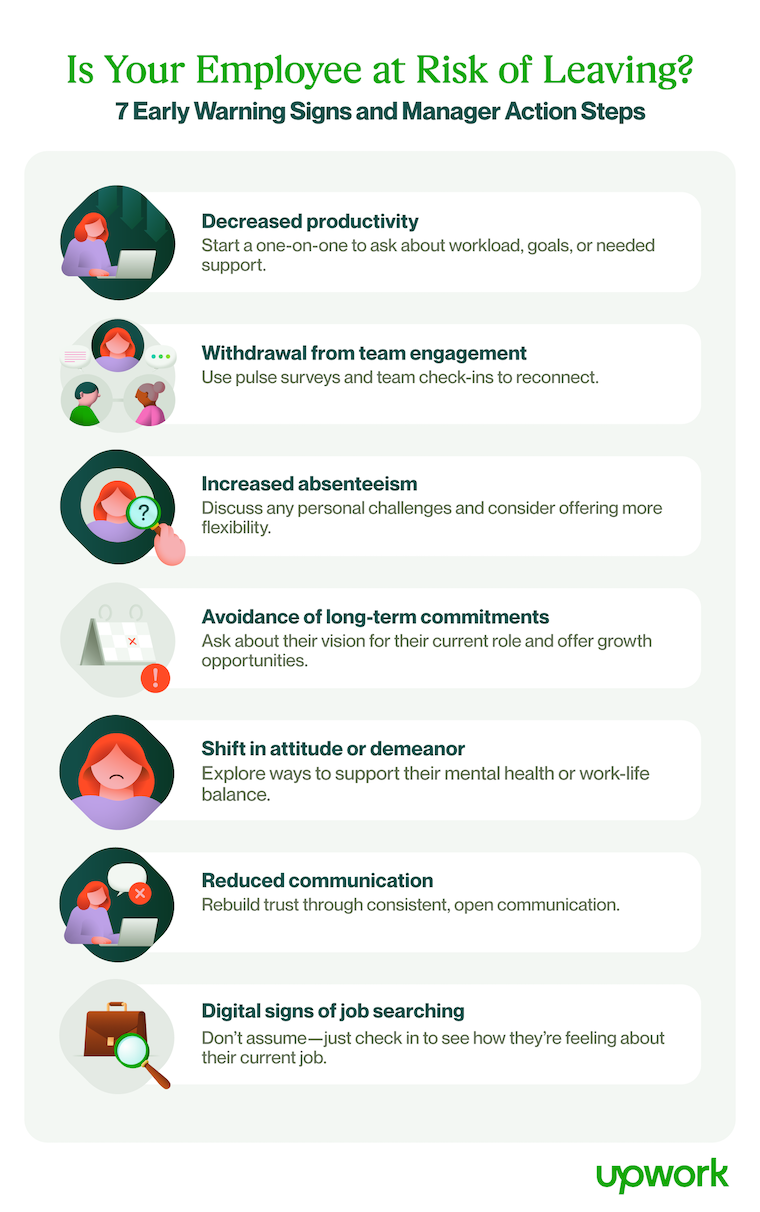
How managers can respond proactively
Spotting early signs that a team member may be planning to leave gives managers the opportunity to intervene with care and strategy. Here are practical steps to respond before turnover disrupts your team:
- Start with open communication. Use regular one-on-one meetings and pulse surveys to create a safe space for honest conversations about workload, goals, and well-being.
- Check in when you see red flags. Don’t assume the worst—ask questions with empathy and curiosity to understand what your team member might need.
- Offer growth and development. When possible, align professional development opportunities or stretch projects with their changing interests.
- Bring in freelance support when needed. If team bandwidth is tight, freelance professionals on Upwork can help you maintain momentum, reduce burnout, and keep projects on track.
- Build retention strategies with flexibility in mind. Support top talent with a culture rooted in communication, adaptability, and career path clarity.
Proactive leadership helps prevent quiet quitting and ensures your most valuable team members feel engaged, supported, and motivated to stay.
The rising trend of revenge quitting
Revenge quitting is the act of leaving a job suddenly and intentionally, often without notice, as a direct response to the perception of poor management, lack of support, or a toxic company culture. Unlike traditional resignations, this form of exit is emotionally charged and meant to send a message.
This trend is especially damaging to morale because it:
- Breeds mistrust among the remaining employees
- Disrupts workflows
- Signals that engagement is no longer worth the effort
For human resources leaders, preventing revenge quitting starts with:
- Building a transparent feedback culture. Normalize regular feedback loops through structured one-on-ones, anonymous surveys, and team retrospectives that focus on improvement, not blame.
- Maintaining open communication. Model transparency from leadership, set clear expectations around updates, and use shared platforms where information is accessible to everyone.
- Ensuring employees feel heard and supported. Actively listen during check-ins, follow up on concerns with action, and provide resources that support personal and professional growth.
Promoting employee engagement, investing in manager training, and creating space for honest dialogue are critical to rebuilding trust and strengthening company culture before turnover becomes contagious.
Why employees really quit
Compensation is surprisingly not the main reason people leave their jobs. For many, the real reasons are poor culture, ineffective leadership, and limited support. To address employee retention effectively, HR leaders need to understand these underlying motivations and realign their strategies.
According to SHRM data, the top reasons employees quit in 2024 were:
- Toxic or negative work environment: 32.4%
- Poor company leadership: 30.3%
- Dissatisfaction with manager or supervisor: 27.7%
- Lack of career growth opportunities: 24.1%
- Poor work/life balance: 20.8%
- Unsatisfactory pay: 20.5%

Don’t wait for a resignation letter
Spotting the signs an employee is about to quit isn’t about micromanagement—it’s about understanding behavior shifts that signal disengagement or burnout. From missed deadlines to communication drop-offs, these subtle red flags can quietly chip away at your team’s momentum and morale.
That’s why building effective retention strategies is more important than ever. Catching early signs helps preserve relationships, retain top talent, and ensure your team stays focused and supported. And when transitions do happen, hiring freelance professionals can keep projects moving and prevent burnout from spreading among new employees or remaining team members.
Being proactive today helps you retain the people who matter most, before they’ve already decided to leave. Hire freelancers on Upwork and keep your team ahead of the curve.
Upwork is not affiliated with and does not sponsor or endorse any of the tools or services discussed in this article. These tools and services are provided only as potential options, and each reader and company should take the time needed to adequately analyze and determine the tools or services that would best fit their specific needs and situation.

.avif)

Author Spotlight

Upwork is the world’s largest human and AI-powered work marketplace that connects businesses with independent talent from across the globe. We serve everyone from one-person startups to large organizations with a powerful, trust-driven platform that enables companies and talent to work together in new ways that unlock their potential.