What Is Advertising? Full Guide With Essentials and Examples
Delve into the evolving landscape of advertising in 2026. Discover strategies and channels to effectively promote your business and drive growth.

.png)
.avif)
Advertising is an important part of all business marketing. It helps brands build awareness and trust among their target audience, as well as respond to competitors in the same market.
This guide will help you better understand the role that advertising plays in marketing, and how it can benefit your business.
From some history of advertising to tips for starting your next ad campaign, it’s all here. Let’s jump in!
What is advertising?
Advertising is the use of sponsored, branded messages to sell products or services. The purpose of ad campaigns is to boost revenue, gain an advantage over competitors, and build brand awareness.
What are ad campaigns?
Ad campaigns are a series of advertisements grouped around a common theme or goal. Companies may create their ad campaigns internally, by working with independent advertising consultants or with the help of a third-party advertising agency.
The following images show the way one company’s advertising has evolved over several decades. First, we see a vintage Sunbeam toaster ad, most likely from a magazine. And the second image shows how an Australian microinfluencer with over 28,000 followers shares photos of a Sunbeam toaster in her kitchen as part of a sponsored post.


Both ads were used to drive sales of the same product, but the ad’s style and format has changed along with audiences — and technology.
Why is advertising important?
Advertising is a reliable way to get specific messages and product images in front of people who might want to buy what a company is selling. Through ads, businesses can:
- Outperform competitors
- Raise awareness about new products or services
- Remain relevant to existing customers
- Build trust and loyalty
- Cultivate a pipeline
- Expand into new markets and regions
- Boost the sales volume of goods or services
Without advertising, it could be much harder to reach new customers and refute the claims of rival companies. It takes one person to knock on one door or call one phone number. A single bus stop ad or social media post, though, can reach thousands or even millions of people.
Advertising vs marketing: What are the differences?
Advertising is a form of marketing, but not all marketing communications are advertising. On a broad scale, marketing — which can take various forms — involves identifying an audience’s needs and figuring out how to deliver solutions.
The marketing process may include:
- Surveys
- Data analysis
- Research
- Product development
- Testing
- Implementation
- Communication
Advertising comes into play during the communication stage of the marketing process.
Types of advertising
Ads may exist in multiple formats, even across one campaign. Traditionally, advertising media took the form of:
- Printed magazine or newspaper pages
- Billboards
- Radio sponsorships
- Television commercials
Today, advertising extends into the digital realm as well, with ads appearing online, in email, on smartphones, and on other internet-connected devices.
Many effective advertising messages involve multichannel marketing, where a business releases a mix of ads and content in more than one format. This can include a blend of traditional and digital advertising formats. Companies may opt to use any of the following advertising methods.
Traditional advertising
From the 1500s to the early 1900s, ads were primarily printed and full of text. In the 1930s, this began to change as print ads became increasingly image-heavy. And as radio and television reached more homes, advertisers began creating commercials as well.
Print
Print advertising peaked in the 1900s, before the advent of widespread digital marketing, and is currently in a decline. However, many businesses still find some value in print formats including newspaper ads, magazine ads, and advertorials.
Newspaper ads
Newspaper ads can range from small classified advertisements placed by individuals to full-page spreads ordered by large organizations or political parties. This example from the U.K.’s The Daily Telegraph shows a variety of ad sizes across two pages:

Magazine ads
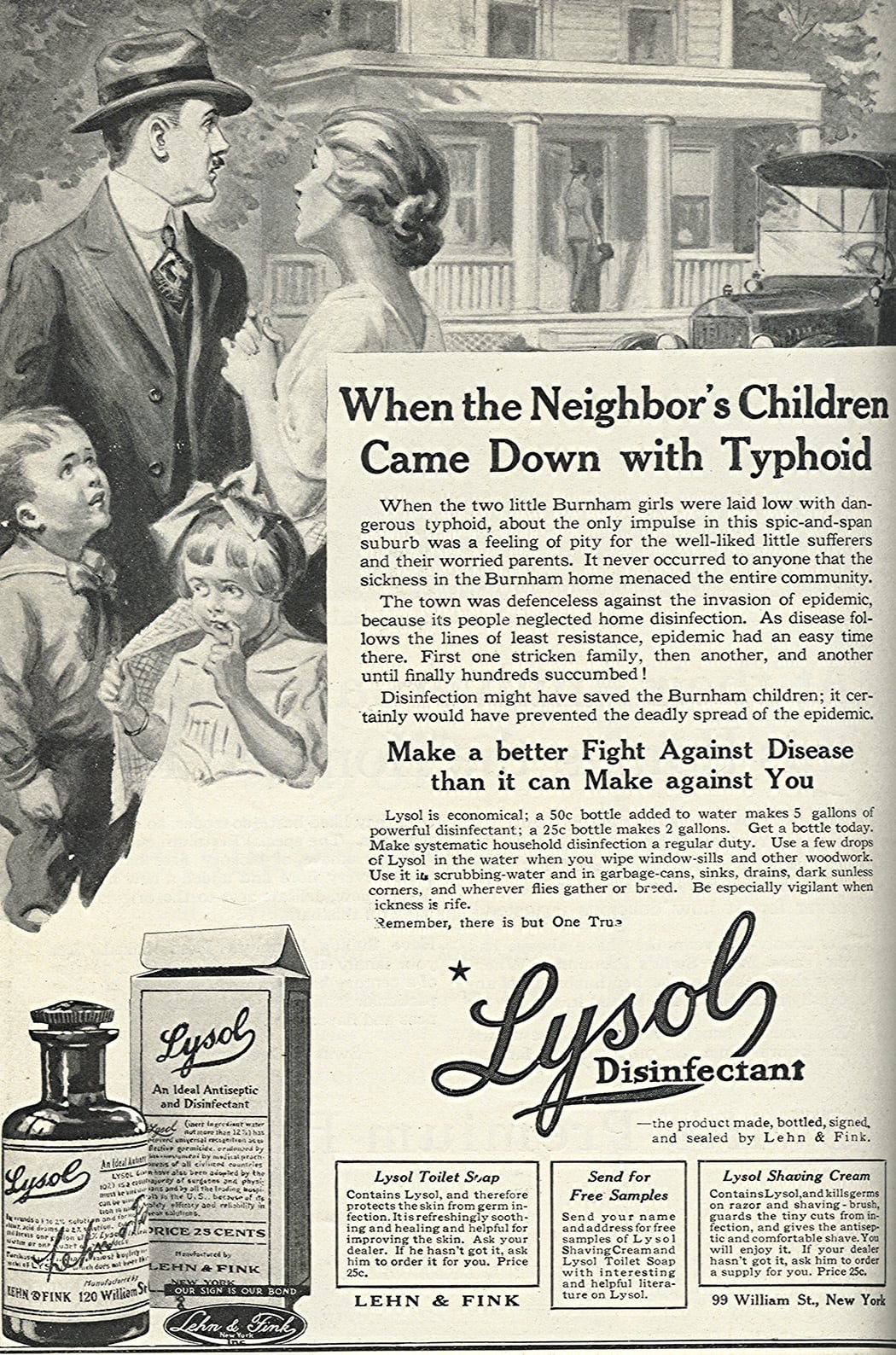
Magazine ads have undergone one of the most noticeable changes of any print ad format, becoming far more image-heavy than in the past. Compare these two ads for Lysol disinfectant, one from 1918 and one from today:

Advertorials
Text-heavy magazine ads do still exist in the form of advertorials. These ads appear to be a normal informational article but are actually paid for — and often produced by — a company. It’s very similar to the concept of a sponsored blog post or paid social media partnership.
Billboards
Billboards are a form of outdoor advertising that’s meant to leave an impression on potential consumers as they travel or move about their day. This is one form of traditional advertising that continues to grow, despite some fluctuations related to the economy.
Even Amazon buys billboards despite being a major online retailer.
Direct Mail
Catalogs, restaurant menus, coupons, car dealership flyers, and other forms of “junk mail” are all direct mail. As the name implies, direct mail is any form of advertising that goes directly to a potential customer’s home or work mailbox.
Many businesses use direct mail in addition to email — and it’s still quite effective. According to Australia Post, 81% of consumers read their mail immediately upon receipt, and 65% read every single item in their mailbox.

Radio
Radio advertising rose to prominence in the 1930s, when advertisers sponsored entire radio programs. In fact, this is exactly how “soap operas” got their name! Soap manufacturers like Procter & Gamble would sponsor episodes of radio dramas, filling all the ad spots and building brand awareness with listeners.
Today, digital audio ads are more popular. The money spent on digital audio ads has nearly tripled over the past five years, and Spotify alone reported an eight-fold increase in revenue from ads between 2020 and 2024.
Television
Radio commercials gave way to television advertising in 1941 when the Bulova watch company ran the first-ever commercial during a baseball game. It cost the company $9 — the equivalent of $198 today.
Live sporting events are still a great opportunity for television advertisers to grab consumers’ attention — check out this Upwork ad that debuted during a football game on Thanksgiving Day in the U.S.:
Digital platform advertising
The first-ever banner ad appeared online in 1994. It was a vague, clickable graphic that led to an AT&T website — and got a massive click through rate of 70%. Today, online advertising can involve not only computers, but smartphones, tablets, smart TVs, generative AI chatbots, and other internet of things (IoT) devices.
SEM and SEO
Search engine marketing (SEM), also known as pay-per-click (PPC) advertising, often goes hand in hand with search engine optimization (SEO) strategies.
A common goal of SEM and SEO is to generate clicks to a webpage. Companies prepare ads in advance and submit them to different platforms, such as Google or Amazon, along with an amount they’re willing to spend to run the ad. From there, complex algorithms make near-instantaneous decisions about which ads a user will see based on their interests, keywords, and the company’s budget.
Display ads
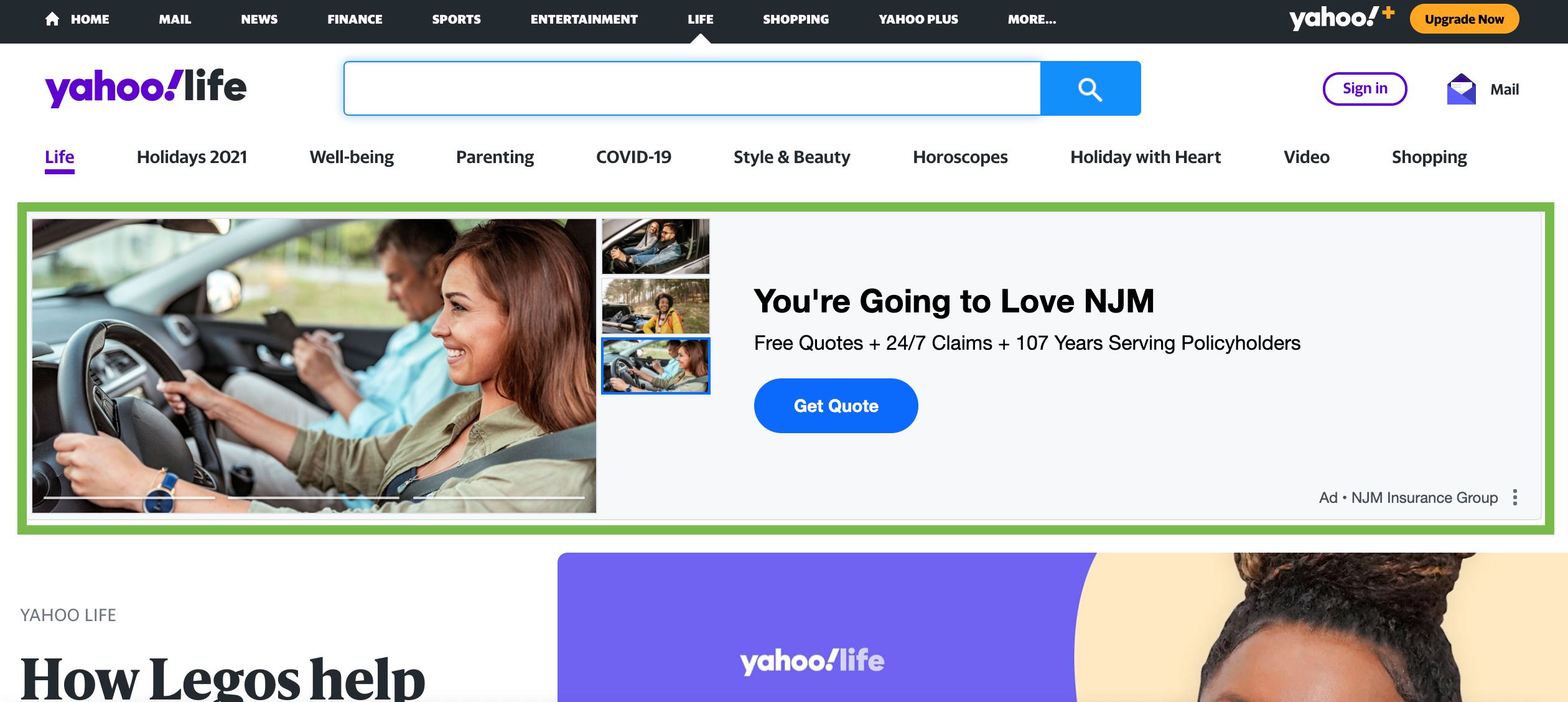
Display ads are banners, images, and pop-ups that appear around website and social media content. The same display ad may appear to all visitors of a website, or it may change based on individual users’ data. If you’ve ever searched for something on your phone and then noticed ads for it on a website a few days later, that’s display advertising in action.
You can see an example of a display ad on Yahoo.com below — it’s highlighted in green:
Content marketing
Time for a quick pop quiz! Can you correctly identify which of the options below counts as advertising?
A. An employee of a cookware company writes a blog post about a product launch and puts it on the company’s domain
B. The company pays a popular lifestyle influencer to include the new product in a holiday recipe post on the influencer’s blog
C. A company employee writes a blog post about the new product and pays for it to appear on a cooking magazine’s website
If you answered B and C, you’re correct.
In example A, the company is engaging in self promotion on their own website — it’s plain old marketing. In examples B and C, though, money changed hands, and the content became a paid ad. This type of advertising is very similar to traditional print advertorials.
In the following example, an Amazon-sponsored article on Forbes is distinguished as an ad by a small addition to the author’s byline:

Social media advertising
There are two main ways a company can advertise on social media:
- Pay the social media platform directly for a PPC ad or a display ad
- Pay an influencer to post about a company's products or services as part of their normal content creation
Social media platform ads typically utilize a pay-per-click model, while influencers may be paid a fixed rate or variable amount based on views. The influencer could also be compensated with free product.
The approach that works best for your company may vary depending on your budget, product or service, and audience. These factors should all play into your overall social media advertising strategy.
Podcast advertising
Podcast ads are a bit like a modern-day version of radio ads from the 1930s. Ads are often read by a podcast’s hosts, giving the content a conversational, organic feel. Ads may appear throughout a podcast and are either read live by the host during the recording or get prerecorded and inserted during editing.
Programmatic advertising
Programmatic advertising is a type of digital marketing in which ads only display to people who meet particular criteria. When setting up a programmatic ad campaign, advertisers can indicate the data they’d like to use to narrow down their target audience. These data points can include:
- Demographic factors like age and location
- Interests and hobbies as inferred from online activity
- Digital behaviors, including activity during specific times of day
- Type of device, such as smartphones or computers
Programmatic advertising may involve digital and social media ads, and often follows a PPC pricing model.
Local vs national advertising levels
Advertisers may choose to run local or national campaigns, depending on their budget and target market.
National campaigns are broad and often reach all major cities around a country. Local advertising campaigns, on the other hand, are narrower in scope and typically more affordable for small businesses.
Large corporations’ marketing plans may mix localization with a national campaign. For example, if a nationwide retailer like Target wanted to effectively appeal to all potential customers during a holiday campaign, it could:
- Run television commercials during a national broadcaster’s nightly news program
- Partner with popular influencers from different regions of the country
- Send direct mail flyers sorted by postal code, each featuring deals specific to the recipient’s local Target stores
Bigger isn’t always better when it comes to advertising. Identifying a specific audience — including by location — can help you get the largest return on your advertising investment.
How to advertise your business in 7 steps
If viewing the great ads above has inspired you to begin advertising your business, you’re in the right spot! Keep reading to learn more about how you can:
3. Determine where to advertise
5. Test with potential customers
7. Evolve your advertising strategy
It’s important to follow each of the below steps in order to maximize the effect of your ads.
1. Understand your audience
It’s very important to identify your target audience before launching any ad campaign. If you skip this step, your ads may be directed toward people who aren’t going to buy or use what you’re selling. This leads to a lower return on investment and wasted advertising costs.
To develop your target audience, you’ll need to:
- Establish whether you’re selling to individual consumers or businesses.
- Develop data points that fit a particular profile, including values, interests, age, relationship status, income, occupation, and location
- Conduct market research around the proposed target audience to confirm there’s a need and desire for your product or service
- Check out the competition’s advertisements and success rates
Once you’ve developed a target audience profile, think about any ways that you could break it down further. If you’re able to create two different ad sets that can appeal to secondary groups in your target audience, this may help to boost conversion rates.
2. Create personas
Take the target audience data you developed in step one and use it to create buyer personas. Personas are profiles of fictional people that represent your target groups. Each persona should include:
- A descriptive name, such as “Home chef Harry”
- Demographic data including an age range, income level, occupation, location, and interests
- Goals and pain points that this person may have
- Things this person may value or fear
- Daily habits this person may have
Use these personas when discussing and structuring your ad campaigns.
3. Determine where to advertise
Next, think about where your target audiences are most likely to consume ad content. You may need to utilize more than one media channel to reach all of the people represented by your different buyer personas.
4. Develop effective ads
Once you’ve settled on a target audience and advertising channels, begin developing ad content. Your ads may be different across channels, or for each persona. This is perfectly fine — but try to carry a consistent theme or emotion through each ad. Doing so will help the ads become recognizable to viewers who may move across platforms or persona groups.
5. Test with potential customers
Before launching your full ad campaign, it’s important to test your ad with potential customers. If the budget allows, you may want to test your ads against a focus group. This can help you get feedback about your ad before it appears on billboards or online.
If you aren’t able to run a focus group, start by rolling your ad out to a limited audience segment and see how it performs. If you’re running digital ads, you may be able to implement A/B testing. These tests show you which version of an ad performs best for a given audience and can be particularly useful when developing programmatic ad campaigns.
Without testing, you may miss an opportunity to improve the impact of your ad.
6. Review results
You’ll need to continually review the results of your ad campaign, both directly after testing and once the ads launch. If you aren’t seeing the performance you expected, you may need to make changes to the campaign or the product itself.
This can happen to anyone, including large companies like Coca-Cola. After nearly 100 years of successful marketing and advertising, the beverage company hit a roadblock in 1985. Their advertising campaign for “New Coke” fell flat — not because the ads were bad, but because people hated the product. Because Coca-Cola monitored the way consumers perceived the product and campaign, they quickly realized the problem and rolled back all changes 79 days after launch. If Coca-Cola hadn’t been paying attention, the brand and its sales may have suffered long-term damage.
7. Evolve your advertising strategy
Every ad campaign is a chance to evolve and improve your advertising strategy. By taking lessons learned from one ad and applying it to another, you can build your brand’s awareness, trust, loyalty, and revenue over time.
Launching a successful advertising campaign
Whether you’re interested in advertising nationally or globally, traditionally or digitally, you don’t have to figure it all out on your own. There are plenty of great independent marketing strategists and advertising consultants who can help. Get started advertising more strategically by posting a job on Upwork today.
Upwork is not affiliated with and does not sponsor or endorse any of the tools or services discussed in this article. These tools and services are provided only as potential options, and each reader and company should take the time needed to adequately analyze and determine the tools or services that would best fit their specific needs and situation.

.avif)

Author Spotlight

Emily Gertenbach is a B2B writer who creates SEO content for humans, not just algorithms. As a former news correspondent, she loves digging into research and breaking down technical topics. She specializes in helping independent marketing professionals and martech SaaS companies connect with their ideal business clients through organic search.