How To Build a Brand From Scratch: 10 Steps for Success in 2026
Learn how to build a brand that will help you stand out to your target audience. See actionable steps to create an engaging brand from scratch.

.png)
.avif)
Whether you’re starting a new business or expanding an existing one, having an effective, engaging brand is one of the most critical ways to resonate with your target audience, stand out from competitors, and drive revenue. Because many components come into play with branding—including logo design, color palettes, and messaging, to name a few—building a brand from scratch is a significant undertaking and may seem overwhelming.
In this guide, learn steps to build a brand from scratch, as well as what a brand is, branding success stories, key elements of a brand, and frequently asked questions.
10 steps to build a brand from scratch
Building an effective brand doesn't happen overnight; it requires a thoughtful, creative, and strategic approach. Whether you’re building a brand for the first time or have done so in the past, the following steps can help you throughout the process.
Here are some steps to help you build a brand from scratch:
- Define your brand purpose and values
- Identify your target audience
- Complete competitive and market research
- Create a name and tagline
- Design an eye-catching logo and visual identity
- Tell your brand story
- Ensure consistency
- Market your brand
- Measure brand awareness and sentiment
- Evolve your brand over time
1. Define your brand purpose and values

Photo by Jason Goodman on Unsplash
Your brand purpose and values explain why your business exists beyond simply to drive revenue. A brand purpose is often defined in simple, one-line mission and vision statements that address how your company solves specific customer problems or addresses challenges in society as a whole. Organizations also often identify three to five values that guide day-to-day operations and decision-making.
As you define your brand purpose and values, consider the following questions:
- Why did you decide to start the business?
- What are you passionate about beyond making a profit?
- What problem does your product or service address for customers?
- How can your business make the world a better place?
- What unique perspective or solution can you offer that doesn’t already exist?
- How can your purpose and values distinguish your brand from competitors?
- How do you want your brand to be perceived by your customers?
- What behaviors or actions are most important to driving success at your organization?
- How do your personal values align with your business values?
- What values do you want workers at your company to embody?
- How will you uphold your values once they’re defined?
- Do the brand purpose and values have the flexibility to evolve over time?
2. Identify your target audience

Photo by Tima Miroshnichenko on Pexels
Determining your target audience and market is key to ensuring you reach the right prospective customers with your brand. Some businesses target a broad target audience to quickly grow revenue. However, identifying a more specific target audience can help you better understand niche customer needs and position your brand and business as a trusted expert on a specific solution or industry.
As you identify your ideal target audience and market, take into consideration which challenges your products or services address, along with which consumers or business buyers would be the best fit for your offerings.
Gather the following information to help you determine the most relevant target audience:
- Market research including publicly available data, as well as surveys, focus groups, and interviews with your intended audience
- Top problems and challenges your target audience is looking to solve
- Demographic data points including age, gender, race, education, occupation, income, and location
- Psychographic details, including interests, values, opinions, and behaviors
Once you gather the information above, develop detailed buyer personas, which are representations of your ideal customer and include details such as a nickname, age, income, goals and objectives, values, and product challenges and pain points. Concise buyer personas can provide the information needed to develop brand assets that resonate with your target audience.
3. Complete competitive and market research

Photo by olia danilevich on Pexels
No matter your product or service or the industry in which you operate, understanding the competitive landscape and market opportunity is essential to developing a brand that resonates with your target audience. Conducting a competitive analysis can help you identify ways to ensure your key differentiators stand out from competitors and help you attract new business.
As you complete competitive and market research, include the following information:
- The total market for your products and services, as well as whether demand is increasing or decreasing
- A list of direct competitors that provide the same or similar products and services
- A list of indirect competitors that offer similar, alternative solutions
- Competitors’ general company information, size, products and services, target market, pricing, revenue, and market share
- An overview of competitors’ branding, positioning, messaging, and marketing strategies
- Online reviews to understand competitors’ customer feedback and brand perception
- A SWOT analysis to assess your company’s strengths, weaknesses, opportunities, and threats compared to your competitors
4. Create a name and tagline

Photo by fauxels on Pexels
An engaging name and tagline are critical, ensuring your brand is memorable and seen in a positive light by your target audience. Examples of memorable brand taglines and slogans include Allstate’s “You’re in good hands,” Airbnb’s “Belong anywhere,” and Capital One’s “What’s in your wallet?”
Designing a brand name and tagline requires careful thought and consideration; most of your other brand messaging will tie back to your name. The following essential traits can help you get started.
- Unique. Your business name and tagline should be distinctly different from other brands—especially competitors—so potential customers don’t confuse your brand with another business.
- Memorable. A memorable name and tagline are easy to recall and keep your brand top of mind to potential customers.
- User-friendly. Keeping your name simple rather than overly complex can help your target audience remember your brand and also simplify the process of incorporating your name and tagline into brand assets.
- Future-proof. Take your target audience’s long-term customer needs into consideration, rather than incorporating timely trends or buzzwords as you develop your name and tagline.
- International. Select a brand name and tagline that not only resonate with your current target audience, but also have the potential to remain relevant as your business expands to new regions.
5. Design an eye-catching logo and visual identity

Photo by Antoni Shkraba on Pexels
Your logo is often the first impression your target audience and other stakeholders have of your brand and is one of many important pieces of your brand’s visual identity. A visual identity is your brand’s collection of visual elements that represent and differentiate your brand.
When designing an eye-catching logo, brainstorm how you want your target audience to interpret your logo. Research published in Harvard Business Review found that the most successful logos are descriptive, meaning the logo design elements describe what a company does. For example, SoundCloud, a music streaming service, uses sound waves in the brand logo and Planters nuts includes a peanut mascot in the logo.
Other best practices to keep in mind as you design a logo and your visual identity include:
- Ensure your logo and other visual elements align with your brand purpose and values
- Keep the design simple, uncluttered, and timeless, rather than incorporating timely trending visuals
- Create a logo that stands out no matter the use or channel—from a small logo on a mobile site to a larger-than-life appearance on a billboard
- Include a few versions or formats of your logo, such as black and white, transparent, and inverted background colors
- Choose a strong color palette and stick to fewer than five main colors to avoid overwhelming visuals
- Select the right typography that matches your brand personality, such as sleek and modern or fun and whimsical
- Conduct surveys, focus groups, or A/B testing to decide on a final logo design
- Align other elements of your visual identity, including imagery, photography, and icons
6. Tell your brand story

Photo by Canva Studio on Pexels
A brand story is a company’s narrative that explains the brand’s origin, purpose, values, and other important information to emotionally connect with the brand’s target audience. According to a global survey of 15,000 respondents conducted by Edelman, 84% of respondents agreed they need to share values with a brand in order to buy from the company.
Promoting your values in your brand story can help humanize your brand and engage your target audience from an emotional perspective, which can contribute to increased revenue and business relevance. As an example, Patagonia is an outdoor clothing and equipment company and highlights a commitment to environmental conservation and activism. The company has pledged 1% of sales to environmental preservation and restoration since 1985 and its core values include a focus on integrity, environmentalism, and justice.
A company’s brand story is typically highlighted on the About Us page of the website, as well as in other materials such as company overview documents and customer pitch presentations.
As you develop your brand story, go beyond simply sharing facts and figures, such as the year the company was founded and your founder’s name. Highlighting your brand purpose and values defined in the first step above is a helpful starting point. Also include the following details in your brand story to connect with your target audience:
- The “why” behind your brand, such as a relatable story about why your brand was founded
- Engaging biographical information about your founding team
- The specific problems your brand solves, with a focus on empathy for challenges your target audience faces
- An overview of the positive impact your brand will have on the world as a whole
- A timeline of important company milestones
- Testimonials or case studies highlighting the direct positive impact your brand has had on customers
- A vision for how you expect your brand to grow, evolve, and have a positive impact in the future
7. Ensure consistency

Photo by Kaboompics.com on Pexels
A consistent brand builds trust with your existing and potential customers and makes your brand easily recognizable. No matter the channel on which your target audience interacts with your brand—such as email, social media, your company website, or print advertising—your messaging and visuals should be consistent across all touchpoints.
Create standardized documents and brand guidelines with your approved branding materials. Once approved, centralize branding documents in an internal folder for employees and on your company website. Each time you engage an external partner or vendor, share your branding materials to ensure any work completed on behalf of your business maintains brand consistency. Also update essential documents as your brand evolves so workers or internal partners don’t use outdated materials.
The following documents can help you maintain brand consistency:
- Brand style guide. This is a comprehensive resource that covers all visual and verbal elements of your brand, along with how they should be used. Effective brand style guides include details such as logo usage guidelines, approved color palettes, typography, imagery, tone, and brand voice,
- Messaging framework. Your brand communicates your purpose and value propositions by developing a standardized messaging framework. An effective framework includes your mission, vision, values, tagline, slogan, elevator pitch, target audience profiles, and key messaging themes.
- Content guidelines. Defined content guidelines help your team and external partners create written and visual content that aligns with your brand. Your content guidelines should include visual content rules and a content style guide that features approved rules for grammar, punctuation, and style.
8. Market your brand

Photo by Kindel Media on Pexels
Once you’ve established the core components of your brand, marketing your brand is essential for reaching your target audience and driving business growth. Many marketers rely on the principle known as the marketing rule of seven, which states that customers need to encounter a brand’s marketing messages a minimum of seven times before making a purchase decision.
Develop and implement a multichannel marketing and communication strategy that includes a mix of online and offline marketing channels such as:
- Your business website
- Email marketing
- Digital advertising
- Traditional offline advertising like billboards, print, and radio ads
- Social media
- Online and in-person events
- Influencer marketing
- Content marketing such as blog posts, articles, eBooks, and customer success stories
9. Measure brand awareness and sentiment

Photo by Antoni Shkraba on Pexels
After you launch and begin marketing your brand, continually measuring brand awareness and sentiment can help you identify what’s working and key areas for improvement to reach and engage your target audience. Brand awareness is a measurement of how familiar consumers are with a brand’s name, logo, and offerings, while sentiment measures perception and feelings individuals have about a brand.
The following tactics can help you measure brand awareness and perception:
- Conducting surveys of the general population or your target audience to understand the level of brand awareness
- Using social media monitoring tools like Brandwatch, Hootsuite, and Sprout Social to track how often your brand is mentioned and the overall sentiment and tone of mentions
- Analyzing search traffic trends such as how often people are searching for your brand and related keywords in search engines
- Tracking website traffic and growth trends
- Keeping track of your brand’s media mentions in news articles, blog posts, and other content
- Evaluating your net promoter score (NPS), which is a measurement of how likely customers are to recommend your brand
- Assessing customer reviews on websites such as Google reviews, Trustpilot, and G2
- Comparing your brand awareness and sentiment metrics with competitors
10. Evolve your brand over time

Photo by Jason Goodman on Unsplash
While maintaining brand consistency is important to increasing awareness and building trust among your target audience, evolving your brand over time or occasionally rebranding can be beneficial. Many companies rebrand every seven to 10 years and make incremental updates more frequently, such as refreshing messaging or making minor logo changes.
Here are some best practices to keep in mind as you evolve your brand:
- Tracking industry trends such as the introduction of artificial intelligence (AI) and other technology
- Understanding how your target audience’s goals and business needs shift
- Asking customers for direct feedback and input to refresh your brand
- Regularly assessing how competitors update their branding
- Adapting your branding to remain relevant as your products and services, target audience, and target market expand or change
- Staying true to your brand purpose, mission, and values as you evolve your brand
What is a brand?
A brand is a unique identity and perception that differentiate a product, service, or company from competitors. A memorable, engaging brand offers many benefits, including helping a product, service offering, or business capture the attention of its target audience, establish trust, build loyalty, and drive sales.
According to the Edelman research cited above, 63% of respondents are more likely to purchase from a brand they trust. Additionally, 55% are more likely to stay loyal and 53% are more likely to recommend a trusted brand to other people. Establishing trust with your target audience should be a top priority as you build your brand.
Branding success stories
Now that you understand the steps involved in building a brand from scratch, the following branding success stories can be used as inspiration for your business.
Imperfect Foods

Imperfect Foods is a grocery delivery service that sells products with minor cosmetic imperfections, irregular sizes, or surplus items at a discounted price compared to traditional grocery stores. The brand started with a crowdfunding campaign and grew into a multimillion dollar business that was acquired by Misfits Market, another grocery delivery provider.
What works about Imperfect Foods branding:
- The logo is descriptive, showing an imperfect carrot as part of the brand name
- The brand tagline, “Taste before beauty,” explains that the company’s food has high-quality taste even if the products have minor imperfections
- Brand messaging plays to the brand’s values and customer needs, with the homepage headline stating, “Cut your grocery bill and your food waste”
- Imperfect Foods has a page dedicated to the company’s impact, which highlights how much food waste the business and its customers have prevented
- Branding and the company’s purpose is consistent across channels and assets, such as the company website, social media, and the brand’s low-waste packaging strategy
Death Wish Coffee
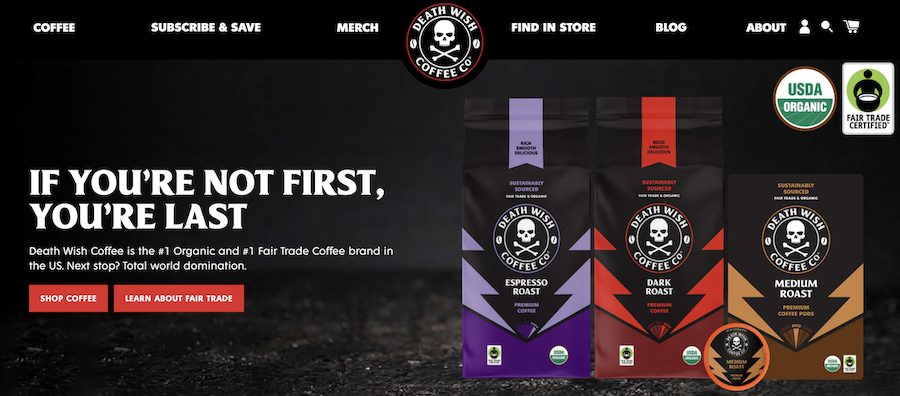
While the coffee brand market may seem overly saturated, Death Wish Coffee grew from a bootstrapped startup to a multimillion dollar company in large part due to its engaging branding. The brand markets itself as the “world’s strongest coffee” and uses its branding to appeal to coffee drinkers in need of an extra caffeine boost.
What works about the Death Wish Coffee branding:
- The brand tagline, "Fiercely strong” and logo featuring a skull and crossbones target coffee connoisseurs looking for coffee options stronger than other brands
- The dark brand colors also highlight the intensity of the brand’s caffeine content
- The brand messaging and voice is bold and brash, which takes a different approach from more broadly appealing coffee brands such as Dunkin’ and Starbucks
- Death Wish Coffee built a community of brand enthusiasts whose votes helped the brand beat 15,000 other small businesses to win a Super Bowl advertisement in 2015
Key elements of a brand
Effective branding often consists of three distinct elements. While some overlap exists between the three, understanding the distinct meanings and importance of each can help you successfully build a brand from scratch.
Elements include:
- Brand strategy is a long-term plan that includes your brand’s purpose, goals, and target audience. A strong brand strategy maps out a path for your company to build an engaging brand that resonates with your target audience.
- Brand identity includes your brand messaging, color scheme, visual assets, and other characteristics that differentiate your brand from competitors and shapes how your brand is perceived.
- Brand marketing is the processes, tactics, channels, and metrics needed to promote your brand, raise awareness, and build trust among potential customers and other stakeholders.
FAQ about building a brand
If you’re looking for additional information about building a brand, these frequently asked questions and answers below can be helpful.
What are the five C’s of branding?
As you follow the steps above to build a brand from scratch, keep in mind the five C’s of branding, which are common principles or elements marketers and entrepreneurs embrace to build successful brands. The five C’s of branding include:
- Clarity. Creating concise and easy-to-understand brand messaging that minimizes any confusion about what your brand represents
- Consistency. Ensuring a cohesive, consistent brand image across all potential touchpoints, including your visual and written assets, to build trust and recognition
- Content. Creating relevant, valuable, and engaging content that educates customers and establishes your brand as an authority in your industry
- Connection. Fostering relationships with customers and making them feel valued by displaying empathy, directly addressing their challenges, and actively listening to their feedback
- Confidence. Projecting enthusiasm, dedication and conviction in your brand both internally with team members and externally through marketing efforts and interactions with customers
What’s in a branding kit?
A branding kit is a centralized collection of visual elements, guidelines, and assets that help you maintain brand consistency While branding kits vary from one company to another, common components of an effective kit include:
- Logo and logo variations (such as color versus black-and-white versions)
- Color palette
- Approved fonts and typography
- Imagery including approved stock photography, illustrations, and icons
- Contact information for questions about your branding
How much does a logo creator cost?
When building a brand from scratch, you may want to enlist the support of an external logo creator, either by partnering with a branding agency or engaging an independent logo designer. The cost will depend on factors such as the logo creator’s experience, industry, geographic location, the complexity of your logo, and the number of feedback rounds on logo design.
Freelance logo designers on Upwork typically charge between $15 and $30 per hour, while a design agency may charge higher rates if an entire team is dedicated to brainstorming and designing a logo.
Helpful resources
In addition to the branding steps and insights outlined above, the following resources can provide useful guidance as you start a business, build your brand, or evolve and market your company branding:
- How to Start Your Own Business: 17 Steps for Success
- How To Start a Business from Home in 2024
- What is Corporate Branding? Identity and Strategy Basics
- What is Brand Positioning? A 2025 Guide to Creating a Brand Positioning Strategy
- Brand Personality: Dimensions, Elements, and Examples
- Step-by-Step Guide for Writing Your Marketing Plan
- 6 Effective Ways to Market Your Freelance Business
Build your brand with Upwork
Building an engaging brand can help your business reach and resonate with your target audience, build trust, and drive revenue growth. While the process may seem complex or daunting, you don’t have to build a brand from scratch on your own.
Independent brand strategists and branding professionals with diverse backgrounds, experience, and skills are available on Upwork to help you build or refresh your brand and ensure your brand aligns with your specific business needs and target audience. Get started today—create an account and post a job on Talent Marketplace.
If you’re a branding professional looking for new clients, search for branding jobs on Upwork. Clients around the world and across industries are looking for skilled professionals like you to help elevate their brands.
Upwork is not affiliated with and does not sponsor or endorse any of the tools or services discussed in this article. These tools and services are provided only as potential options, and each reader and company should take the time needed to adequately analyze and determine the tools or services that would best fit their specific needs and situation.

.avif)

Author Spotlight

Beth Kempton is a B2B writer with a passion for storytelling and more than a decade of content marketing experience. She specializes in writing engaging long-form content, including blog posts, thought leadership pieces, SEO articles, case studies, ebooks and guides, for HR technology and B2B SaaS companies. In her free time, you can find Beth reading or running.