You will get a Custom Built Django Web App

Project details
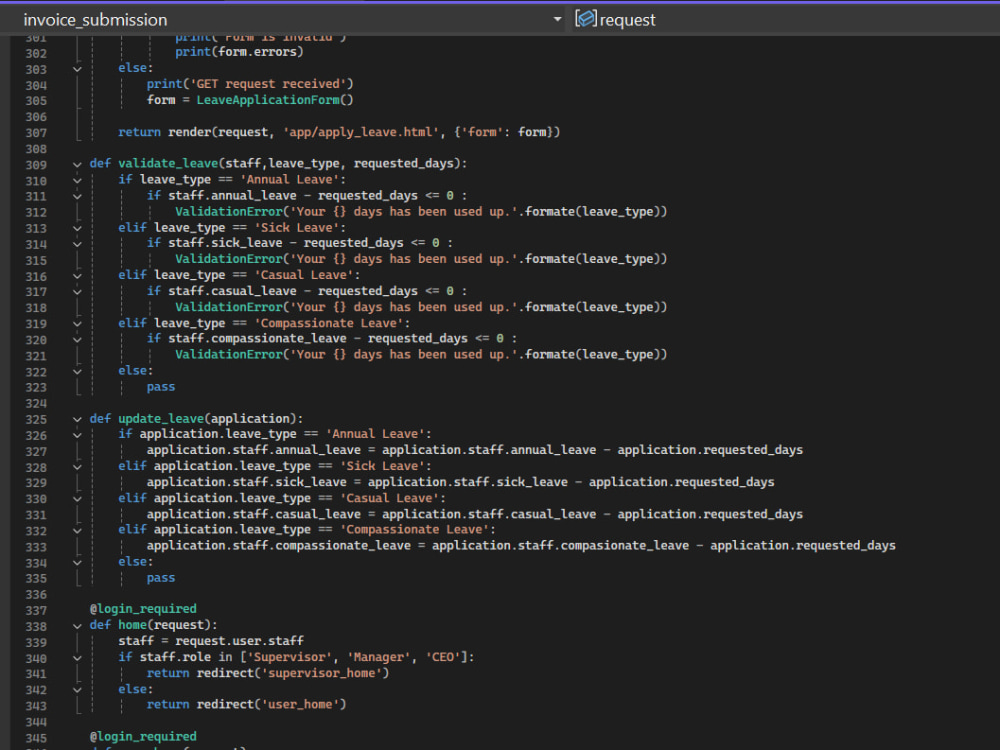
I will build a custom Django web application tailored to your business needs. Whether it’s a simple MVP, a dynamic web app with user authentication, or a full-featured platform with complex workflows, APIs, and admin dashboards, I deliver clean, scalable, and responsive web apps ready for deployment.
Key Features:
Free pages, revisions, and core features vary per tier.
All tiers are mobile-friendly and come with content upload and responsive design included.
Optional extras (pages, revisions, or advanced features) have flat tier-independent pricing, making it easy to scale your project.
Key Features:
Free pages, revisions, and core features vary per tier.
All tiers are mobile-friendly and come with content upload and responsive design included.
Optional extras (pages, revisions, or advanced features) have flat tier-independent pricing, making it easy to scale your project.
Programming Languages
HTML & CSS, JavaScript, PythonCoding Expertise
Cross Browser & Device Compatibility, Performance OptimizationWhat's included
| Service Tiers |
Starter
$250
|
Standard
$500
|
Advanced
$800
|
|---|---|---|---|
| Delivery Time | 10 days | 20 days | 30 days |
Number of Revisions | 1 | 3 | 5 |
Number of Pages | 3 | 7 | 10 |
Design Customization | - | ||
Content Upload | |||
Responsive Design | |||
Source Code | - | - |
Optional add-ons
You can add these on the next page.
Fast Delivery
+$100 - $300
Additional Revision
+$40
Additional Page
(+ 1 Day)
+$25
Design Customization
(+ 2 Days)
+$50
Source Code
+$50Frequently asked questions
About Osayanhu
End-to-End Machine Learning: Constructing and Appraising Models
Port Harcourt, Nigeria - 11:06 pm local time
Defining project objectives and problem scope
Collecting, cleaning, and preprocessing raw data
Exploratory data analysis to understand data characteristics
Feature engineering for data transformation and enrichment
2. Model Selection and Architecture:
Identifying suitable machine learning algorithms based on problem type
Choosing appropriate model architectures (e.g., decision trees, neural networks)
Hyperparameter tuning to optimize model performance
Evaluating trade-offs between model complexity and interpretability
3. Data Splitting and Training:
Dividing data into training, validation, and test sets
Implementing cross-validation techniques for robust model evaluation
Training models using relevant libraries (e.g., scikit-learn, TensorFlow, PyTorch)
4. Feature Selection and Engineering:
Selecting relevant features based on domain knowledge and analysis
Creating new features to capture underlying patterns
Applying dimensionality reduction techniques (e.g., PCA, t-SNE) when needed
5. Model Training and Optimization:
Implementing algorithms to fit models to training data
Regularization techniques for preventing overfitting
Fine-tuning hyperparameters to achieve optimal model performance
6. Model Evaluation and Interpretability:
Performance metrics for classification, regression, and clustering tasks
Interpreting feature importance and model decisions
Visualizing model outputs and predictions for better understanding
7. Model Refinement and Iteration:
Analyzing model weaknesses and areas for improvement
Iteratively adjusting hyperparameters and features
Addressing bias, variance, and data quality issues
8. Deployment and Monitoring:
Preparing models for deployment in production environments
Implementing model monitoring to detect performance degradation
Ensuring model fairness, robustness, and security
9. Documentation and Communication:
Creating comprehensive documentation for the end-to-end process
Communicating findings and insights to both technical and non-technical stakeholders
Collaborating with teams to integrate models into business processes
10. Continuous Learning and Adaptation:
Staying updated with the latest advancements in machine learning
Adapting to changing project requirements and technological landscapes
Continuously refining skills through practical projects and professional development
Steps for completing your project
After purchasing the project, send requirements so Osayanhu can start the project.
Delivery time starts when Osayanhu receives requirements from you.
Osayanhu works on your project following the steps below.
Revisions may occur after the delivery date.
Revision takes place
The Client provides feedback and changes are implemented