You will get a production-ready REST API built in FastAPI or Spring Boot on AWS
Project details
I build backend APIs that go into production and stay there - not prototypes that fall over on the first real user.
You get a REST API with a clean schema, validation on every input, honest error responses, automated tests, a Dockerfile, and documentation you can hand to the next developer. It runs on your infrastructure, under your accounts.
I agree the endpoint contract with you in writing before I write code, then give you a running deployment to test against - not a zip file at the end of the week.
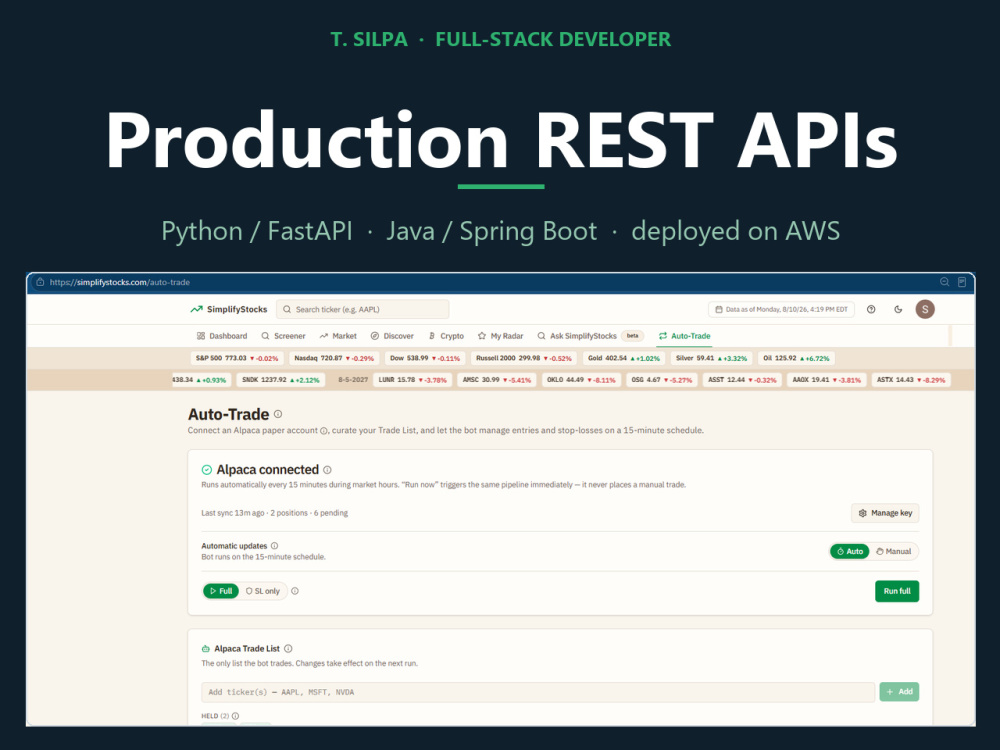
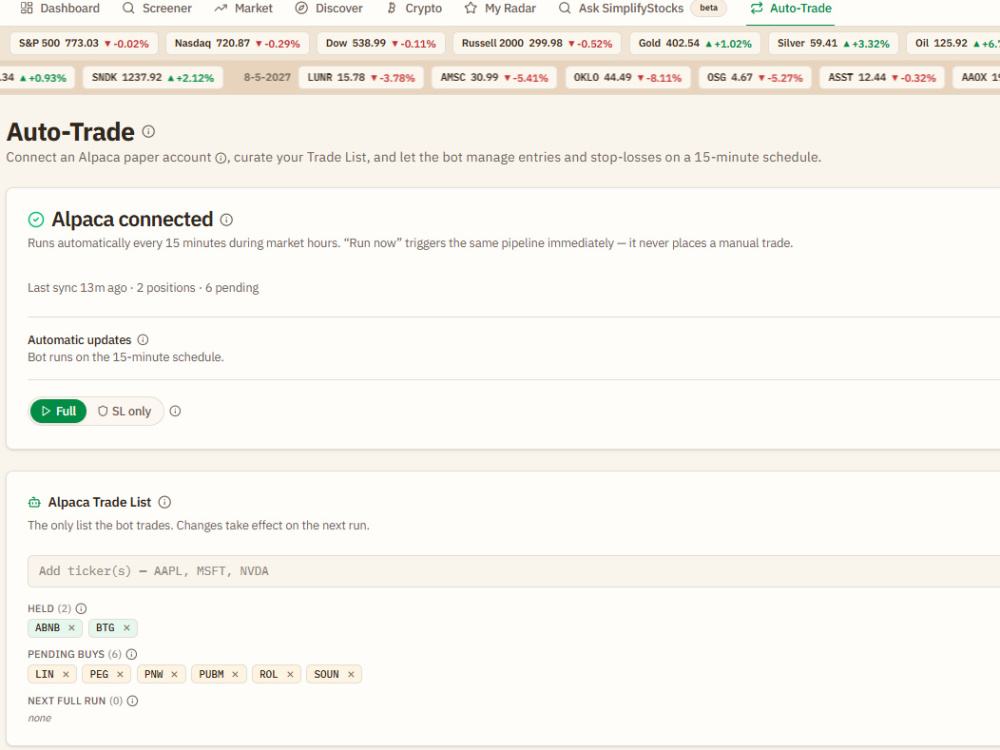
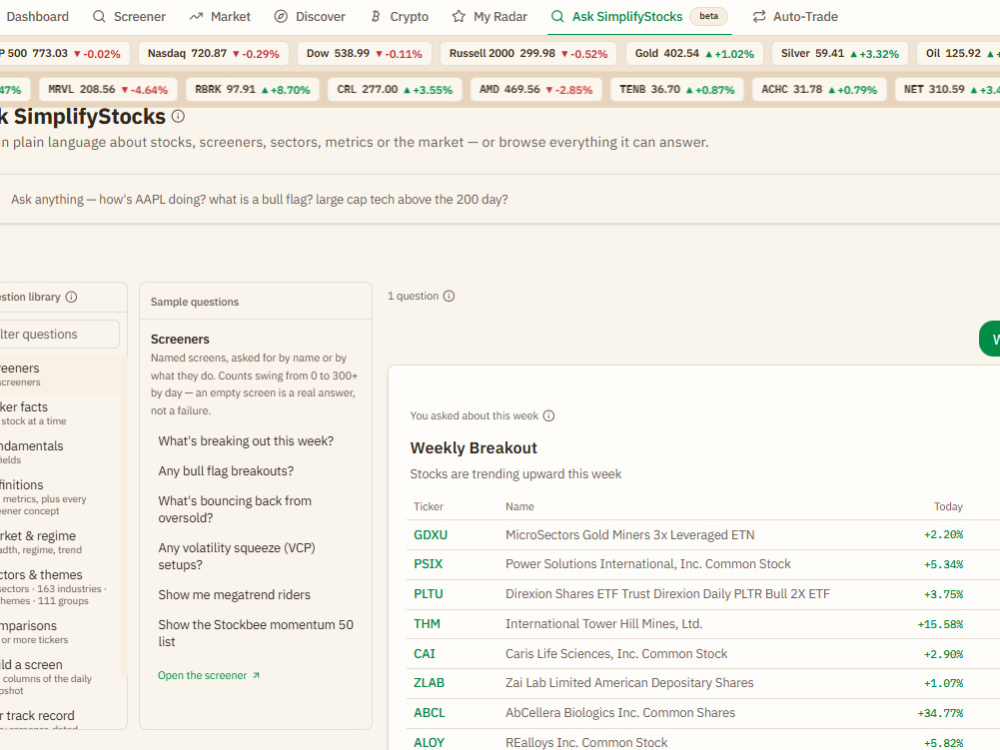
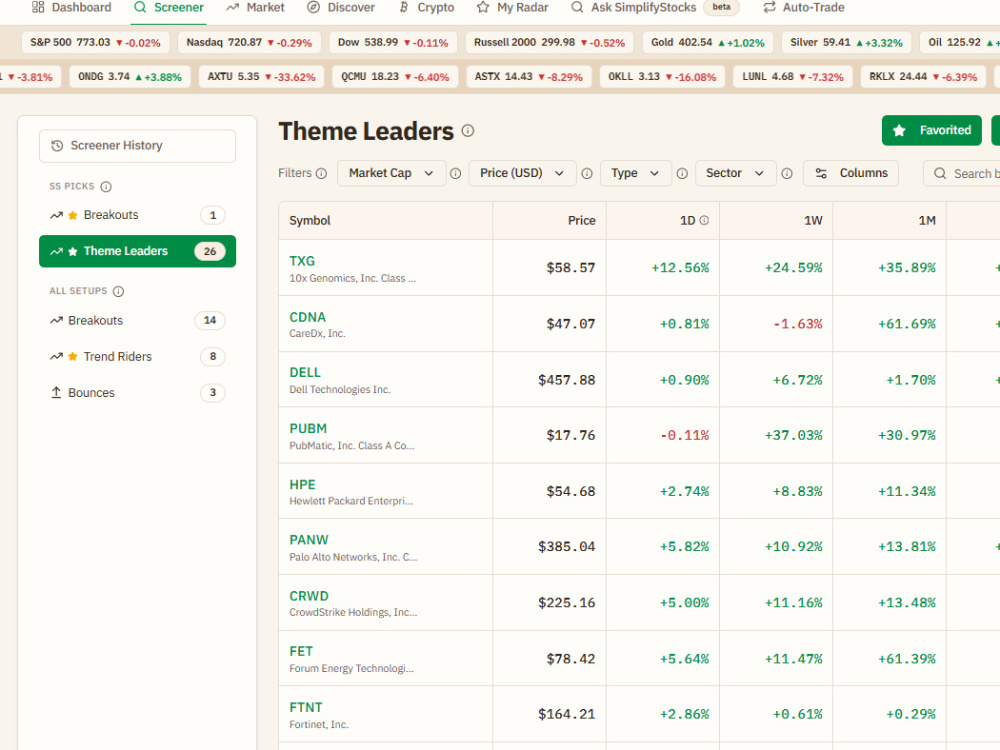
Background: I built and run www simplifystocks com solo - a stock research and automated-trading platform. It includes a Python/FastAPI ranking service and a Node API over a daily pipeline of 400+ metrics across ~11,000 tickers, plus a bot that acts on that data every 15 minutes during market hours. All on AWS: ECS Fargate, Lambda, DynamoDB, S3, provisioned with Terraform. Before that, years of enterprise Java and Spring Boot work.
So when I say the API will handle bad input, survive a flaky upstream, and tell you when it breaks - that comes from running one myself.
You get a REST API with a clean schema, validation on every input, honest error responses, automated tests, a Dockerfile, and documentation you can hand to the next developer. It runs on your infrastructure, under your accounts.
I agree the endpoint contract with you in writing before I write code, then give you a running deployment to test against - not a zip file at the end of the week.
Background: I built and run www simplifystocks com solo - a stock research and automated-trading platform. It includes a Python/FastAPI ranking service and a Node API over a daily pipeline of 400+ metrics across ~11,000 tickers, plus a bot that acts on that data every 15 minutes during market hours. All on AWS: ECS Fargate, Lambda, DynamoDB, S3, provisioned with Terraform. Before that, years of enterprise Java and Spring Boot work.
So when I say the API will handle bad input, survive a flaky upstream, and tell you when it breaks - that comes from running one myself.
Programming Languages
Python, JavaCoding Expertise
Performance Optimization, SecurityWhat's included
| Service Tiers |
Starter
$150
|
Standard
$450
|
Advanced
$1,200
|
|---|---|---|---|
| Delivery Time | 5 days | 10 days | 21 days |
Number of Revisions | 1 | 2 | 3 |
Number of Pages | 5 | 15 | |
Design Customization | - | - | - |
Content Upload | - | - | - |
Responsive Design | - | - | - |
Source Code |
Frequently asked questions
About Silpa
AI Engineer | Developer | Angular, Springboot, Java
Broadlands, United States - 12:20 am local time
Most recently I built simplifystocks website solo - a stock research and automated-trading platform, live in production. That meant every layer: a daily pipeline computing 400+ metrics for ~11,000 tickers into Parquet on S3; a Node/Express API; a Next.js 15 + React 19 front end with Stripe billing and Google/GitHub sign-in; a Python/FastAPI ranking service; and a trading bot that manages a connected brokerage account on a 15-minute schedule. Infrastructure on ECS Fargate, Lambda, DynamoDB and S3, provisioned with Terraform.
Before that: 10+ years building and supporting enterprise Java/Spring Boot and Angular applications across multiple domains, with the testing and code-review discipline that environment demands.
What that means for you:
- I own the whole slice. Requirements, schema, API, UI, deploy, monitoring - you do not need a second person to connect the pieces.
- I ask about the business before I write code. Understanding why a feature exists is what makes it get used rather than just delivered.
- I work well solo or embedded in a team, and I document what I hand over.
Tech: Java, Spring Boot, Python, FastAPI, Node.js, Express, TypeScript, React, Next.js, Angular, REST APIs, PostgreSQL, MySQL, DynamoDB, AWS (ECS, Lambda, S3, API Gateway), Terraform, Docker, Git.
Happy to start with a small paid task so you can judge the work before committing to the whole project.
Steps for completing your project
After purchasing the project, send requirements so Silpa can start the project.
Delivery time starts when Silpa receives requirements from you.
Silpa works on your project following the steps below.
Revisions may occur after the delivery date.
Scope and endpoint contract
we agree the exact endpoints, request and response shapes, and error cases in writing before any code is written.
Schema and setup
data model, repository, Docker, and the test harness in place.