You will get an up-to-date GPT-5.6 risk analysis and workflow redesign plan
Rising Talent
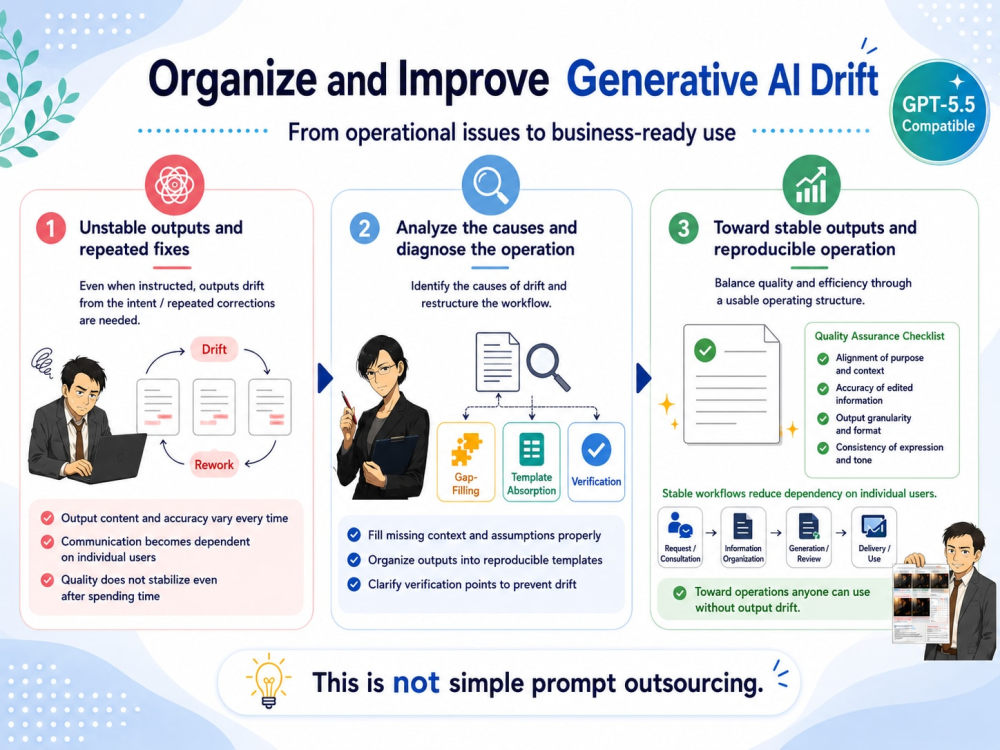
Project details
【モニター期間限定】
生成AIは、文書作成、レポート、社内資料、要約、調査補助など、さまざまな業務で活用されています。
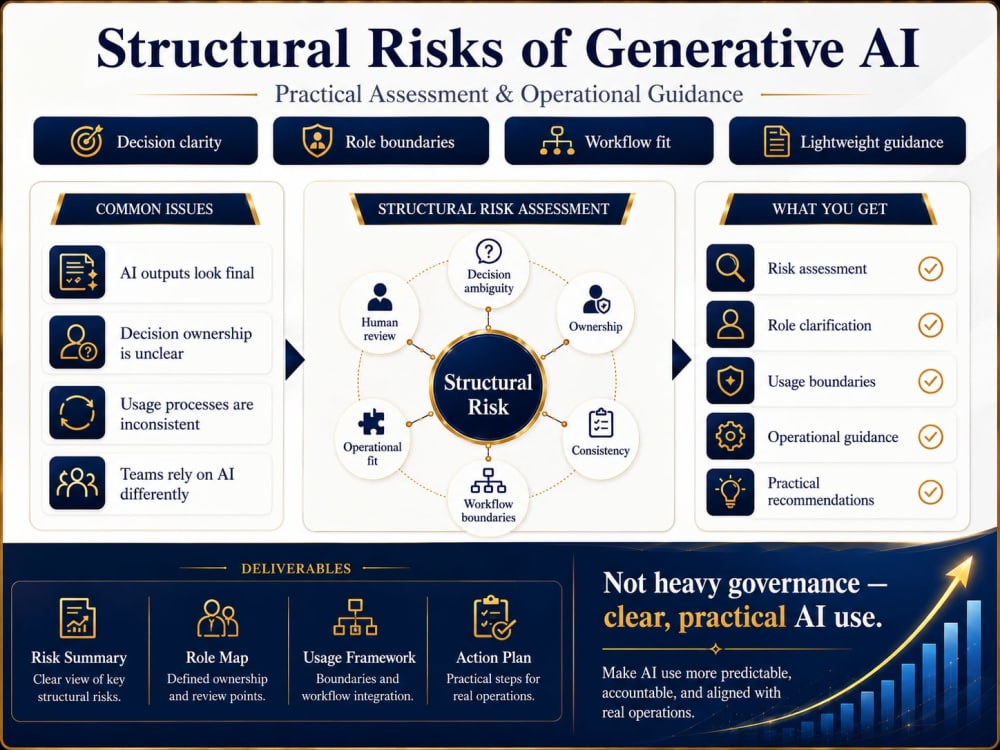
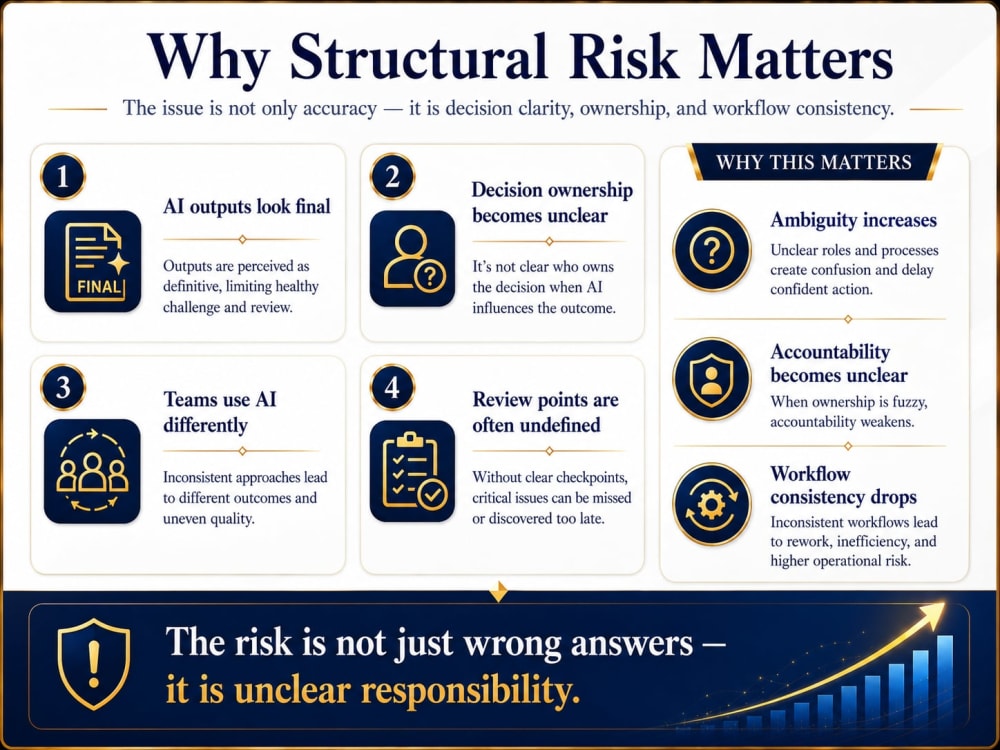
一方で、出力が整っているほど、それが「確定した判断」のように扱われ、誰が最終判断を行うのか、どこまでAIに任せるのか、どの段階で人が確認・停止すべきかが曖昧になることがあります。
これは単なる精度やプロンプトの問題ではありません。AIの役割、確認工程、責任範囲、停止条件が業務フロー内で整理されていないことによる構造的な運用リスクです。
さらに、モデルが更新されると、以前は機能していたプロンプトやワークフローが、そのままでは機能しない場合があります。モデルごとに解釈、補完、安定化の傾向が異なるため、確認工程、停止条件、ロールバック、人間の承認範囲も見直す必要があります。
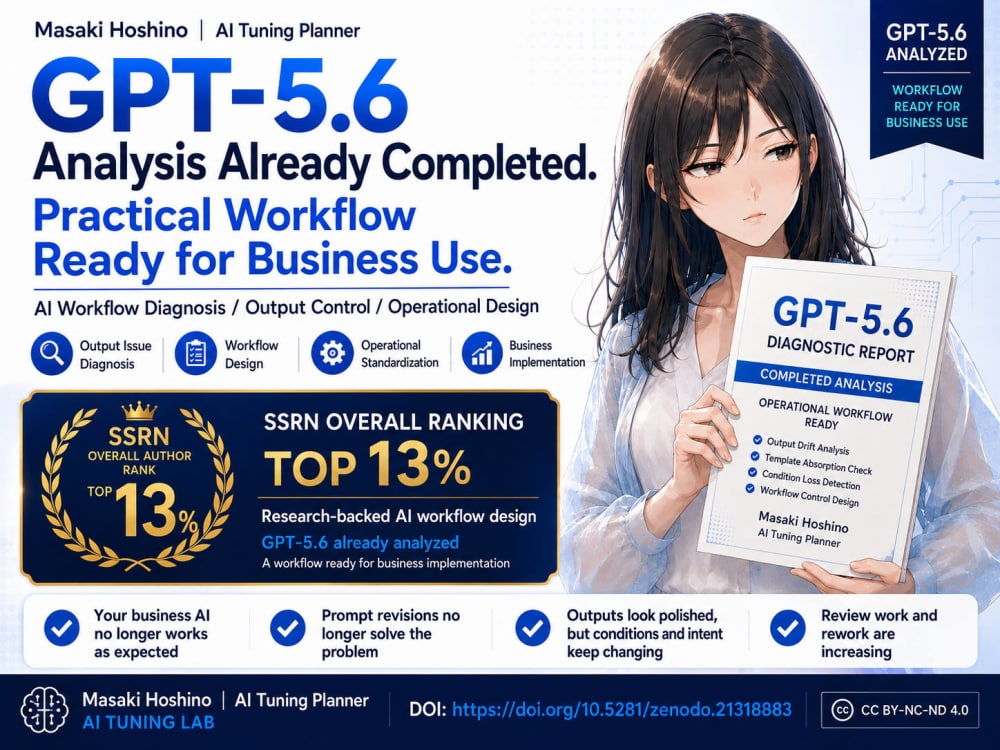
私はモデル公開直後から挙動変化を観測しています。GPT-5.6では、公開から2日以内に失敗モードと構造的リスクを分析し、検証ゲート、停止条件、段階別ロールバック、人間レビューを含む16段階の運用ワークフローを設計して、DOI登録しました。
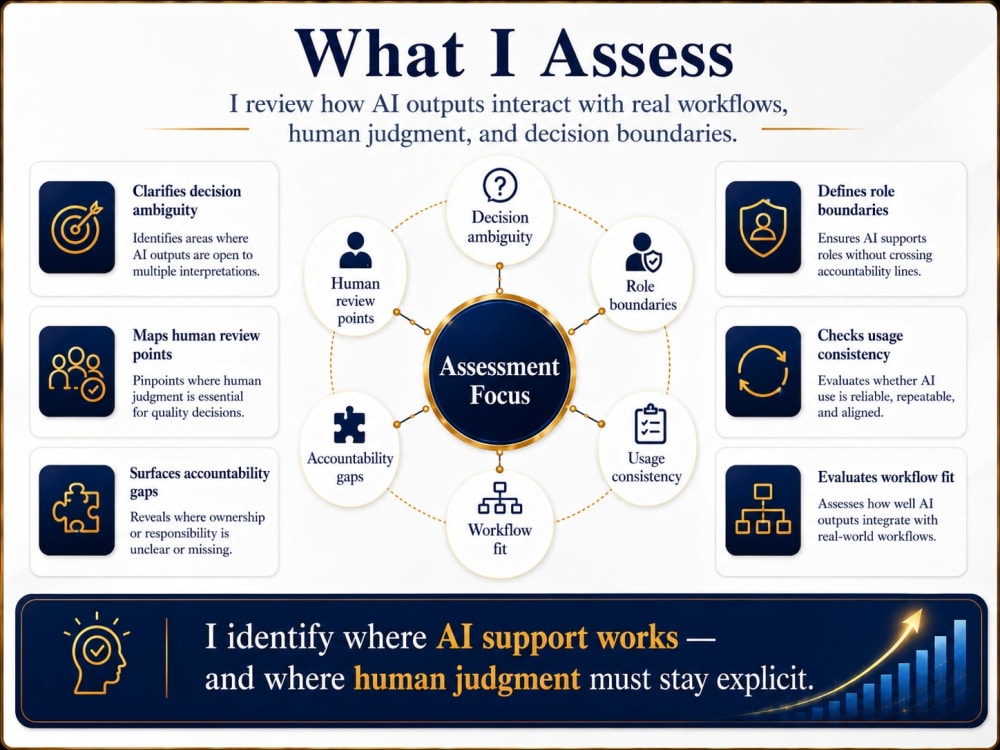
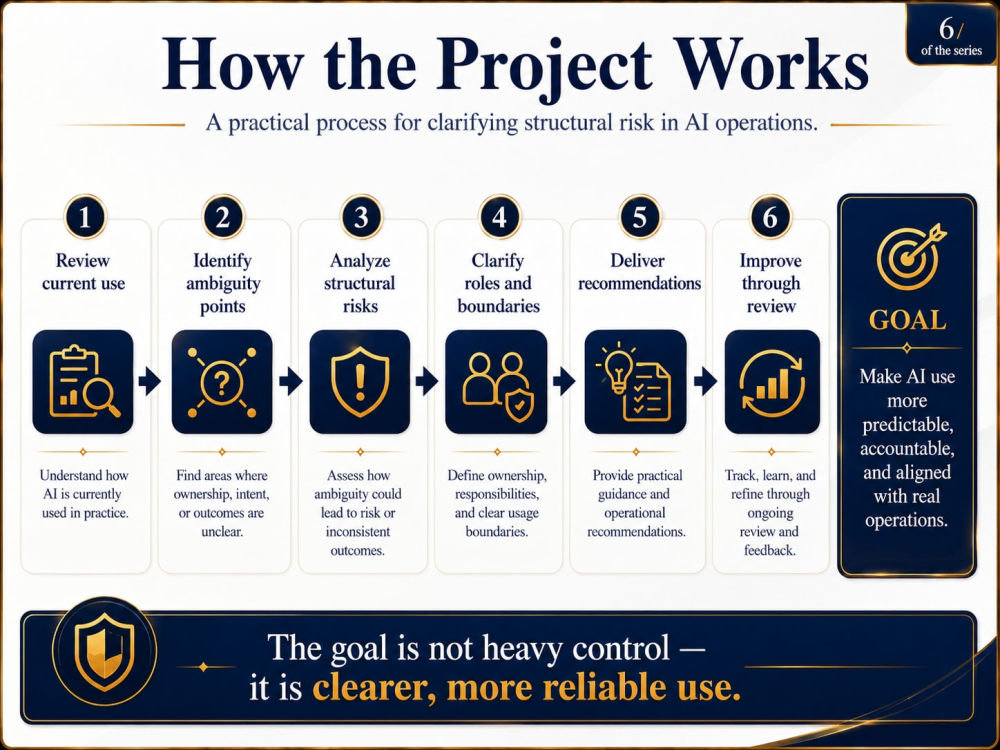
本サービスでは、現在のプロンプト、生成物、確認手順、業務フローを確認し、次の内容を整理します。
・判断が曖昧になっている箇所
・現在のモデルに合わない工程
・AIに任せる領域と人が判断する領域
・確認、停止、差し戻し、ロールバックのポイント
・モデル更新後も継続できる運用方法
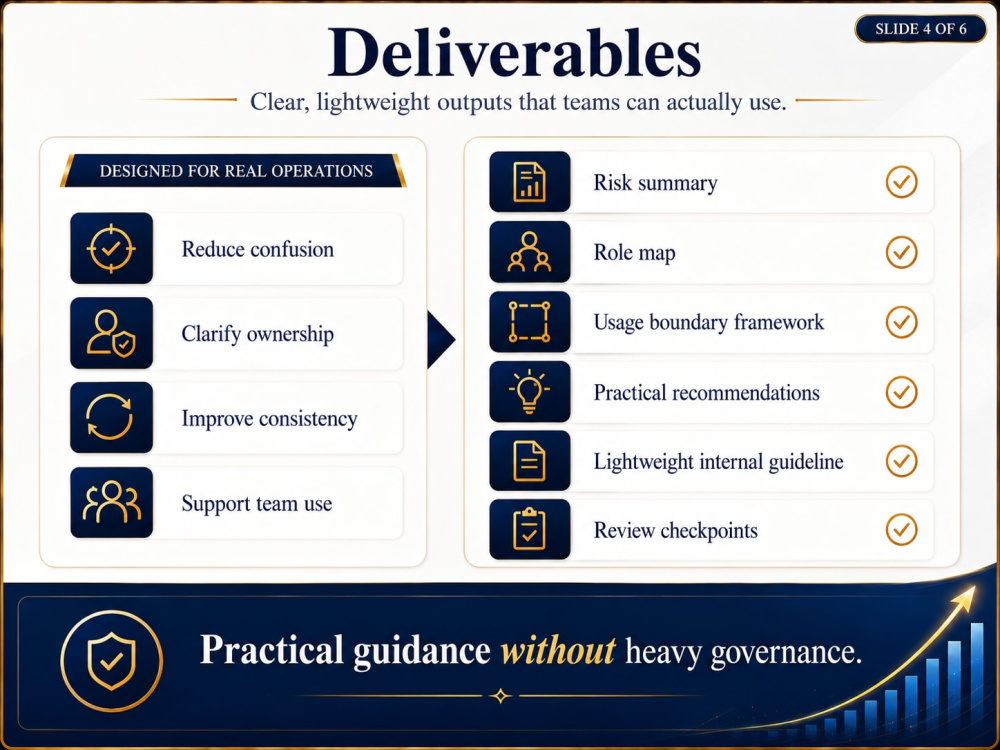
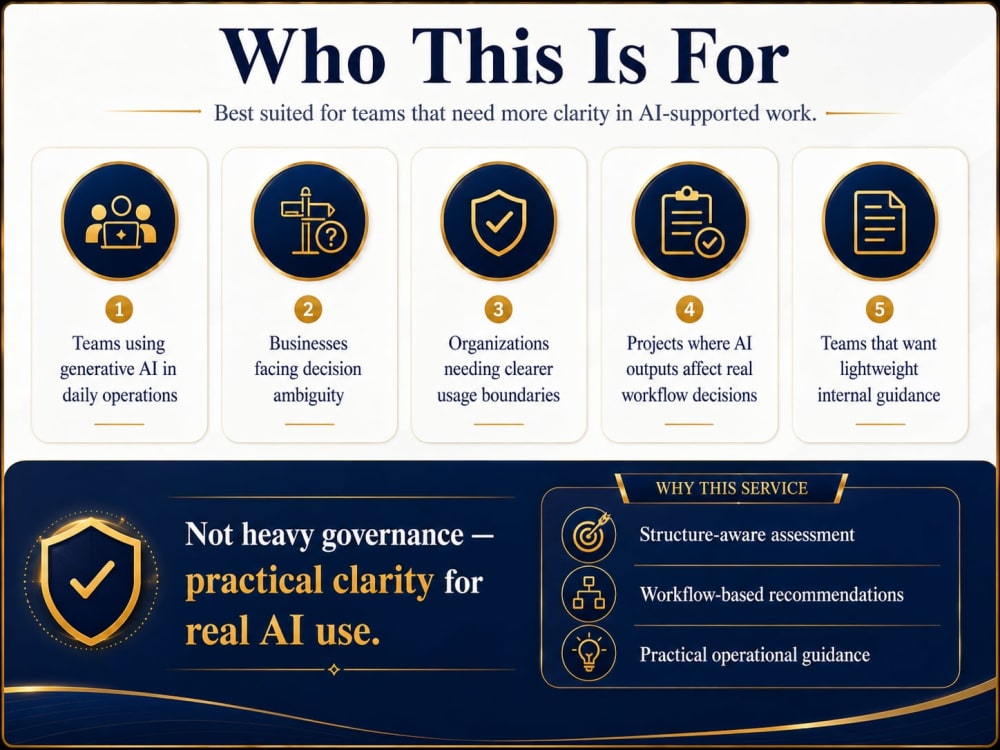
納品物は、構造的リスクの簡易診断、改善提案、役割と責任範囲の整理、簡易チェックリスト、チーム向けの軽量な運用ガイドラインを想定しています。
AI利用を制限するのではなく、現場の速度を落とさず、手戻り、判断の混乱、責任の曖昧化、モデル更新後の運用崩れを減らすための実務支援です。
現在、Upworkでの導入事例を構築するため、モニター期間限定の特別価格で提供しています。分析内容や納品品質を簡略化したものではありません。実施後に簡単なフィードバックへのご協力をお願いします。
生成AIは、文書作成、レポート、社内資料、要約、調査補助など、さまざまな業務で活用されています。
一方で、出力が整っているほど、それが「確定した判断」のように扱われ、誰が最終判断を行うのか、どこまでAIに任せるのか、どの段階で人が確認・停止すべきかが曖昧になることがあります。
これは単なる精度やプロンプトの問題ではありません。AIの役割、確認工程、責任範囲、停止条件が業務フロー内で整理されていないことによる構造的な運用リスクです。
さらに、モデルが更新されると、以前は機能していたプロンプトやワークフローが、そのままでは機能しない場合があります。モデルごとに解釈、補完、安定化の傾向が異なるため、確認工程、停止条件、ロールバック、人間の承認範囲も見直す必要があります。
私はモデル公開直後から挙動変化を観測しています。GPT-5.6では、公開から2日以内に失敗モードと構造的リスクを分析し、検証ゲート、停止条件、段階別ロールバック、人間レビューを含む16段階の運用ワークフローを設計して、DOI登録しました。
本サービスでは、現在のプロンプト、生成物、確認手順、業務フローを確認し、次の内容を整理します。
・判断が曖昧になっている箇所
・現在のモデルに合わない工程
・AIに任せる領域と人が判断する領域
・確認、停止、差し戻し、ロールバックのポイント
・モデル更新後も継続できる運用方法
納品物は、構造的リスクの簡易診断、改善提案、役割と責任範囲の整理、簡易チェックリスト、チーム向けの軽量な運用ガイドラインを想定しています。
AI利用を制限するのではなく、現場の速度を落とさず、手戻り、判断の混乱、責任の曖昧化、モデル更新後の運用崩れを減らすための実務支援です。
現在、Upworkでの導入事例を構築するため、モニター期間限定の特別価格で提供しています。分析内容や納品品質を簡略化したものではありません。実施後に簡単なフィードバックへのご協力をお願いします。
Machine Learning Tools
Azure Machine Learning, ChatGPT, GPT-3, OpenCV, Python Scikit-Learn, Vertex AIWhat's included
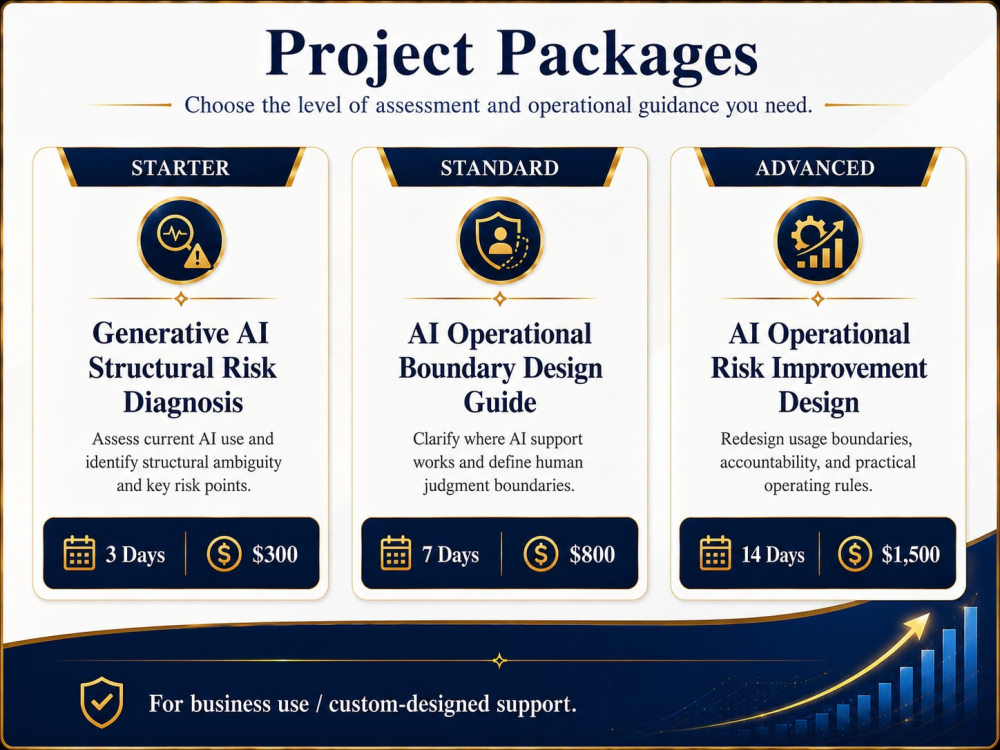
| Service Tiers |
Starter
$100
|
Standard
$200
|
Advanced
$500
|
|---|---|---|---|
| Delivery Time | 3 days | 7 days | 14 days |
Number of Revisions | 1 | 2 | 3 |
Number of Model Variations | 0 | ||
Model Validation/Testing | - | - | - |
Model Documentation | - | - | - |
Data Source Connectivity | - | - | - |
Source Code | - | - | - |
Optional add-ons
You can add these on the next page.
Additional Revision
+$150
Additional Scenario
(+ 2 Days)
+$250
Model Validation/Testing
(+ 2 Days)
+$300
Model Documentation
(+ 3 Days)
+$400Frequently asked questions
About Masaki
AI Tuning Planner | Ethics Architect | Bias Framework Originator
Tokyo, Japan - 11:09 pm local time
I help organizations diagnose, structure, and control generative AI workflows using evidence-based AI tuning and operational design.
My work goes beyond generic prompt optimization. I analyze externally observable AI behavior, including template drift, condition replacement, gap filling, output reconstruction, validation gaps, and workflow-level risks that can remain hidden behind polished or apparently stable outputs.
I am the original author of Open Bias Architecture (OBA), the Stability Substitution Effect (SSE), Operational SSE, Template Absorption, and related AI workflow-control frameworks. These concepts are supported by comparative observations, structured checklists, heatmaps, workflow records, and DOI-registered publications.
When you work with me, the published research is not being interpreted by a third-party consultant. It is applied directly by the author who developed the theory, observation methods, and operational workflows.
My public research is available through SSRN, Zenodo, Figshare, and ORCID. Within approximately six months of joining SSRN, I reached the top 12% overall author rank independently, without institutional affiliation, research funding, co-authors, or academic supervision.
How I Can Help
Diagnose AI output drift and recurring failure patterns
Identify hidden template absorption, condition replacement, and unsupported gap filling
Review prompts, system instructions, outputs, and existing workflows
Distinguish output stability from actual accuracy or operational control
Design validation criteria, stopping conditions, return paths, and rollback procedures
Improve consistency while preserving company-specific requirements
Integrate internal knowledge, brand tone, manuals, and OJT materials into practical AI use
Reduce rework caused by vague instructions, unstable outputs, or unclear responsibility
Create internal AI usage rules, review checklists, and operational documentation
Support AI governance and EU AI Act readiness from an operational perspective
Typical Deliverables
AI workflow diagnostic report
Output-drift and failure-pattern analysis
Prompt and instruction-structure review
Risk and responsibility map
Revised AI operational workflow
Validation and human-review checklist
Stop, return, correction, and re-verification criteria
Prioritized implementation action plan
My Approach
I first review the intended use case, current workflow, prompts, sample outputs, and existing review process. I then compare the intended conditions with the actual outputs, identify where structural drift begins, and redesign the workflow around explicit validation and control points.
The objective is not simply to produce better-looking AI outputs. It is to create an operational structure in which outputs can be reviewed, corrected, stopped, and used responsibly within the organization’s actual business environment.
If your AI outputs look polished but remain inconsistent, template-driven, difficult to verify, or expensive to correct, I can help identify the structural cause and convert it into a practical improvement plan.
ORCID: 0009-0000-1089-1730
Steps for completing your project
After purchasing the project, send requirements so Masaki can start the project.
Delivery time starts when Masaki receives requirements from you.
Masaki works on your project following the steps below.
Revisions may occur after the delivery date.
AI Output Structure & Risk Hearing
We assess AI usage and output patterns to identify issues and ethical risks, then define initial tuning direction.
AI Tuning & Governance Design
We analyze AI output structure, ethics, and bias to create a tuning design based on Open Bias Architecture.