You will get Production-Ready Multi-Agent AI & LLM System Development
Project details
A fully engineered, production-deployed AI agent system — not a proof-of-concept. You get multi-agent orchestration (research, writing, validation, or domain-specific agent roles), structured and validated LLM outputs, proper error handling and fallback logic, and a backend API that your frontend or existing product can call immediately. Built on your choice of OpenAI, Anthropic, Gemini, or Groq, with cost-optimized model routing
Machine Learning Tools
SQLWhat's included
| Service Tiers |
Starter
$2,500
|
Standard
$5,000
|
Advanced
$8,000
|
|---|---|---|---|
| Delivery Time | 70 days | 70 days | 70 days |
Number of Revisions | 4 | 6 | 8 |
Model Validation/Testing | - | - | - |
Model Documentation | - | - | - |
Data Source Connectivity | - | - | - |
Source Code | - | - | - |
About ArunKumar
Senior Python & AI Backend Engineer | LLM Architect | Multi-Agent Syst
Chennai, India - 7:20 pm local time
Most teams don't have an AI problem. They have an engineering problem wearing an AI costume: brittle prompt chains instead of orchestrated agents, backend code that breaks past 100 concurrent users, and "prototypes" quietly running in production with no monitoring, no rate limiting, and no path to scale. I close that gap. I design and ship backend architecture and LLM systems that are production-grade from day one — not hackathon code dressed up for a demo.
Core Pillars of Expertise
Backend Architecture & API Engineering — Django and FastAPI systems designed for real concurrency, not just correctness. Clean service boundaries, proper async handling, PostgreSQL schemas that don't fall over under load, and Dockerized deployments that ship the same way every time.
Custom AI/LLM Workflows — Multi-agent orchestration, RAG pipelines, structured output enforcement, and tool-calling systems built on production LLM stacks (OpenAI, Anthropic, Gemini, Groq). I build agents that fail predictably and recover gracefully — not chains that break the moment a user goes off-script.
System Scaling & DevOps — Rate limiting, caching layers, queue-based background processing, and containerized deployment pipelines that take a system from "works on my machine" to "handles real traffic without paging me at 2 a.m."
Proven Proof Points
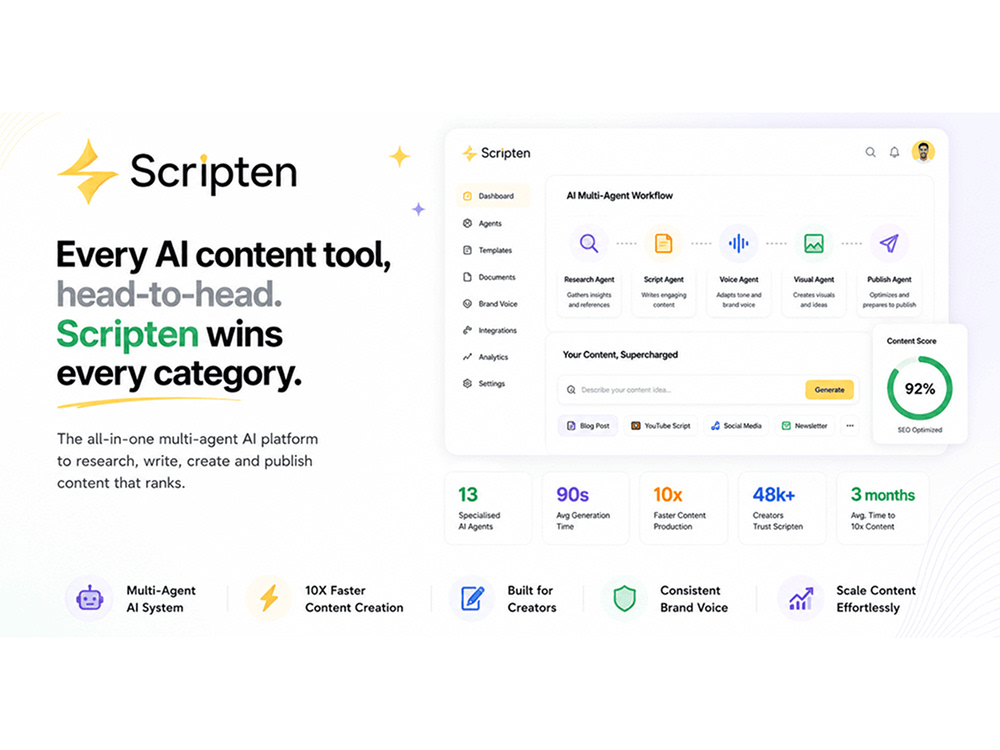
Architected and built scripten, a multi-agent AI video production co-pilot that automates script writing, scene direction generation, and marketing metadata creation for content creators — a full agentic pipeline running multiple coordinated LLM agents in production, not a single prompt wrapper.
Engineered CLINiQ-SHIFT, a specialized healthcare AI system built on Google's MedGemma model — hands-on experience with domain-constrained medical AI, a space where hallucination tolerance is zero and output structure has to be enforced, not hoped for.
Founded and lead-architected Crack Leap Academy, designing intensive 6-week bootcamps in Python, Advanced AI, and DevOps — meaning I don't just write production code, I can explain the "why" behind every architectural decision to a non-technical stakeholder in the room.
Tech Stack Breakdown
Languages: Python (expert), JavaScript/TypeScript
Backend Frameworks: Django, FastAPI, Django REST Framework
Frontend: Next.js, React, Node.js
Databases: PostgreSQL, Redis, vector stores (RAG pipelines)
AI/LLM: Multi-agent frameworks, OpenAI/Anthropic/Gemini/Groq APIs, RAG, MedGemma
DevOps: Docker, Ubuntu server administration, CI/CD, Nginx
Architecture: REST API design, async processing, rate limiting, queue systems
Steps for completing your project
After purchasing the project, send requirements so ArunKumar can start the project.
Delivery time starts when ArunKumar receives requirements from you.
ArunKumar works on your project following the steps below.
Revisions may occur after the delivery date.
Discovery & Architecture Call
I map your use case to an agent architecture: single-agent with tools, or multi-agent with defined roles and handoffs. You get a written technical proposal before any code is written.
Prompt & Schema Design
Structured output schemas (Pydantic/JSON Schema) so downstream systems never receive malformed data. Prompt engineering with explicit failure-mode handling.