You will get Spatial Technical Explainer: Custom 3D AI System Visualization
Project details
Being able to explain how your AI agents work is the ultimate empowering leverage.
Founders who understand their agents optimize them better — they see the bottleneck instead of guessing at it.
Employees who understand the agent work with it instead of around it — they spot failures earlier, suggest improvements, and stop treating it like a black box.
Investors who easily understand your agents trust them... and trust makes it easier for them to write checks.
Trying to do it with text and flat diagrams is like like explaining a soccer match by reading out the stats sheet. Nobody understands the game that way — they understand it by watching the ball & players move.
And the reason you understood that instantly is the mental picture. You SAW the game being played... and that's how people come to understand systems.
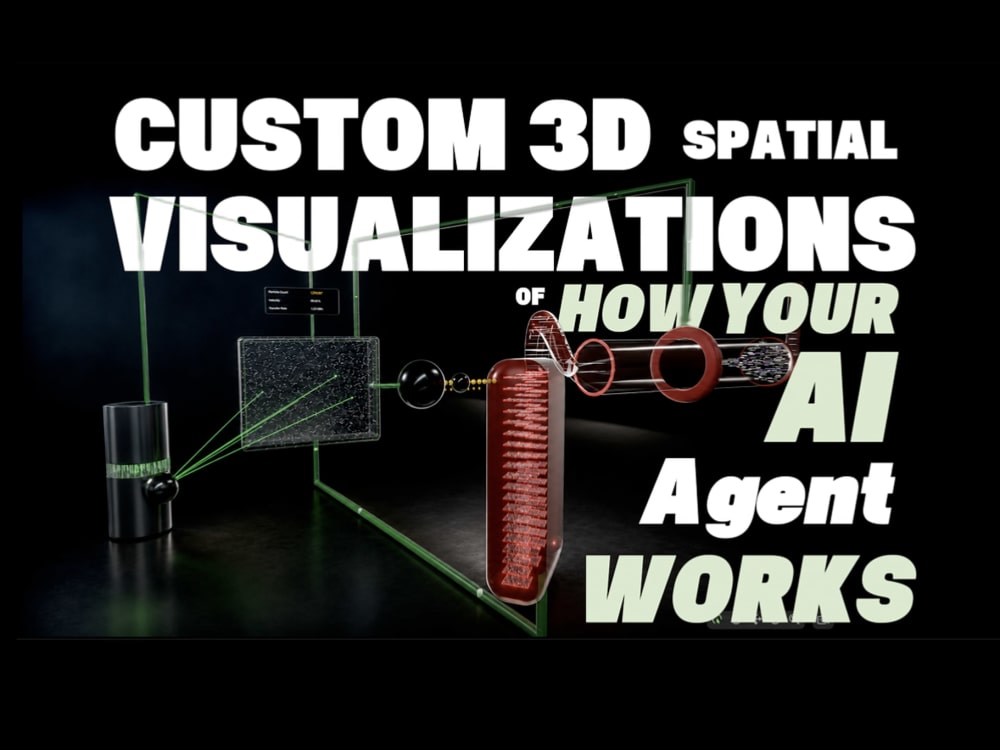
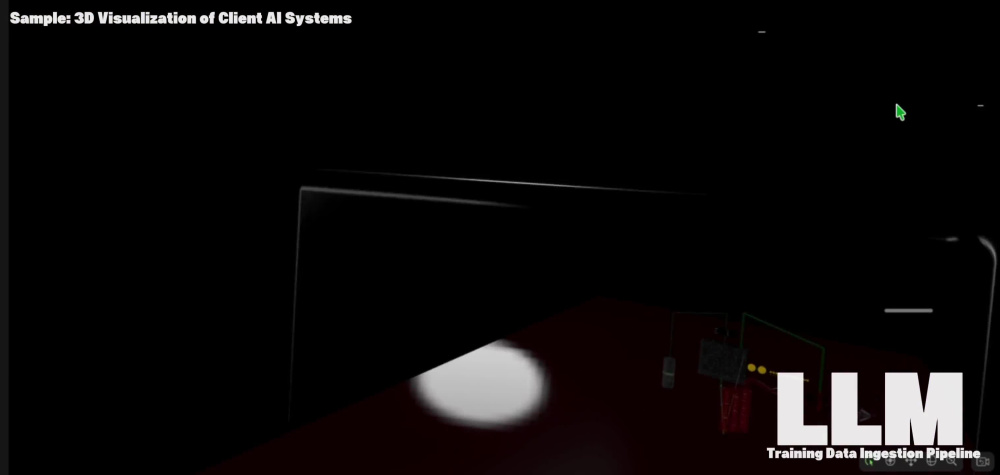
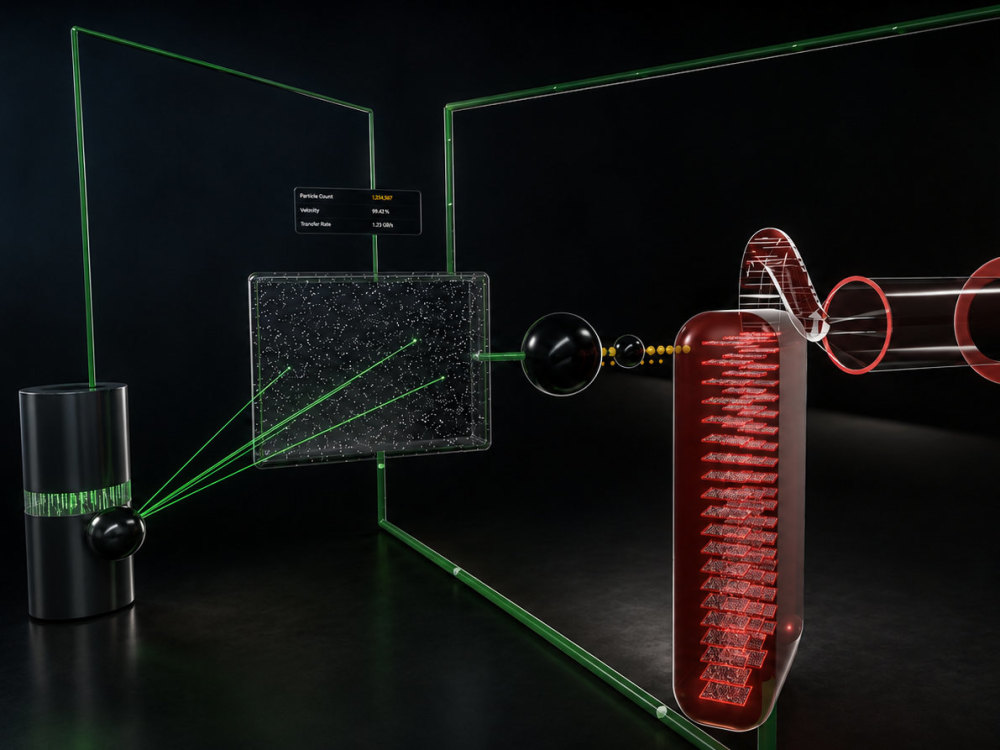
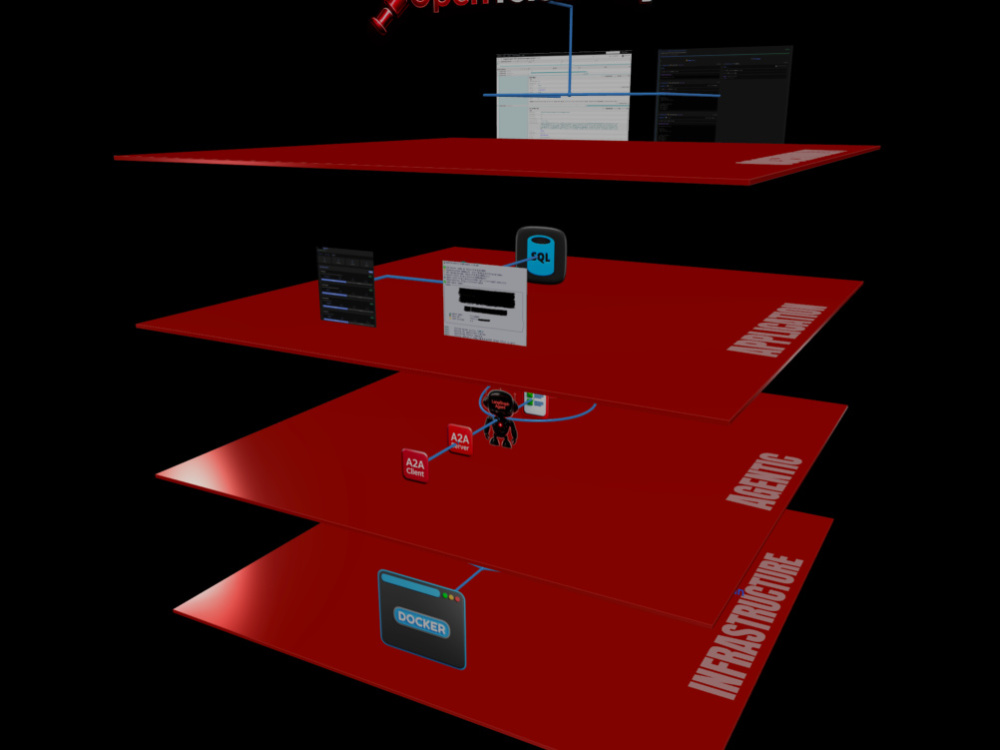
Instead of hearing or reading about what your AI agent does, my spatial 3D visualizations let your audience SEE what your AI agent is doing
When everyone can see & explain whats happening, your agents become a story your whole team can tell — to customers, to new hires, to the investor meeting you're not in
Founders who understand their agents optimize them better — they see the bottleneck instead of guessing at it.
Employees who understand the agent work with it instead of around it — they spot failures earlier, suggest improvements, and stop treating it like a black box.
Investors who easily understand your agents trust them... and trust makes it easier for them to write checks.
Trying to do it with text and flat diagrams is like like explaining a soccer match by reading out the stats sheet. Nobody understands the game that way — they understand it by watching the ball & players move.
And the reason you understood that instantly is the mental picture. You SAW the game being played... and that's how people come to understand systems.
Instead of hearing or reading about what your AI agent does, my spatial 3D visualizations let your audience SEE what your AI agent is doing
When everyone can see & explain whats happening, your agents become a story your whole team can tell — to customers, to new hires, to the investor meeting you're not in
AI Development Type
Knowledge RepresentationAI Development Language
PythonWhat's included
| Service Tiers |
Starter
$599
|
Standard
$1,499
|
Advanced
$2,999
|
|---|---|---|---|
| Delivery Time | 3 days | 5 days | 9 days |
Number of Revisions | 0 | 1 | 2 |
AI Model Integration | - | - | - |
Detailed Code Comments | - | - | - |
Knowledge Graph | - | - | - |
Model Documentation | |||
Ontology | - | - | - |
Source Code | - | - | - |
Taxonomy | - | - | - |
About Dwayne
Senior AI Engineer | Claude / OpenAI Agents, MCP & LangGraph
Southfield, United States - 3:14 am local time
Most engineers can call an LLM API but fewer have shipped agents that hold up under real load, with visibility into what every tool call cost, how long it took, and where it failed.
That gap is where I work... and I make it all easy to understand by building 3D visualizations of any AI system for non-technical clients.
• Agents & orchestration — Claude and OpenAI agents, MCP servers, LangGraph, A2A
• Agent observability — tool-call tracing, token and cost attribution per request, agentic system problem-solving
• RAG pipelines — pgvector, FAISS, sentence-transformers, hybrid retrieval, reranking
• Document ingestion at scale — layout detection, OCR, PDF/DOCX parsing, entity extraction
• Private and on-prem deployment — for data that can't reach a public API
• Infrastructure — Python, FastAPI, Docker, Kubernetes, PostgreSQL, AWS (certified Solutions Architect)
Tell me what you're trying to build and what's constraining it — I'll tell you honestly whether it's the right approach before you spend money on it.
Recent work
• Led a 3-person team building an agent generation framework: deployable LangGraph agents from CLI or UI, containerized to run anywhere from DigitalOcean to AWS, with MCP tool integration and agent-to-agent (A2A) communication wired in by default. Observability built in from the start — OpenTelemetry into Prometheus and Grafana, tracking hardware metrics, per-request tool invocations, latency, model selection, token spend, and cost per request.
• Deployed production ML inference on-premise on a non-x86 architecture, compiling PyTorch, Rust tokenizers, and ONNX Runtime from source where no prebuilt wheels exist — deployment time cut from 20+ hours to under 18 minutes.
• Built natural-language RAG search for a mentorship platform, replacing dropdown filtering with plain-language queries — 77% increase in student engagement.
• Migrated vector search from RDS/EC2 to serverless Lambda containers — 96% reduction in monthly infrastructure cost.
• Built a RAG coding assistant on Claude for Apple's Developer Academy over web-scraped VisionOS documentation — 52%+ faster development.
Steps for completing your project
After purchasing the project, send requirements so Dwayne can start the project.
Delivery time starts when Dwayne receives requirements from you.
Dwayne works on your project following the steps below.
Revisions may occur after the delivery date.
Brief
You send a short brief: what's hard to explain, who the audience is (investors, customers, new hires, conference attendees), and where it'll be used.
My Review
I review any existing diagrams, docs, or architecture references you can share, so the visualization reflects your actual system rather than a generic template