You will get clean, reviewable JSON or Markdown from your PDF data
Project details
Your PDF or parser output may look usable, but before you import it, review it or prepare it for search, you need to know what is clean and what could quietly break downstream.
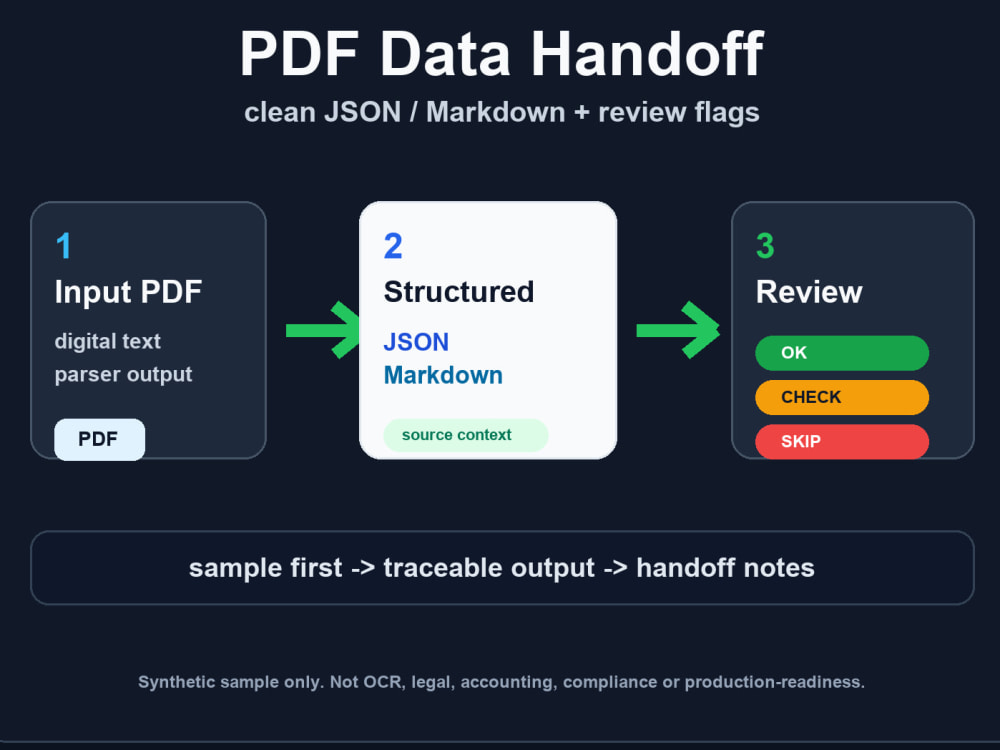
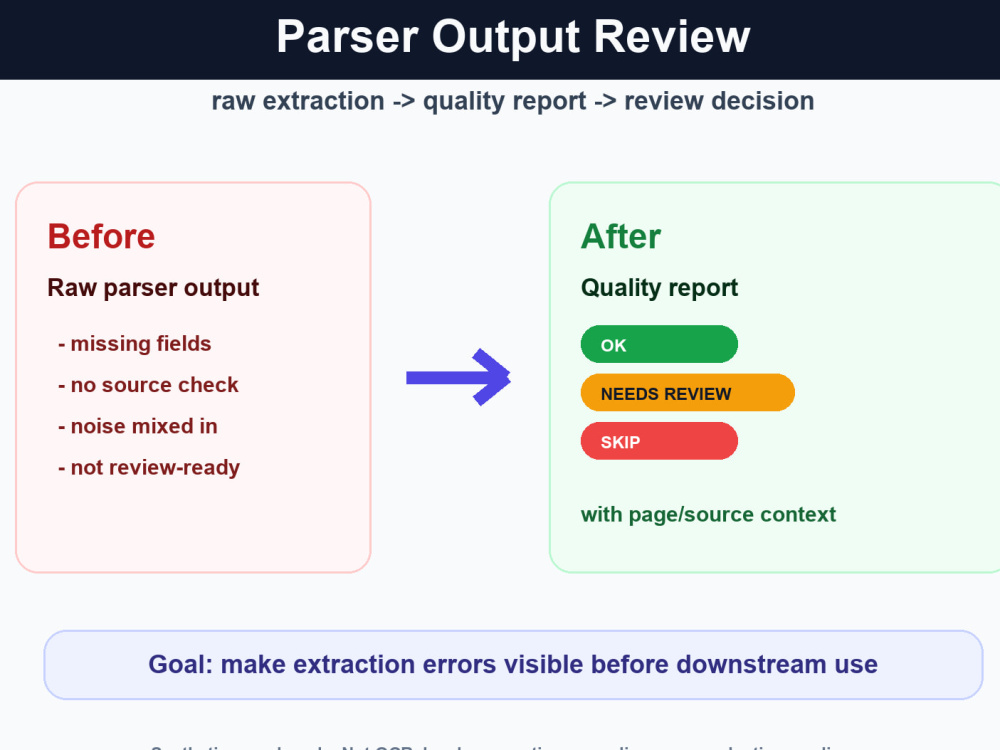
I turn digital PDFs or existing parser output from tools such as Docling, PyMuPDF, Unstructured or similar into reviewable structured data with source context preserved. Depending on the tier, you can receive normalized JSON blocks, clean Markdown, JSONL chunk records, a short quality report and handoff notes that flag missing fields, noisy blocks, ambiguous structure and content that needs manual review.
The difference is the review-first handoff: I do not just convert files and assume the result is correct. I show what looks usable, what needs checking and where each piece of content came from through page/source context.
This is not OCR, not a chatbot or full RAG system and not a production extraction guarantee. This service is for digital text-based PDFs or existing parser output. If your file is scanned or image-only, I can first review a small sample and tell you whether OCR should be treated as a separate step.
I turn digital PDFs or existing parser output from tools such as Docling, PyMuPDF, Unstructured or similar into reviewable structured data with source context preserved. Depending on the tier, you can receive normalized JSON blocks, clean Markdown, JSONL chunk records, a short quality report and handoff notes that flag missing fields, noisy blocks, ambiguous structure and content that needs manual review.
The difference is the review-first handoff: I do not just convert files and assume the result is correct. I show what looks usable, what needs checking and where each piece of content came from through page/source context.
This is not OCR, not a chatbot or full RAG system and not a production extraction guarantee. This service is for digital text-based PDFs or existing parser output. If your file is scanned or image-only, I can first review a small sample and tell you whether OCR should be treated as a separate step.
Data Tool
PythonWhat's included
| Service Tiers |
Starter
$75
|
Standard
$175
|
Advanced
$350
|
|---|---|---|---|
| Delivery Time | 3 days | 4 days | 6 days |
Number of Revisions | 1 | 1 | 2 |
Number of Pages Mined/Scraped | 10 | 50 | 150 |
Number of Sources Mined/Scraped | 1 | 1 | 2 |
Frequently asked questions
1 review
(0)
(1)
(0)
(0)
(0)
This project doesn't have any reviews.
JM
Jim M.
Jun 7, 2026
Technical Scoping for Wagyu Sales Tracking
Michael delivered the agreed scoping assessment on time and was responsive throughout the engagement. The report identified several important technical considerations and helped focus the next stage of investigation. Professional communication and a straightforward process.
About Michael
CSV/Excel Cleanup & Validation | Python, Exceptions & PDF Handoffs
Hamburg, Germany - 12:43 pm local time
Two main strands:
- Messy CSV and Excel files become clean, deduplicated files for review or import, with mismatch flags, missing-value notes, an exceptions file and a short quality summary.
- PDF and parser output becomes reviewable JSON, CSV, Markdown and chunk records with source context before downstream review, import, automation or retrieval preparation.
For CSV and Excel work, the goal is not just a cleaner file. The goal is a handoff where you can see what changed, which rows were merged or flagged and which records still need review before import into a shop, CRM, spreadsheet or internal workflow.
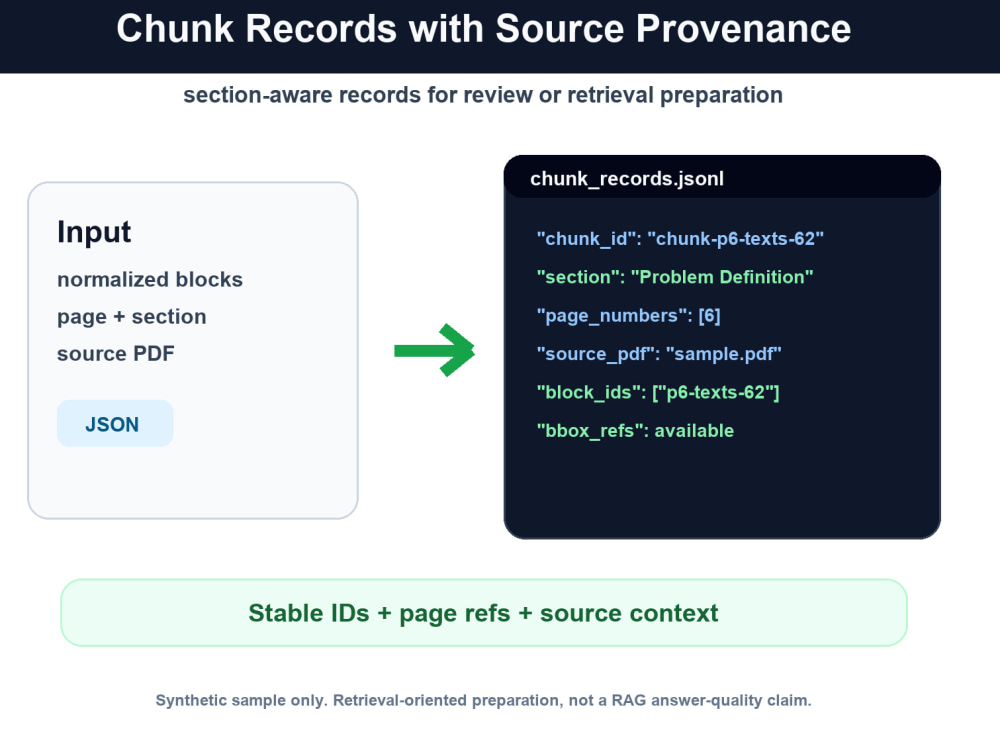
For PDF and parser work, current public examples start from Docling JSON. The same review pattern can be scoped for Docling, PyMuPDF or similar parser output when sample output is available. Where the parser output provides it, I preserve source context such as source file, page number, section heading, bounding box, provenance, block IDs and stable chunk IDs.
Typical deliverables:
- Clean, deduplicated CSV or Excel files with exceptions and quality notes
- Mismatch, missing-value and duplicate-review flags
- Normalized JSON or CSV outputs from PDF or parser output
- Clean Markdown export with source-reference comments
- JSONL chunk records with section and page context
- Handoff bundles and validation flags for human review before downstream use
Typical first step:
Send a small sample: one messy CSV or Excel file, 3 to 5 representative PDF pages or an existing parser-output export. I return a small reviewable sample so you can inspect the output shape before committing to a larger scope.
Recent client feedback:
Reliable and professional delivery; on-time scoping work that identified important technical considerations and helped focus the next investigation stage.
Not a good fit:
- Full SaaS or platform builds
- Production OCR accuracy guarantees
- Web scraping or lead-generation services
- Accounting, tax, legal, medical or compliance ownership
- Full RAG chatbot or answer-quality ownership
- Cloud, infrastructure or deployment ownership
Steps for completing your project
After purchasing the project, send requirements so Michael can start the project.
Delivery time starts when Michael receives requirements from you.
Michael works on your project following the steps below.
Revisions may occur after the delivery date.
Review sample and confirm scope
I check the files, confirm whether they are digital text or parser output, flag OCR/table risks and confirm the right tier or custom scope before work starts.
Structure the output
I create normalized JSON blocks, Markdown or JSONL chunk records with page/source context and traceable IDs where applicable.