You will get Foundational LLM Behavior Architecture — Review & Design
Project details
Most LLM-based systems fail for the same reason: behavioral structure is treated as an afterthought. Rules, memory, reasoning, files, and user input are blended together, leading to hallucination, drift, overconfidence, and growing UX friction over time.
I don’t theorize about AI reliability. I build systems that only work if reliability is solved.
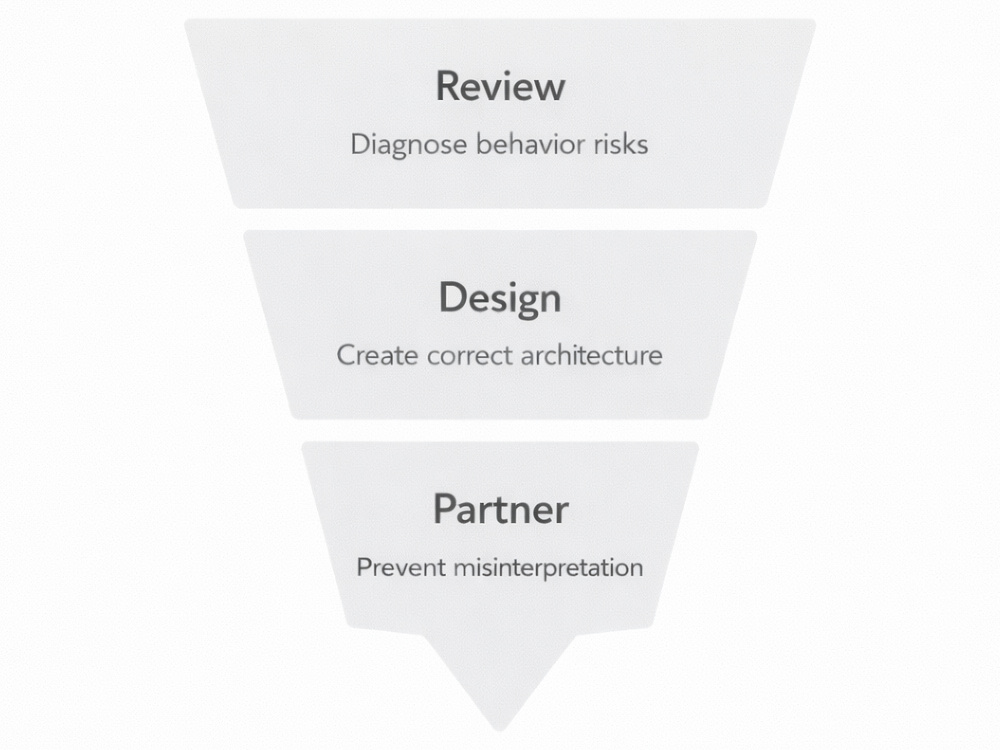
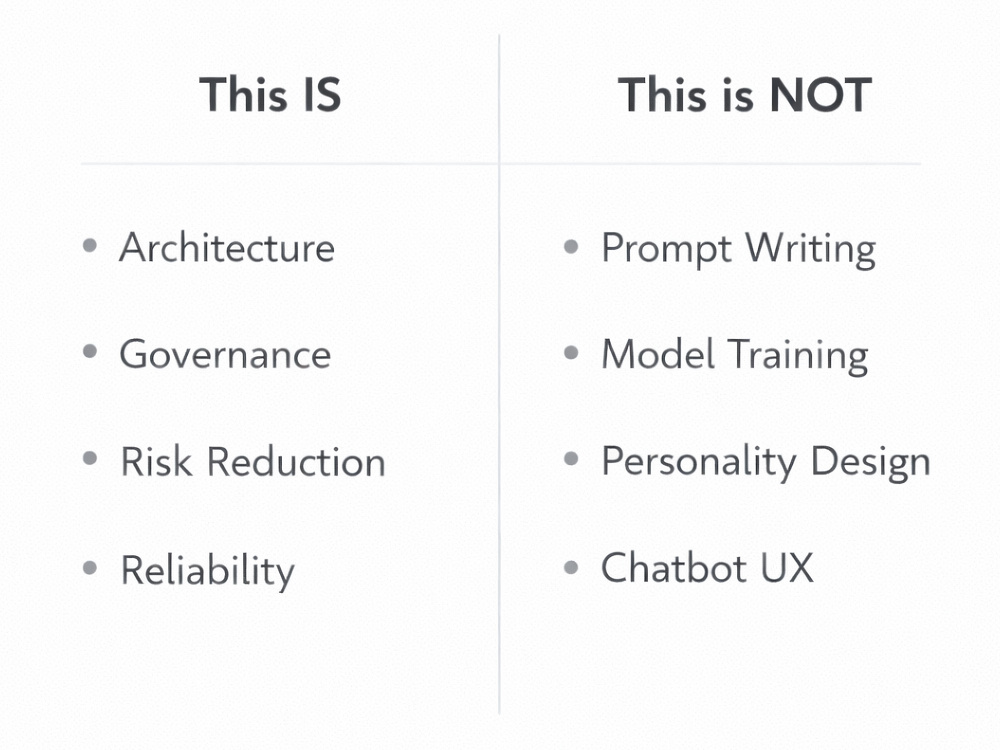
This engagement provides a foundational review and design of your LLM’s behavior architecture. Rather than tuning prompts or retraining models, the focus is on how the system is structured to operate: authority, identity, memory boundaries, failure handling, and long-term stability.
The work is a one-time, bounded consultation tailored to your system and stage. Depending on the tier, deliverables range from architectural risk diagnosis to a complete behavior architecture blueprint, with optional live walkthroughs for design and engineering teams.
This approach is model-agnostic and complementary to training. Its purpose is to ensure that increased intelligence translates into reliable, predictable behavior — before problems reach users or become expensive to correct.
I don’t theorize about AI reliability. I build systems that only work if reliability is solved.
This engagement provides a foundational review and design of your LLM’s behavior architecture. Rather than tuning prompts or retraining models, the focus is on how the system is structured to operate: authority, identity, memory boundaries, failure handling, and long-term stability.
The work is a one-time, bounded consultation tailored to your system and stage. Depending on the tier, deliverables range from architectural risk diagnosis to a complete behavior architecture blueprint, with optional live walkthroughs for design and engineering teams.
This approach is model-agnostic and complementary to training. Its purpose is to ensure that increased intelligence translates into reliable, predictable behavior — before problems reach users or become expensive to correct.
AI Development Type
Knowledge Representation, Model Tuning, Software MaintenanceAI Development Language
PythonWhat's included
| Service Tiers |
Starter
$4,500
|
Standard
$9,000
|
Advanced
$15,000
|
|---|---|---|---|
| Delivery Time | 7 days | 10 days | 15 days |
Number of Revisions | 1 | 1 | 2 |
AI Model Integration | - | - | - |
Detailed Code Comments | - | - | - |
Knowledge Graph | - | - | - |
Model Documentation | |||
Ontology | - | ||
Source Code | - | - | - |
Taxonomy | - | - |
Optional add-ons
You can add these on the next page.
Additional Revision
+$1,500Frequently asked questions
About Shane
Human-Centered AI Systems Designer | Conversational AI & Guardrails
Tremonton, United States - 10:35 am local time
My work focuses on how AI systems are structured to behave, not just how they perform in best-case demos. I’m typically brought in when an AI feature technically works, but becomes brittle, confusing, or untrustworthy once it reaches real users.
I specialize in behavior governance, authority boundaries, failure handling, and long-term stability across conversational AI, agents, and AI-assisted workflows. This includes defining how tone, constraints, memory, and escalation logic interact at a systems level so teams can build features that remain reliable as complexity grows.
I’ve designed and shipped live AI-driven products, including a public Android app, and I work independently, asynchronously, and outcome-driven. My role is to help teams understand why their AI behaves the way it does—and how to correct structural issues before they become product or trust liabilities.
Hourly engagements are best suited for architectural advisory, clarification, and targeted review. For full system audits or behavior architecture design, fixed-price projects are recommended.
How I help teams
• Diagnose structural causes of hallucination, drift, and overconfidence
• Define AI behavior, authority, and constraints at an architectural level
• Design failure-aware conversational and agent workflows (not just happy paths)
• Establish governance models engineers can maintain over time
• Audit existing AI systems to explain where trust breaks down—and why
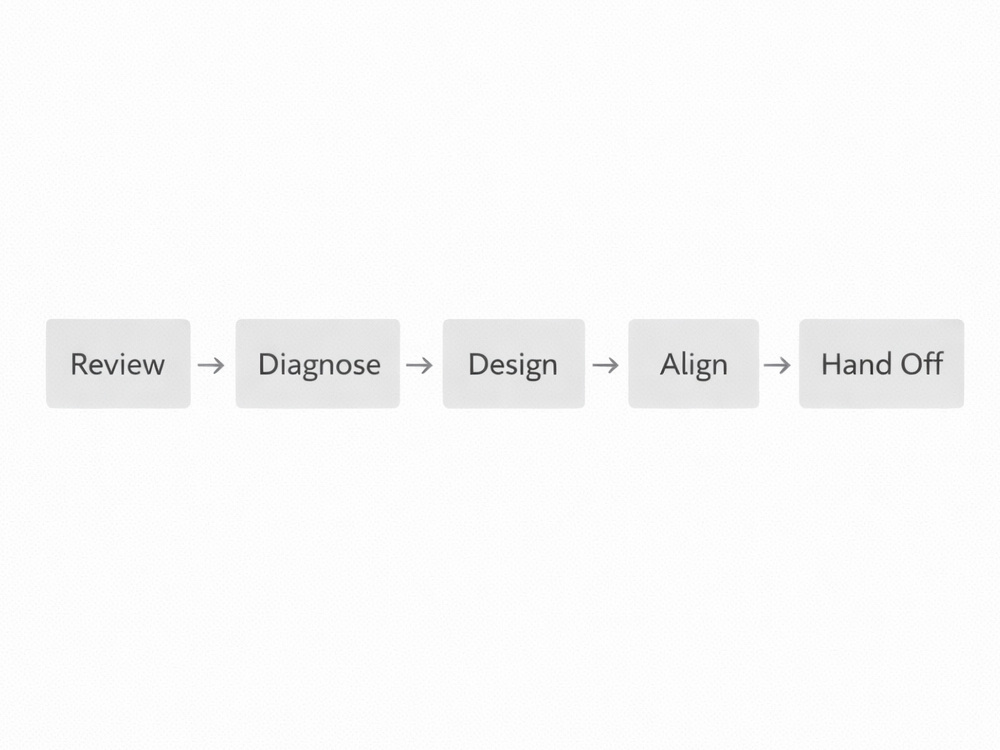
Steps for completing your project
After purchasing the project, send requirements so Shane can start the project.
Delivery time starts when Shane receives requirements from you.
Shane works on your project following the steps below.
Revisions may occur after the delivery date.
Intake & System Mapping
I review your requirements, examples, constraints, and stated friction. I map the system at a behavioral level and identify where responsibilities (rules, memory, reasoning, reference) are currently conflated.
Review & Clarification (Revisions if Needed)
You review the initial analysis or draft deliverable. If clarification or adjustment is needed within the included revision scope, it is addressed here.