You will get Production AI Pipeline — From Engineer Who Shipped Medical-Grade LLMs
Project details
Most "AI gigs" are a thin Python script that calls OpenAI and prints the response. That works for a demo. It dies in production the moment a real document arrives.
I build the part most sellers skip: the infrastructure around the model. At Tusdi AI (medical document parsing), 0.01% failure was treated as a critical bug. At Codevalet, I rebuilt the AI pipeline from scratch with Celery + Redis Streams after the original couldn't handle real load. At Lexpert (legal AI), I evolved the data pipeline through three generations — Python scripts → Airflow → Temporal.
What you get:
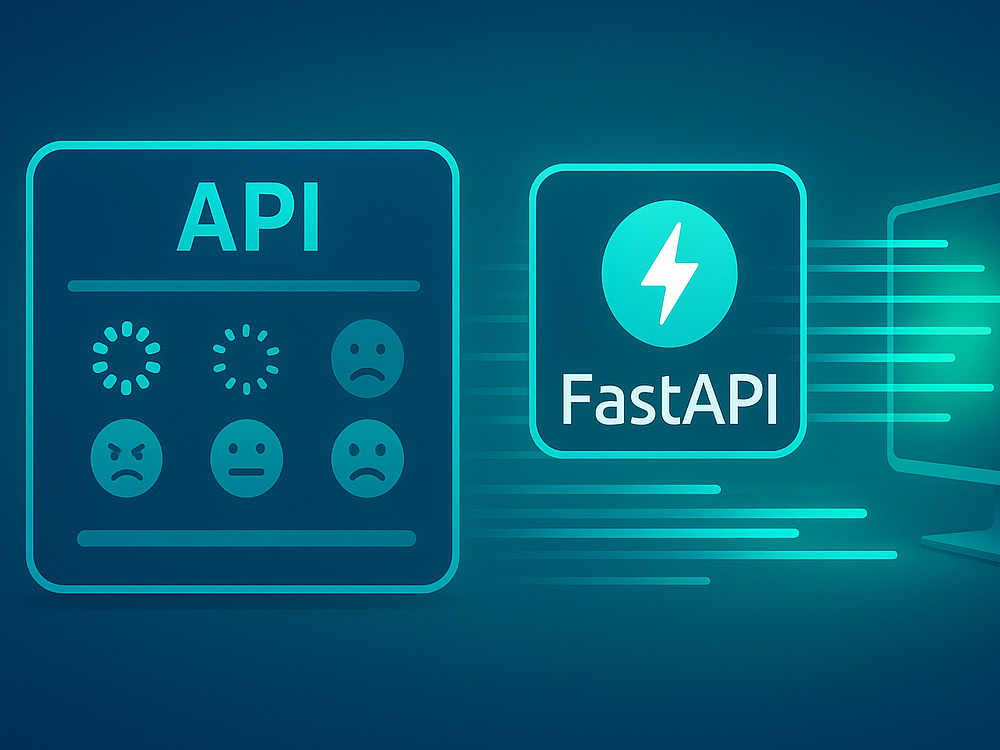
• FastAPI service with async, structured output, and Pydantic validation
• Task queue (Celery + Redis or RQ) so AI work doesn't block your API
• Retry, dead-letter queue, exponential backoff
• Cost and latency monitoring (Prometheus-compatible)
• Tested against real failure modes: rate limits, timeouts, malformed responses, model outages
What only a human does:
• Prompt engineering for your domain
• Structured output schema for your data
• Per-pipeline runbook
• Failure modes specific to your data
• 30-day post-deploy support (Enterprise)
I build the part most sellers skip: the infrastructure around the model. At Tusdi AI (medical document parsing), 0.01% failure was treated as a critical bug. At Codevalet, I rebuilt the AI pipeline from scratch with Celery + Redis Streams after the original couldn't handle real load. At Lexpert (legal AI), I evolved the data pipeline through three generations — Python scripts → Airflow → Temporal.
What you get:
• FastAPI service with async, structured output, and Pydantic validation
• Task queue (Celery + Redis or RQ) so AI work doesn't block your API
• Retry, dead-letter queue, exponential backoff
• Cost and latency monitoring (Prometheus-compatible)
• Tested against real failure modes: rate limits, timeouts, malformed responses, model outages
What only a human does:
• Prompt engineering for your domain
• Structured output schema for your data
• Per-pipeline runbook
• Failure modes specific to your data
• 30-day post-deploy support (Enterprise)
Programming Languages
PythonWhat's included
| Service Tiers |
Starter
$400
|
Standard
$1,200
|
Advanced
$2,800
|
|---|---|---|---|
| Delivery Time | 3 days | 3 days | 5 days |
Number of Revisions | 2 | 3 | 5 |
Design Customization | - | - | - |
Content Upload | - | - | - |
Responsive Design | - | - | - |
Source Code |
Frequently asked questions
11 reviews
(11)
(0)
(0)
(0)
(0)
This project doesn't have any reviews.
JR
James R.
Nov 21, 2025
Development and maintenance of JournalPay and OJSs
Aliboyev is very easy to work with and a great communicator. He completed all of the work quickly and with high quality.
HR
Hanan R.
Sep 26, 2024
DevOps + Reactjs
As usual, great working with Abror.
RC
Rupesh C.
Aug 21, 2024
React JS Conversational UI
HR
Hanan R.
Jul 21, 2024
AI integration with an existing APP
HR
Hanan R.
Jul 21, 2024
Nextjs/Reactjs Expert to work on a complex app
Abror is exceptionally skilled and highly professional. He is always available and collaborates seamlessly as a part of our team. Thank you, Abror, for your outstanding work. We look forward to continuing our partnership.
About Abror
Senior AI & Infrastructure Engineer - Python, Go, Kubernetes
100%
Job Success
Tashkent, Uzbekistan - 1:45 am local time
Senior full-stack engineer, 9 years — database schema to production Kubernetes. Python, FastAPI, TypeScript (Next.js), Go.
A few things I've actually done:
— Built a research publishing platform solo: 14,000 publications, 4,000 researchers, live production
— Helped maintain 20+ microservices at 99.9% uptime at a US anti-fraud startup (AWS, SAM/CDK/SST)
— Recovered a corrupted 11M-row MySQL database in 26 hours under exam-season pressure
— Rewrote Python scrapers to Go for a 100× speedup on brittle legal data
— Migrated a code intelligence platform off a custom py-script framework to Next.js + FastAPI on my own initiative
— Built legal-data pipelines through Airflow, then Temporal workflows (temporal is my favorite and I'm not tired of advocating for it)
I run a 9-node production Kubernetes cluster on VPS without relying on AWS and saving thousands a month on cloud costs (124 cores, 320 GB, ArgoCD-managed) — the code and the infra are the same problem to me. Boring reliable tech over exciting fragile stuff, align on protocols before writing code, read a codebase before refactoring it.
Good fit for: AI & document pipelines, production infrastructure, migrations and rescues, legacy codebases that need someone who'll read before touching.
Based in Tashkent (UTC+5). English fluent. Available now.
Steps for completing your project
After purchasing the project, send requirements so Abror can start the project.
Delivery time starts when Abror receives requirements from you.
Abror works on your project following the steps below.
Revisions may occur after the delivery date.
Kickoff
30-min call to define input→transformation→output, agree on LLM provider, review sample data, and confirm failure modes to test against.
Schema & Architecture
Design the Pydantic output schema and task queue architecture. Share a one-page spec for your sign-off before writing code