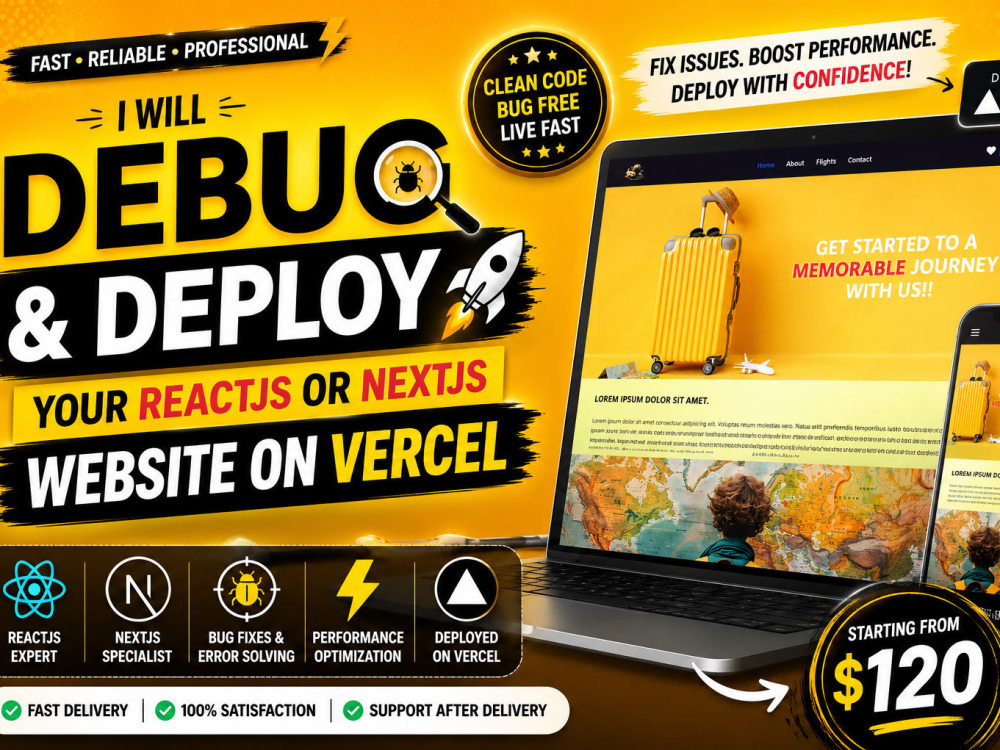
You will get react js responsive website with TailwindCSS


Project details
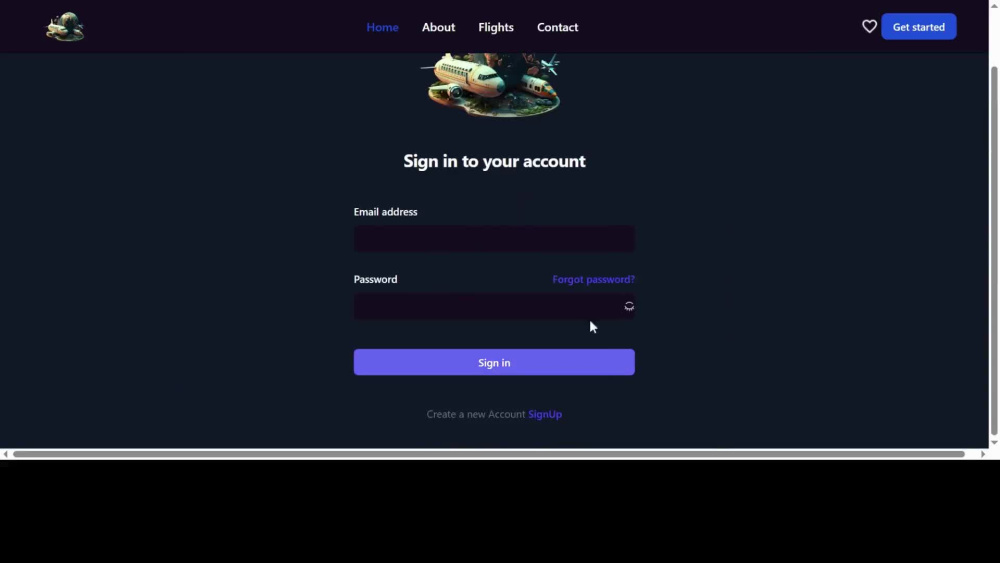
You will get a complete Reactjs website that will help register a user to you site, sign in and sign out. Each user will have his own account and data will be stored for each user separately. The user will be able to add items, to his cart and later edit them as well. this facility will also be for guest users as well but without storage. The entire site will be including Mongodb, Reactjs, Redux.
Programming Languages
HTML & CSS, JavaScriptCoding Expertise
Cross Browser & Device Compatibility, PSD to HTML, Performance OptimizationWhat's included
| Service Tiers |
Starter
$120
|
Standard
$230
|
Advanced
$450
|
|---|---|---|---|
| Delivery Time | 7 days | 30 days | 45 days |
Number of Revisions | 2 | 3 | 5 |
Number of Pages | 2 | 3 | 4 |
Design Customization | - | ||
Content Upload | - | - | |
Responsive Design | |||
Source Code |
Optional add-ons
You can add these on the next page.
Additional Revision
+$20
Additional Page
+$50About Zoya
React & Next.js Developer | Landing Pages That Drive Action
Lahore, Pakistan - 1:12 pm local time
I build React and Next.js websites and landing pages that solve both problems at once: a clear layout that leads visitors toward the action you want, plus a build that actually holds up: fast, clean, and consistent across every device. For projects that need more than a static or marketing site, I also build full-stack web applications using the MERN stack, handling everything from the interface down to the database, including CRUD functionality for things like dashboards, admin panels, and data-driven tools.
Why this happens
Often it's not a design problem, it's a translation problem. A Figma file can look great, but turning it into a real website means hundreds of small decisions the design doesn't answer: how elements resize between breakpoints, how sections load, how interactions feel under a real cursor or a thumb. When those decisions are rushed, you end up with a site that looks fine on the designer's monitor and falls apart everywhere else.
How I approach it
I start with the intended user journey: what a visitor is meant to notice first, and what action the page is meant to drive, before writing any code. From there, I structure the layout and components around that goal, build it in React or Next.js (or plain HTML/CSS when that's the better fit), and test it across real screen sizes rather than just resizing a browser window. For application-style projects, this also means designing the data flow between frontend and backend so CRUD operations stay reliable as the project grows. The result is a site or app that matches the intended purpose, not just the visuals.
What this looks like in practice
→ Turning a Figma design into a working React/Next.js or HTML/CSS site, without losing detail in the handoff
→ Building landing pages for SaaS, startups, and small businesses that are structured around a clear call to action
→ Building full-stack web applications with MongoDB, Express, React, and Node.js, including CRUD operations for dashboards, admin tools, and data-driven features
→ Fixing frontend issues on an existing site: layout breaks, inconsistent styling, slow load times
→ Redesigning or rebuilding sites that have become hard to maintain or update
→ Making sure every page actually works on mobile, not just resizes on it
What you get
A site or application that's fast to load, holds up across devices, and is built with clean, maintainable code, so updates later don't mean untangling a mess. I use a structured component approach (React/Next.js, Tailwind CSS) on the frontend, and for full-stack projects, a properly connected MongoDB/Express/Node.js backend, so the interface stays consistent and the data layer stays reliable as the project grows.
How do I work
Most of my work sits at the point where a design or idea has to become a real, functioning product, and that transition is where things usually go wrong: spacing that doesn't hold up, interactions that feel off, components that don't scale, or a backend that wasn't structured to handle real data. I pay close attention to that transition specifically, so what you get matches the original intent and doesn't need to be rebuilt six months later.
I'm not chasing the newest framework or adding complexity the project doesn't need. I build with what the project actually calls for, whether that's a static landing page, a React/Next.js frontend, or a full MERN stack application, and keep the code structured enough that someone else (or future you) can pick it up without confusion.
Tech stack:
HTML | CSS | JavaScript | Tailwind CSS | React.js | Next.js | Node.js | Express.js | MongoDB
If you have a design, an idea, or an existing project that needs work, send it over and I'll walk you through how I'd approach it.
Steps for completing your project
After purchasing the project, send requirements so Zoya can start the project.
Delivery time starts when Zoya receives requirements from you.
Zoya works on your project following the steps below.
Revisions may occur after the delivery date.
Gather requirements
Start Developing